Info
Known as the "Convolvulus Hawk-moth," this impressive insect is often mistaken for a small bird or a bat as it darts through gardens at dusk. A master of aerial acrobatics, it is a long-distance traveler that migrates across continents, following the warmth of the summer. While its size can be intimidating to some, it is a gentle giant and one of the most efficient nocturnal pollinators in the natural world.
🔍 How to Identify
- ✈️ Aerodynamic Shape: It possesses a thick, torpedo-shaped body and long, narrow forewings designed for high-speed flight, reaching spans of up to 12cm.
- 🎨 Intricate Camouflage: The upper wings are a mottled "bark-grey," allowing it to vanish against tree trunks during the day.
- Pink Abdomen Stripes: If you catch a glimpse of its body beneath the wings, you’ll see vibrant horizontal bands of pink, black, and white.
- 👅 The Super-Tongue: It features an incredibly long proboscis (tongue), which can be up to 10cm long—often exceeding the length of its entire body.
🌲 Habitat & Ecology
- 🌺 The Night Shift: Unlike most butterflies, this moth is a "crepuscular" flier, meaning it is most active at dawn and dusk. It specifically seeks out deep-tubed, fragrant flowers like Tobacco plants, Honeysuckle, and Jasmine.
- 🚜 Garden Helper: As it hovers in front of flowers to drink nectar, it picks up pollen on its head and chest, playing a vital role in the reproduction of many ornamental and wild plants.
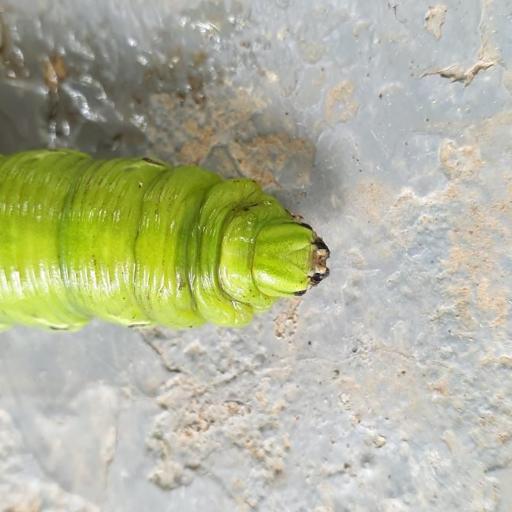
- 🍃 Host Plants: Its larvae (large, chunky caterpillars with a "horn" on the tail) primarily feed on Bindweed and Morning Glory. While they eat a lot, they rarely cause enough damage to be considered a serious garden pest.
⚠️ Safety & Toxicity
- 🛡️ Harmless Friend: Despite its large size and loud humming sound, the Convolvulus Hawk-moth cannot sting or bite. It has no interest in humans or pets.
- 🐛 Caterpillar Bluff: The larvae may thrash or wiggle if disturbed, but they are non-toxic and lack stinging hairs. They are perfectly safe to gently relocate if they are munching on a prized plant.
✨ Fun Fact
The Convolvulus Hawk-moth is a champion of the insect world; it is capable of flying across the Mediterranean Sea and the English Channel in a single trip, migrating from Africa to Northern Europe every year!
More Details








