Info
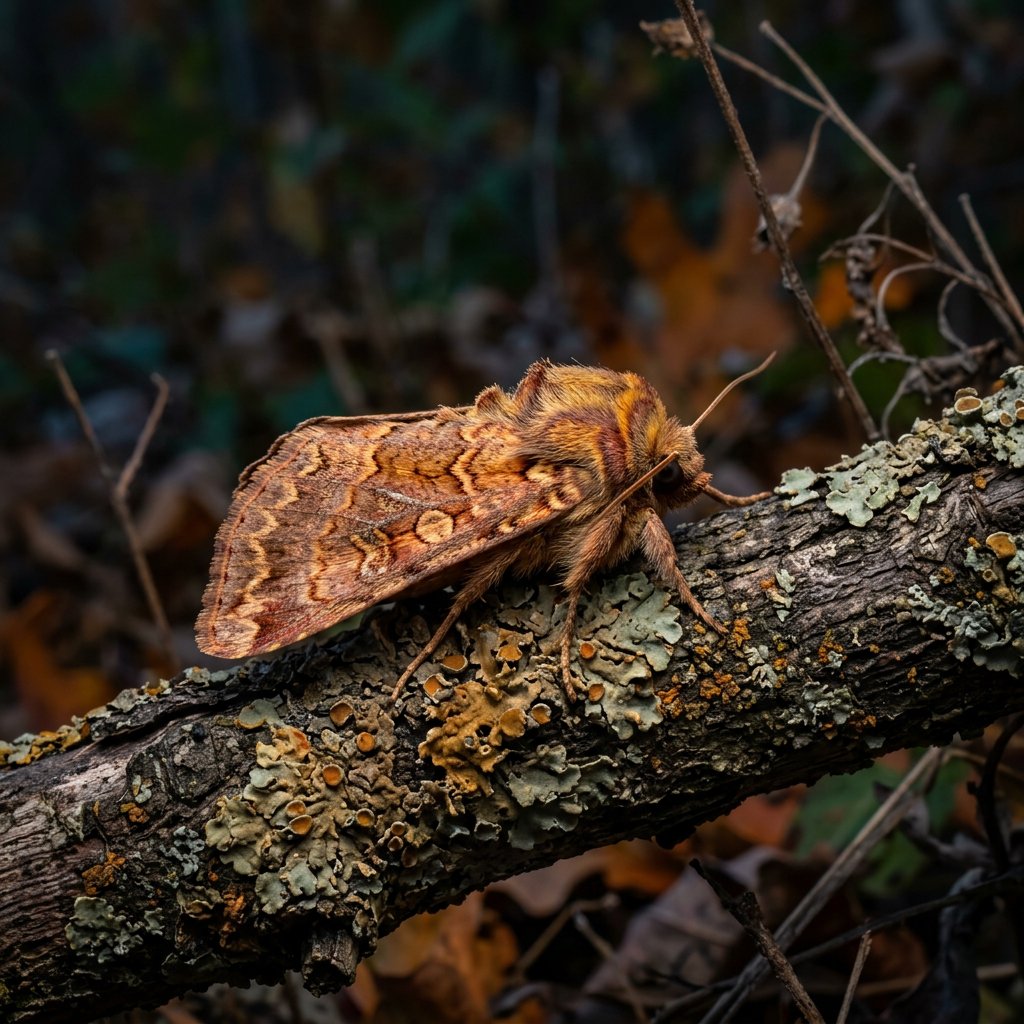
As the leaves turn amber and the air grows crisp, the Bicolored Sallow (Agrochola bicolorago) makes its debut. Often called the "Autumnal Owlet," this moth is a master of disguise, sporting the exact colors of a fallen maple leaf to hide from predators. While most insects vanish when the frost arrives, this hardy traveler is just getting started, often seen fluttering through gardens well into November.
🔍 How to Identify
- 🍂 Wing Coloration: The forewings are typically a warm, toasted orange or honey-yellow, perfectly mimicking dead foliage.
- 🌓 The "Bicolor" Mark: True to its name, the outer half of the forewing is often significantly darker—shaded with smoky purplish-gray or deep brown—creating a distinct two-toned appearance.
- 📐 Resting Posture: When at rest, it folds its wings into a steep, tent-like triangle, hiding its fuzzy body and blending seamlessly into tree bark or leaf litter.
🌲 Habitat & Ecology
- 🍎 A Fermented Diet: Unlike many butterflies that seek fresh nectar, the Bicolored Sallow has a "sweet tooth" for the overripe. It is frequently found sipping on fermenting sap or rotting fallen fruit in orchards and backyards.
- 🌳 Forest Friends: The larvae (caterpillars) are generalist feeders, munching happily on the leaves of cherry, oak, willow, and crabapple trees during the spring before retreating into the soil to pupate.
- 🌙 Night Owl: They are strictly nocturnal and are highly attracted to porch lights or UV "blacklights," making them a favorite for backyard moth-watchers during the chilly months.
⚠️ Safety & Toxicity
- 🛡️ Status: Entirely harmless. The Bicolored Sallow does not bite, sting, or possess any chemical irritants.
- 🏡 Home Impact: They are not considered household pests. If one wanders into your home, it is simply looking for a warm spot or was confused by your lights; it won't eat your clothes or your pantry staples.
✨ Fun Fact
The Bicolored Sallow is a "shiverer." To fly in the cold autumn air, it vigorously vibrates its wing muscles to generate internal body heat, essentially warming up its own engine before takeoff!
More Details








