Info
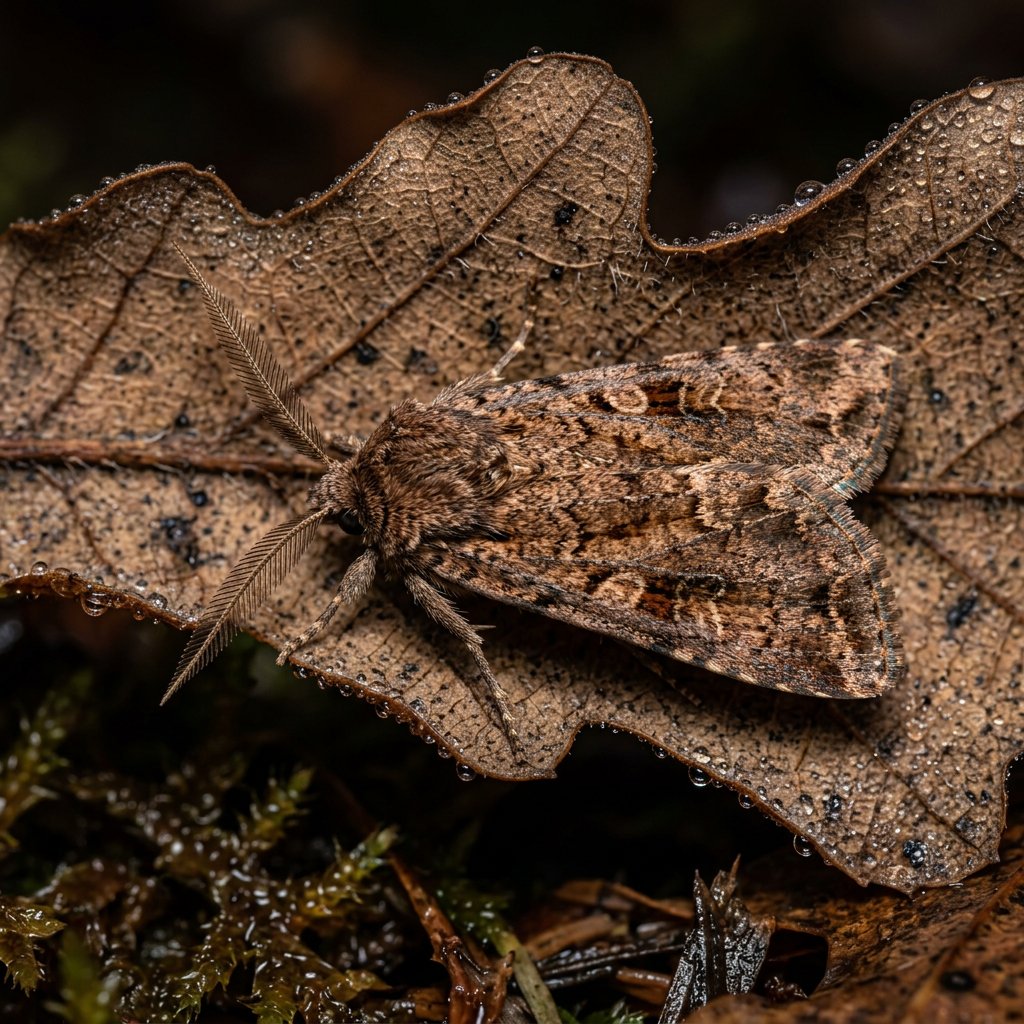
The Brown-spot Pinion (Agrochola litura) is a master of disguise, perfectly blending into the fallen leaves of autumn. Often seen fluttering around ivy blossoms on cool September evenings, this moth is a gentle garden visitor that signals the changing seasons. Its muted colors and subtle patterns make it a favorite for those who appreciate the quiet beauty of nocturnal pollinators.
🔍 How to Identify
- 🦋 Forewings: Typically a rich, reddish-brown to violet-grey color, designed to mimic dried bark or leaf litter.
- ⚫ Distinct Spots: It earns its name from the sharp, black markings (the "pinion" spots) located near the front edge of the wings.
- 📏 Subterminal Line: Look for a pale, slightly wavy line that runs parallel to the outer edge of the wing, creating a distinct "border" to its camouflage.
🌲 Habitat & Ecology
- 🍂 Seasonal Specialist: This is a strictly autumnal species. While most insects are winding down, the Brown-spot Pinion is most active from late August through October.
- 🍯 The Ivy Connection: In the garden, they are primary visitors to late-blooming Ivy. They serve as important pollinators for plants that flower just before the winter frost.
- 🌿 Generalist Larvae: The caterpillars emerge in spring and aren't picky eaters; they feed on a variety of hosts including Willows, Oaks, and low-growing "weeds" like Dandelions and Docks.
⚠️ Safety & Toxicity
- 🛡️ Status: Completely harmless.
- 🐾 Details: This moth does not bite, sting, or possess irritating hairs. They are safe to observe closely and pose no threat to curious pets or children. Their only defense is their "play dead" tactic or their incredible camouflage.
✨ Fun Fact
The Tipsy Moth: Enthusiasts often attract these moths using a method called "sugaring." Because the Brown-spot Pinion loves fermented sugar, collectors paint a mixture of treacle, beer, and sugar onto tree trunks—the moths will actually become slightly "tipsy" and lethargic while feasting on the sweet brew, making them easy to photograph!
More Details








