Info
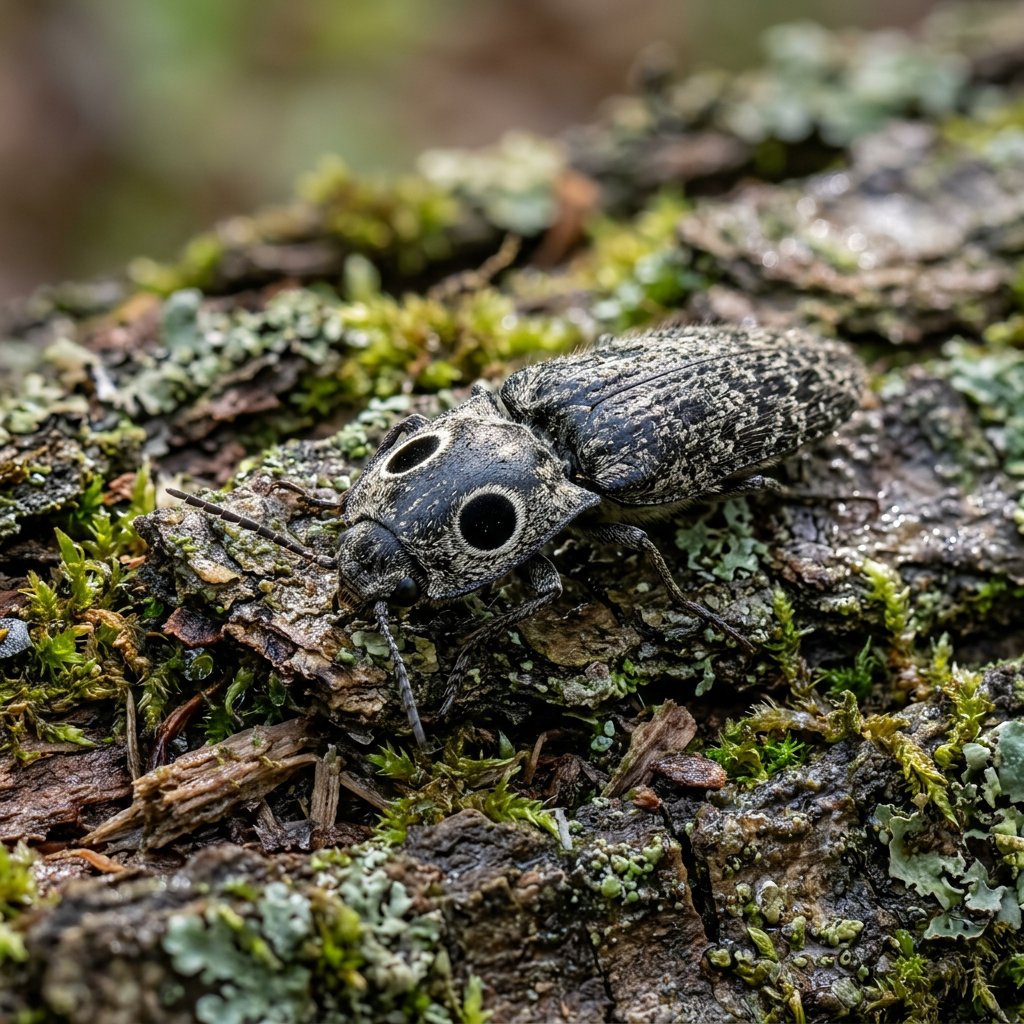
Often called the Eastern Eyed Click Beetle, this insect is nature's master of disguise and acrobatics. At first glance, it looks like a miniature monster peering at you with giant, unblinking eyes, but those "eyes" are actually a clever ruse to scare off hungry birds. In reality, it’s a fascinating forest inhabitant known for its incredible "click" trick and its role as a secret protector of trees.
🔍 How to Identify
- 👁️ The "False Eyes": Two large, black, velvety ovals ringed with white sit prominently on the thorax. These aren't its real eyes—those are much smaller and hidden near the base of the antennae.
- 🌫️ Salt-and-Pepper Coloring: The elongated body is covered in tiny scales that create a mottled black, grey, and white pattern, providing perfect camouflage against tree bark.
- 📏 Impressive Stature: As one of the largest click beetles in North America, it can reach nearly 2 inches in length with a heavy, streamlined carapace.
🌲 Habitat & Ecology
- 🪵 The Rotting Log Life: These beetles are most common in deciduous forests. You’ll often find them near decaying logs or old stumps, which serve as the "nursery" for their young.
- 🪲 A Predator in Disguise: While the adults might occasionally sip nectar, their larvae (known as "wireworms") are fierce underground hunters. They spend years inside rotting wood devouring the larvae of wood-boring beetles that would otherwise kill healthy trees.
- 🤸 Aerial Acrobatics: If the beetle finds itself on its back, it uses a specialized "peg" and "groove" on its underside to snap its body with incredible force, launching itself into the air with a loud click to land upright.
⚠️ Safety & Toxicity
- 🛡️ Gentle Giant: Despite its intimidating appearance and "staring" eyespots, this beetle is completely harmless to humans. It does not have a stinger and its mandibles are not strong enough to pierce human skin.
- 🤏 No-Bite Policy: If you pick one up, it will likely start "clicking" rapidly. This is not an attack, but a frantic attempt to startle you into letting go. It poses no threat to children or pets.
✨ Fun Fact
- ✨ The force generated by the beetle's "click" is so powerful that the insect experiences a G-force hundreds of times the strength of gravity during its literal "leap of faith!"
More Details








