Info
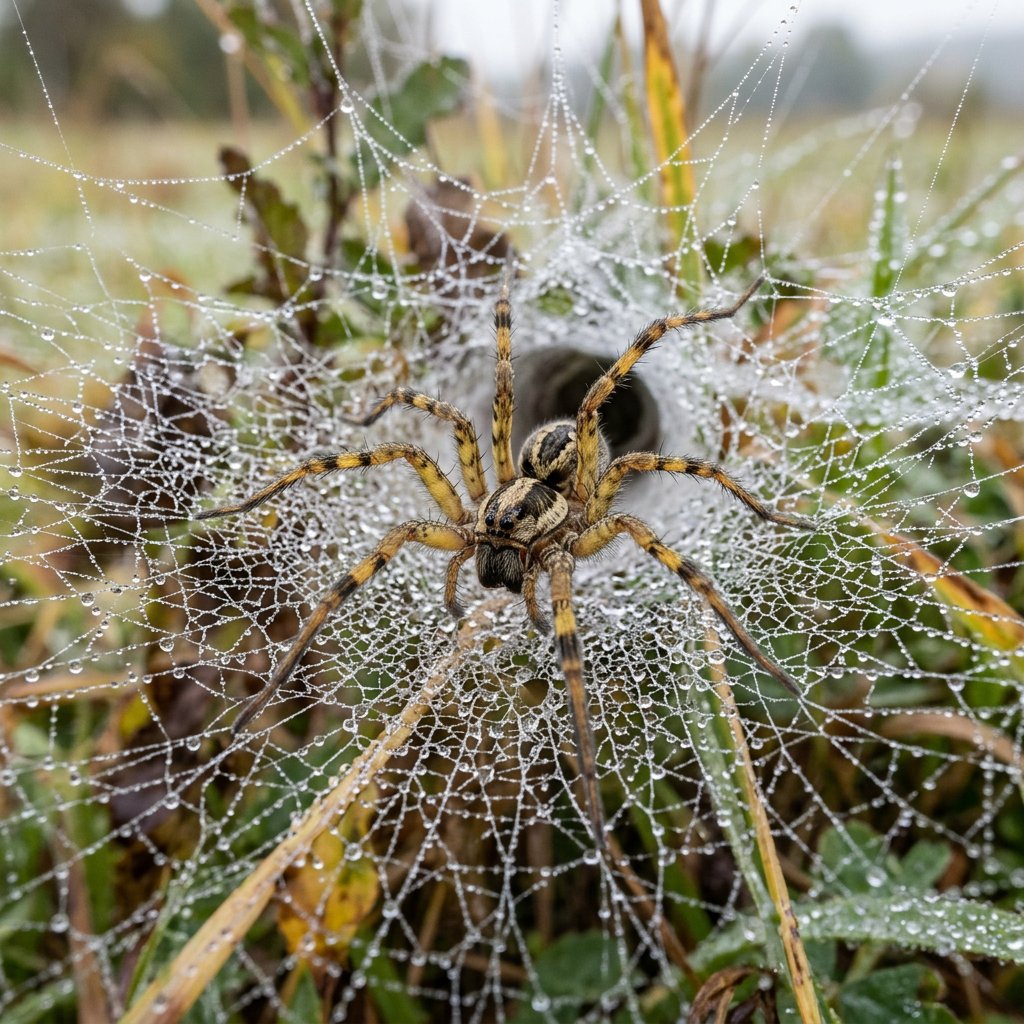
Known as the Slender Funnel Weaver, this delicate architect is a common sight in gardens across Europe and Asia. Unlike the spiders that weave circular, sticky "orb" webs, this species creates a flat, non-sticky silk sheet that leads into a private, funnel-shaped retreat where it hides and waits for a meal.
🔍 How to Identify
- 🕷️ The Silhouette: True to its name, it has a notably slender, elongated body compared to its bulkier cousins, the common House Spiders.
- 🏁 Racing Stripes: Its cephalothorax (the front body segment) features two distinct, dark longitudinal stripes running down a lighter yellowish-grey background.
- 🥢 Elongated Spinnerets: If you look closely at its rear, you’ll see two long, finger-like silk-spinning organs that help it weave its intricate funnel architecture.
🕸️ Habitat & Behavior
- 🌿 The Hedge Hunter: You will most likely find this spider in low-lying bushes, boxwood hedges, or tall, dry grass. It prefers sunny spots where its silk sheet can catch the light.
- ⚡ Vibration Specialist: It doesn't use sticky glue to catch prey. Instead, it relies on incredible speed. When an insect lands on the silk sheet, the spider feels the "tripwire" vibrations and dashes out of its tunnel at lightning speed to grab the intruder.
- 🏡 Garden Guardian: These spiders are excellent natural pest controllers, munching on flies, small moths, and leafhoppers that might otherwise damage your ornamental plants.
⚠️ Safety & Toxicity
- 🛡️ Non-Aggressive: The Slender Funnel Weaver is extremely shy. At the first sign of a human or a large predator, it will sprint deep into the safety of its funnel.
- 🚫 Low Risk: While all spiders have venom to hunt insects, this species is not considered medically significant to humans or pets. Its fangs are rarely large enough to pierce human skin, and its venom is very weak.
- 🐾 Pet Safety: It is generally harmless to cats and dogs, though a curious pet might get a face full of silk if they poke their nose into a hedge!
✨ Fun Fact
The silk sheet of Allagelena gracilens isn't just a trap; it's a sophisticated "acoustic" sensor. The spider can tell exactly how big its prey is and where it is located just by the specific frequency of the vibrations traveling through the silk threads!
More Details








