Info
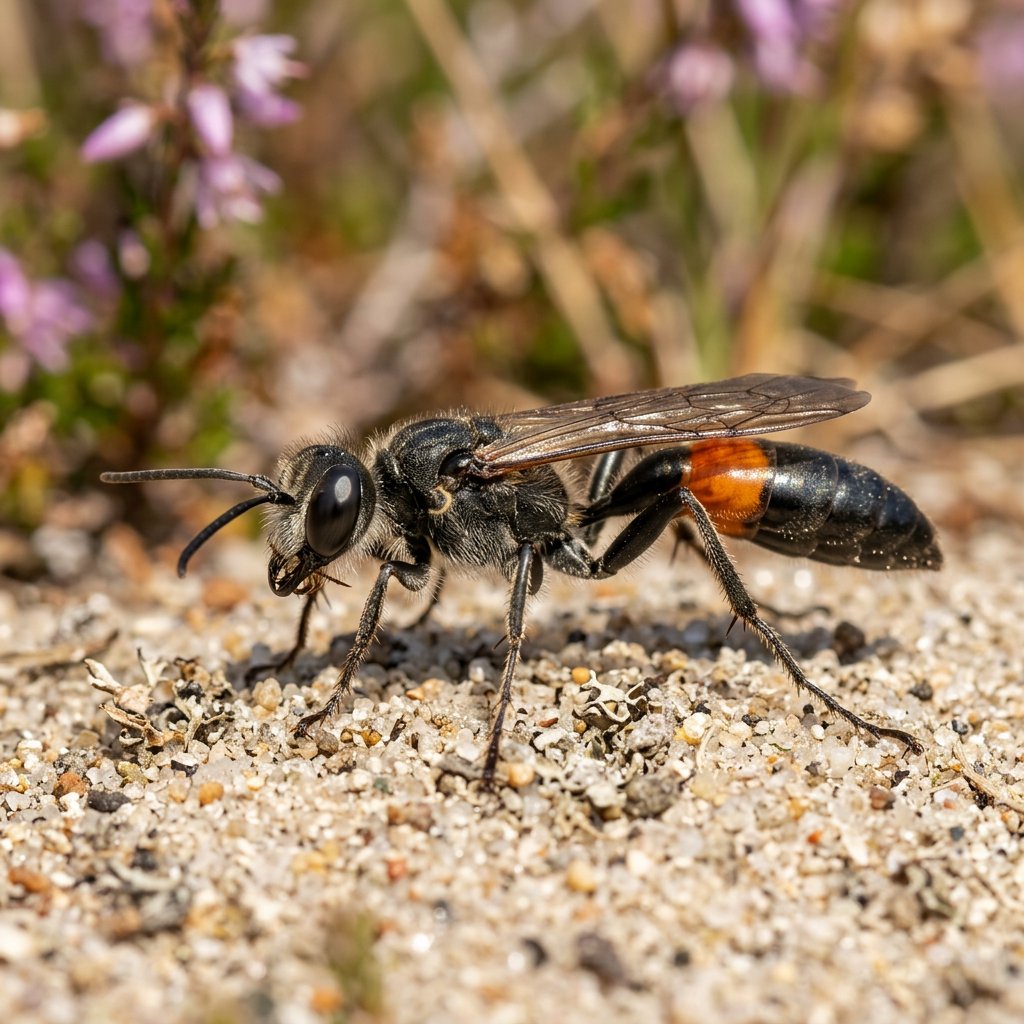
Often called the Red-banded Sand Wasp, this elegant architect of the insect world looks like a masterfully crafted piece of needlework. While its elongated, needle-thin body might look intimidating to some, this solitary wasp is a peaceful neighbor and a fascinating example of parental dedication. It is a master hunter and a vital part of the ecosystem that keeps garden pest populations in check.
🔍 How to Identify
- ⏳ The "Thread-Waist": It features a strikingly long, thin segment (called a petiole) that connects the thorax to the abdomen, giving it a delicate, "stretched" appearance.
- 🔴 Distinctive Colors: The front half of the abdomen is a vibrant, warning orange-red, while the rest of the body is a sleek, matte black.
- 🏗️ Digging Mandibles: Look for them on sunny, sandy patches of ground; they use their powerful jaws to excavate deep burrows and carry heavy loads.
🌲 Habitat & Ecology
- 🏜️ The Sand Architect: As the name suggests, they are almost always found in open, sandy habitats. This includes heathlands, coastal dunes, and even the sandy gaps between garden paving stones or well-drained flower beds.
- 🐛 The Caterpillar Specialist: They are incredible natural pest controllers. A female wasp will hunt large, hairless caterpillars, paralyze them with a precise sting, and drag them—often over great distances and obstacles—back to her burrow to provide a fresh meal for her larvae.
⚠️ Safety & Toxicity
- 🛡️ Non-Aggressive: Because they are solitary and have no colony or "queen" to defend, they are not aggressive. They have zero interest in humans and will typically fly away if approached.
- 🐝 The Sting: Only the females possess a stinger. While a sting is possible if the wasp is physically caught or stepped on, it is rare and generally no more painful than a common bee sting, posing no threat unless you have a specific insect allergy.
✨ Fun Fact
- 🛠️ A Rare Tool-User: The Red-banded Sand Wasp is one of the few insects known to use "tools." After filling her nest with sand, she will sometimes pick up a small pebble in her jaws and use it as a hammer to tamp down the dirt and perfectly camouflage the entrance from predators!
More Details








