Info
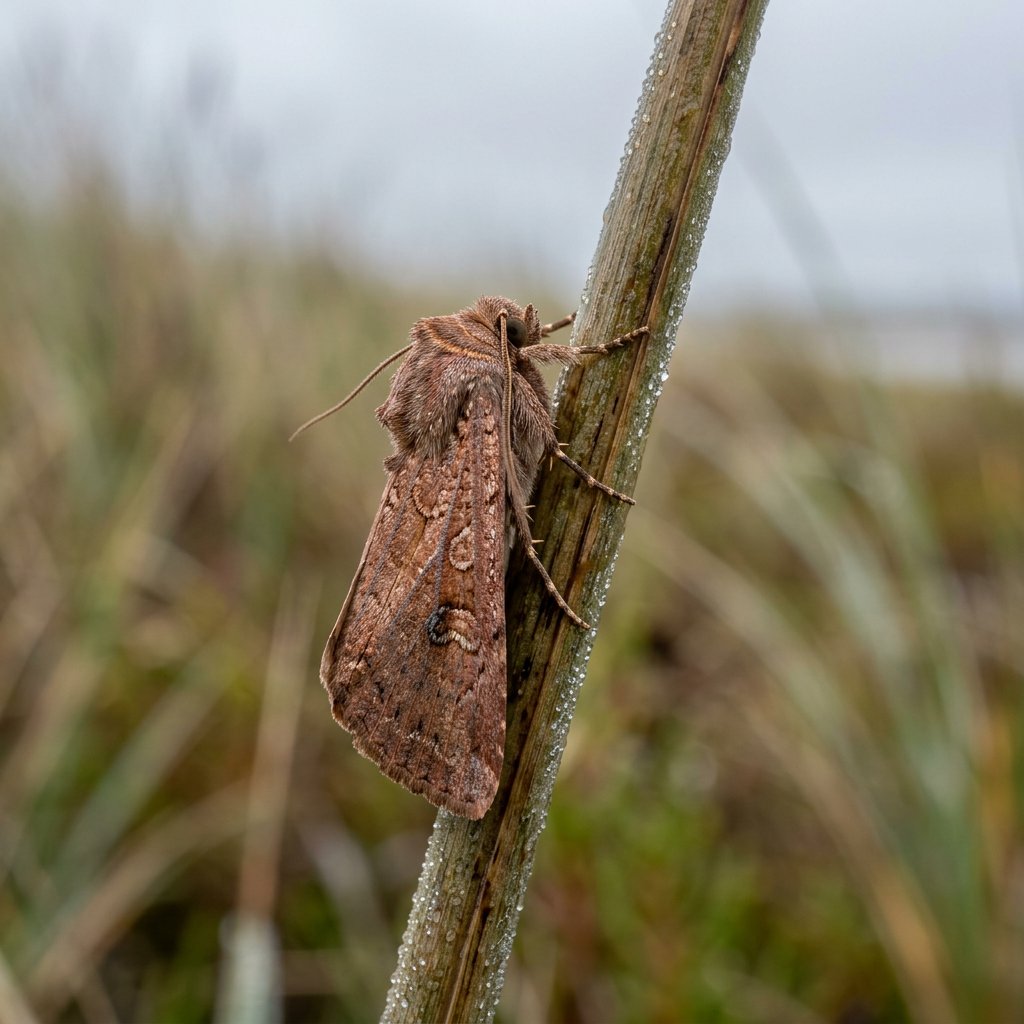
Often referred to as the Saltern Ear, this moth is a master of autumnal camouflage. It belongs to a complex group of nearly identical species whose earthy, rusted tones mimic fallen leaves perfectly. Named for the distinct ear-shaped mark on its wings, this nocturnal flier is a common sight in damp meadows and marshes across Europe and Northern Asia during the late summer months.
🔍 How to Identify
- 🦋 The "Ear" Spot: Look for a prominent kidney-shaped mark (the reniform stigma) on the forewing, which is often filled with bright orange, yellow, or stark white scales.
- 🍂 Rustic Palette: The forewings are typically a rich reddish-brown or ochre, often textured with darker marbled lines that help it blend into bark and dried grass.
- 📏 Resting Posture: When at rest, it folds its wings into a roof-like shape, hiding its duller, grayish-brown hindwings entirely.
🌲 Habitat & Ecology
- 🌾 Marshland Resident: Unlike many garden moths, the Saltern Ear prefers "wet" feet; you’ll most likely find it in fens, bogs, and damp grasslands where its favorite host plants grow.
- 🐛 Root Dwellers: The larvae lead a secretive life. Instead of feeding openly on leaves, the caterpillars burrow into the lower stems and roots of grasses and sedges, such as Purple Moor-grass, to stay protected from predators.
- 🌙 Night Owl: As an adult, it is strictly nocturnal. It is highly attracted to artificial lights and sugar baits, making it a favorite for backyard "mothing" enthusiasts.
⚠️ Safety & Toxicity
- ✅ Harmless: This moth is a "gentle neighbor." It does not bite, sting, or possess any chemical defenses that could harm humans.
- 🐾 Pet Friendly: It is non-toxic to cats and dogs. While a curious pet might try to catch one, there are no irritating hairs or toxins to worry about.
✨ Fun Fact
The Amphipoea genus is famous among entomologists for being "cryptic." The Saltern Ear looks so much like its cousins, the Ear Moth and the Crinan Ear, that experts often have to use a microscope to look at their internal structures to tell exactly which species is which!
More Details








