Info
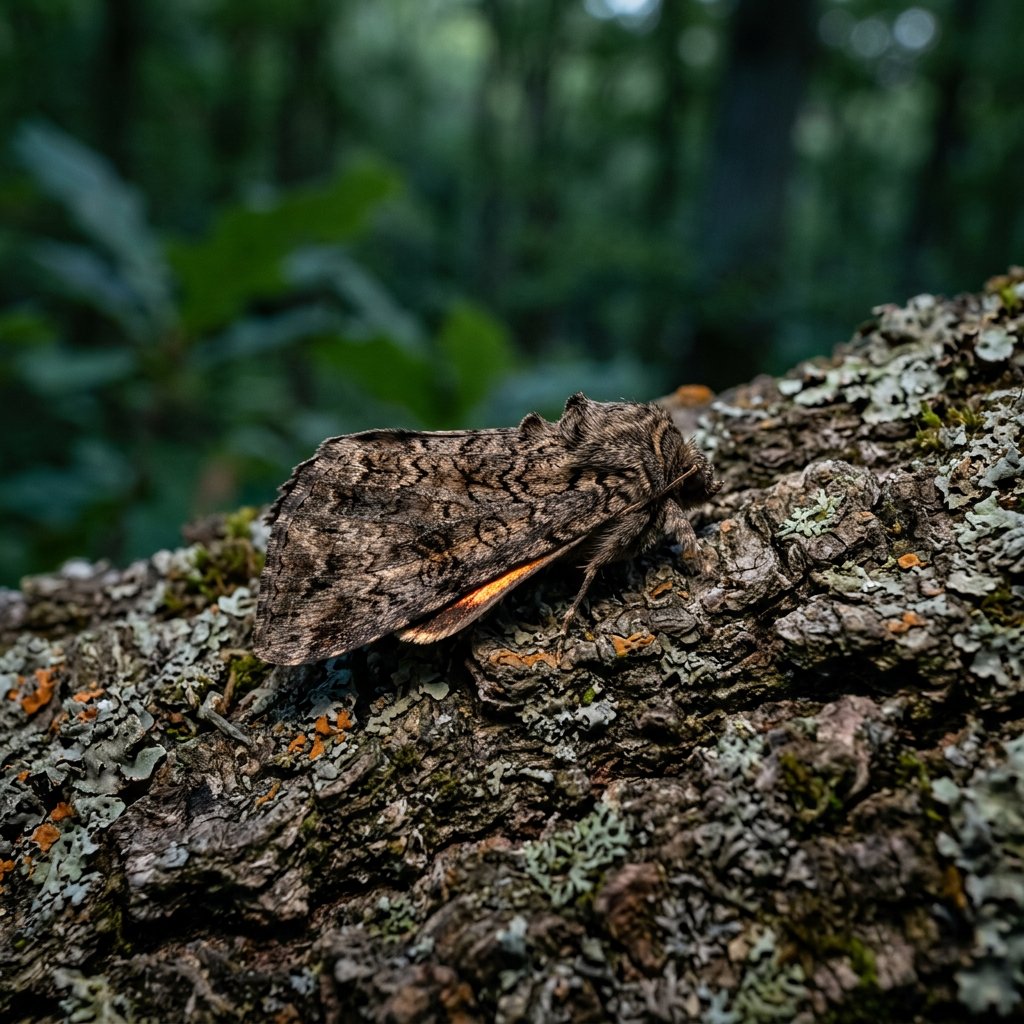
Often mistaken for a piece of weathered bark or a dry leaf, the Copper Underwing is a master of disguise. Known as the "Pyramid Moth" in its larval stage, this nocturnal visitor hides a flashy secret beneath its dusty exterior. It is a common sight in temperate gardens and woodlands, often found snoozing behind window shutters or tucked under loose bark during the day to avoid hungry birds.
🔍 How to Identify
- 🦋 The Hidden Flash: While the outer wings are a drab, mottled brown designed for camouflage, the hindwings (visible only in flight) are a stunning, metallic copper-orange.
- 📐 The "Pyramid" Hump: As a caterpillar, it is bright green with a distinct, pointed hump on its rear end, which gives the species its scientific name, pyramidea.
- 🪵 Bark Mimicry: When resting, its wings overlap in a flat, tent-like shape, allowing it to blend perfectly with tree trunks and wooden structures.
🌲 Habitat & Ecology
- 🌳 Generalist Feeders: The larvae are not picky eaters; they enjoy a buffet of broad-leaved trees and shrubs, including Oak, Willow, Birch, and various garden fruit trees.
- 🌙 Night Owl: Adults are strictly nocturnal and are famously attracted to "sugar" (fermenting fruit or bait) more than light. Interestingly, they often prefer to scurry away on their legs like beetles rather than flying when first disturbed.
⚠️ Safety & Toxicity
- ✅ Harmless Neighbor: The Copper Underwing is a total "friend." It does not bite, sting, or carry any toxins that could harm humans.
- 🐾 Pet Safe: Unlike some fuzzy caterpillars that have irritating hairs, the "Pyramid" caterpillar is smooth and non-toxic, posing no threat to curious cats or dogs.
✨ Fun Fact
Scientists believe the bright copper color on the hindwings is a "startle defense." When a predator tries to grab the moth, it flashes the bright color to confuse the attacker for a split second—just enough time for the moth to vanish back into the shadows!
More Details








