Info
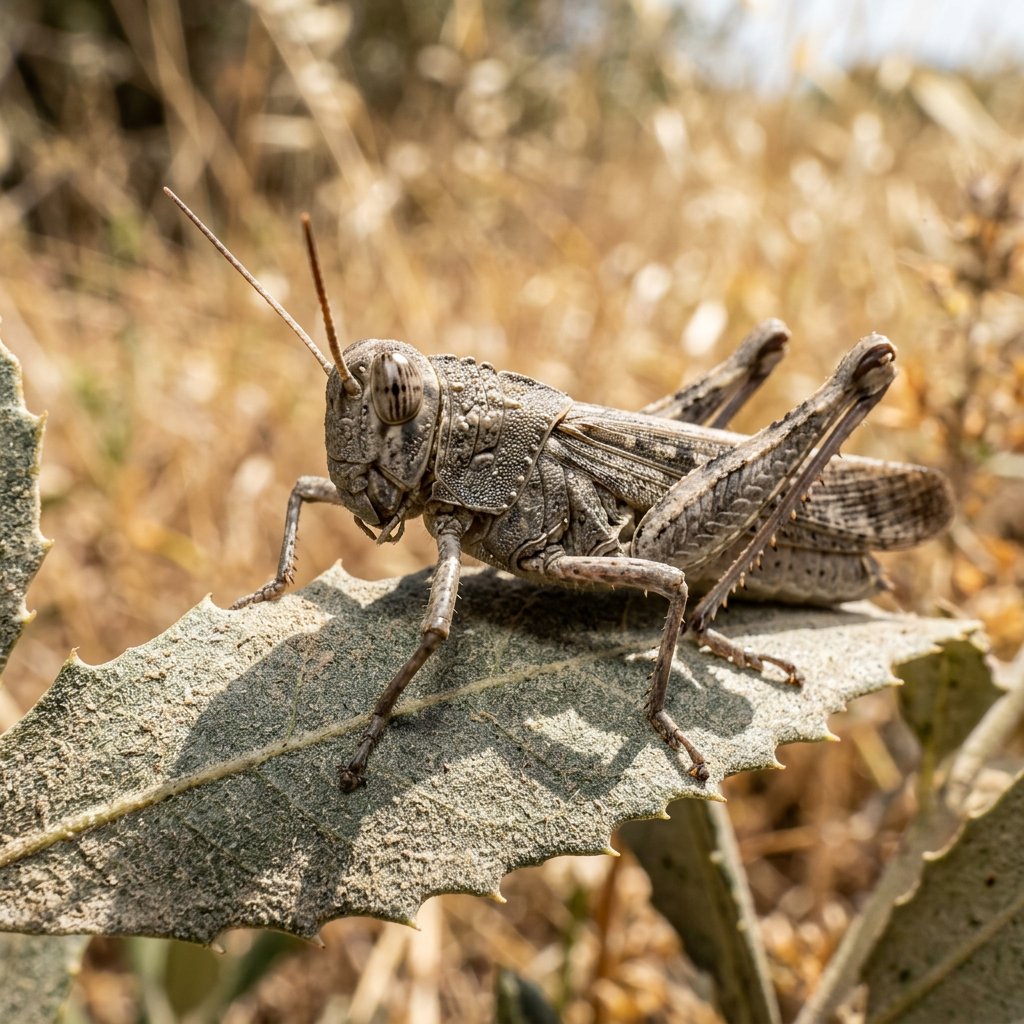
Known as the Egyptian Grasshopper, this impressive insect is often called the "Gentle Giant" of the Mediterranean. Unlike its notorious locust cousins that travel in devastating swarms, the Egyptian Grasshopper is a solitary wanderer that prefers the quiet life among the leaves of trees and tall shrubs.
🔍 How to Identify
- 👀 Striped Eyes: The most iconic feature is the eyes, which are marked with distinct vertical black and white stripes, giving them a very focused, "serious" expression.
- 📏 Impressive Scale: This is one of the largest insects in Europe and North Africa, with females reaching a staggering 7 to 8 centimeters in length.
- 🦵 Spiny Hind Legs: Their powerful jumping legs are lined with sharp-looking white and black spines, used for gripping branches rather than defense.
- 🎨 Camouflage Tones: Their bodies are typically a dusty gray, brown, or olive green, allowing them to blend perfectly with bark and dried foliage.
🌲 Habitat & Ecology
- 🌳 Arboreal Habits: While most grasshoppers stay low in the grass, this species loves height. It is commonly found in citrus groves, vineyards, and garden hedges where it can hide among the canopy.
- 🍂 Solitary Lifestyle: You won't see them in "plagues." They live independent lives, munching on various leaves and shoots, and are generally considered a minor garden guest rather than a major pest.
- ❄️ Winter Survivor: Unlike many insects that die off in the cold, the Egyptian Grasshopper overwinters as an adult, hiding in tree hollows or under rocks until the first warm days of spring.
⚠️ Safety & Toxicity
- 🛡️ Completely Harmless: The Egyptian Grasshopper does not bite, sting, or carry any toxins. It is a "look but don't touch" friend that is entirely safe for humans.
- 🐶 Pet Interactions: They are non-toxic to cats and dogs. However, their large size and spiny legs can cause mild mouth irritation or a "choking hazard" if a curious pet tries to swallow one whole.
✨ Fun Fact
The Egyptian Grasshopper has a very slow "startup" time. Because it is so large, it needs to bask in the sun for quite a while to warm up its flight muscles before it can take off, making it a very easy subject for nature photographers in the early morning!
More Details








