Info
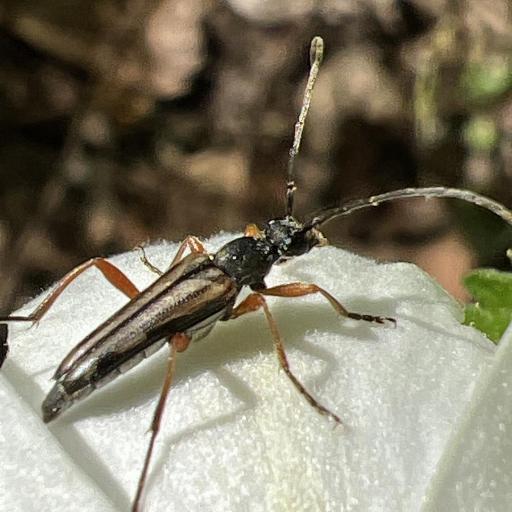
The Pale-edged Flower Longhorn (Analeptura lineola) is a delicate, slender visitor often seen swaying on wildflowers during the peak of summer. Often mistaken for a small wasp or a fly at first glance due to its narrow profile, this beetle is a dedicated pollinator that adds a touch of "wild wood" charm to any garden or forest edge. It is a peaceful member of the longhorn beetle family that focuses more on blossoms than on timber.
🔍 How to Identify
- 🪲 Elegant Wing Covers: Its elytra (wing cases) are typically a pale tan or straw color, strikingly framed by thin black lines along the outer edges or the center seam.
- 📡 Sweeping Antennae: True to its "Longhorn" name, it sports long, segmented antennae that arch backward, used to "smell" and navigate toward the sweetest nectar.
- 📏 Slender Silhouette: Unlike the chunky, heavy-set beetles found in soil, this species has a very narrow, tapered body built for agile flight between swaying flower heads.
🌲 Habitat & Ecology
- 🌼 The Nectar Enthusiast: Adults are primarily "floricolous," meaning they live on flowers. You will most likely find them on white, flat-topped blooms like Queen Anne’s Lace, Elderberry, or Yarrow, where they feed on pollen and nectar.
- 🪵 The Forest Recycler: While the adults love the sunshine, the larvae live a hidden life inside decaying hardwood. They prefer moist, rotting wood from trees like Birch, Maple, or Pine, playing a vital role in breaking down organic matter and returning nutrients to the forest floor.
⚠️ Safety & Toxicity
- ✅ Harmless Guest: This insect is a "friend" to the gardener. It does not sting, and its mandibles are designed for eating pollen, meaning it cannot provide a painful bite to humans.
- 🐾 Non-Toxic: It carries no chemical defenses or venom. If a curious pet or a bird snaps one up, it is entirely non-toxic, though its crunchy exterior might be a bit of a surprise!
✨ Fun Fact
- 🎭 A Clever Mimic: Analeptura lineola utilizes "Batesian mimicry." By sporting a slender body and hanging out on flowers where wasps are common, it tricks predators into thinking it might have a stinger, allowing it to forage in peace without actually having any weapons!
More Details








