Info
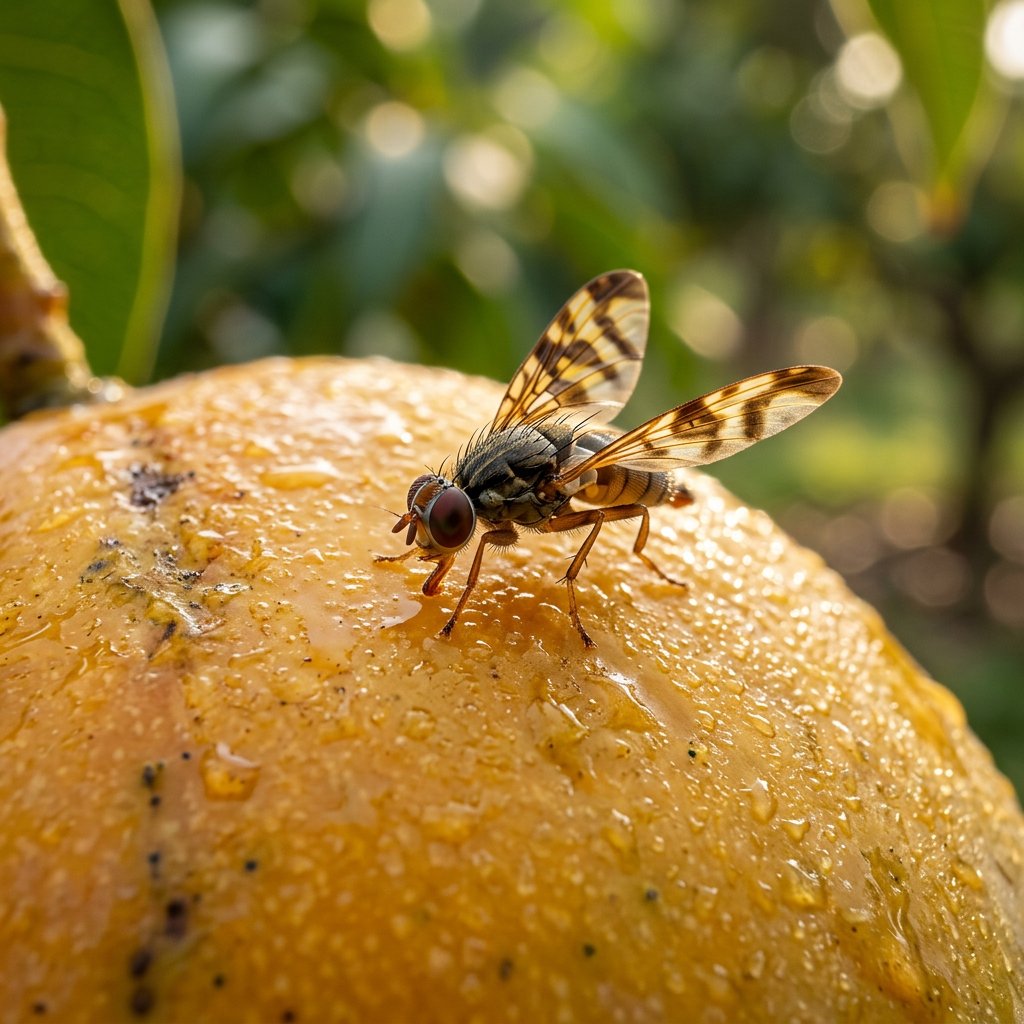
Known primarily as the "True Fruit Flies," members of the Anastrepha genus are master mimics that often sport the golden-yellow colors of wasps to scare off predators. While they might look like tiny, winged jewels, they are famous (or infamous) among gardeners as the "Caribbean" or "Mexican" fruit flies. These insects are high-stakes players in the ecosystem, often deciding which fruits make it to your table and which stay in the garden.
🔍 How to Identify
- 🎨 Intricate Wings: Unlike common houseflies, their wings are decorated with complex "S" or "V" shaped bands in shades of yellow, orange, and brown.
- 🌞 Golden Bodies: Most species have a robust, sun-kissed yellow or orange thorax and abdomen, giving them a distinct tropical look.
- 🗡️ The Faux Stinger: Females possess a long, needle-like structure at the end of their body called an ovipositor. While it looks like a stinger, it is actually a precise tool used for depositing eggs deep inside fruit skins.
🌲 Habitat & Ecology
- 🍎 The Fruit Specialist: You will mostly find these flies hovering around ripening tropical fruits like mango, guava, citrus, and peach. They are highly attracted to the scent of fermenting sugars.
- 🔄 Life Cycle: The larvae (maggots) hatch inside the fruit and feed on the pulp. Once they’ve grown, they drop to the soil to pupate, eventually emerging as the colorful flies you see in the canopy.
⚠️ Safety & Toxicity
- 🟢 Harmless to Humans: Anastrepha flies cannot bite or sting humans or pets. Their "needle" is strictly for fruit, and they do not carry diseases that affect people.
- 🍎 Garden Foe: While safe for you, they are a major pest for your plants. Infested fruit usually rots prematurely. If you find small punctures in your fruit or "mushy" spots, it is best to dispose of the fruit rather than eat it, as it may contain larvae.
✨ Fun Fact
Scientists use "Fly FM" to control them! In some regions, researchers release millions of sterile male Anastrepha flies into the wild. Because the females only mate a few times, this "birth control" method successfully crashes the pest population without using harmful pesticides.
More Details








