Info
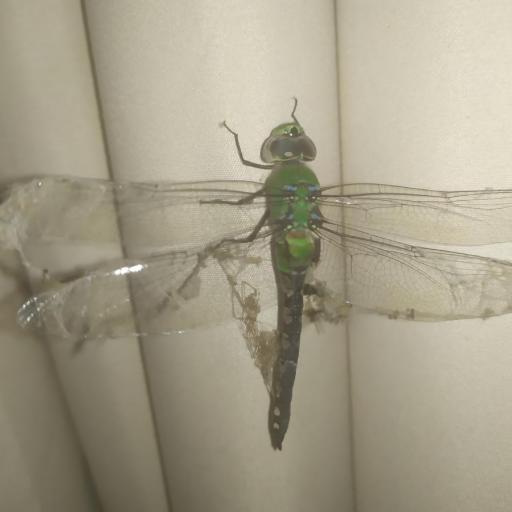
Often called the Amazon Darner, this dragonfly is a high-performance jet of the insect world. With its shimmering neon-green body and tireless wings, it patrols tropical and subtropical landscapes from the Southern United States all the way to Argentina. While folklore once whispered that "darners" could sew up the ears of sleeping children, these insects are actually silent, beneficial guardians of the sky.
🔍 How to Identify
- 🟢 The Thorax: A brilliant, solid apple-green midsection that remains vibrant even when the dragonfly is in high-speed flight.
- 🏙️ The Abdomen: A long, slender tail-section that is mostly dark brown or black, featuring a distinctive bright blue "saddle" or spots near the base where it joins the body.
- 👀 The Eyes: Massive, multifaceted compound eyes that meet at the top of the head, providing a nearly 360-degree field of vision to spot tiny prey from a distance.
🌲 Habitat & Ecology
- 🦟 Nature's Pest Control: These are elite aerial predators. They often form "feeding swarms" at dusk, snatching mosquitoes, gnats, and biting flies right out of the air using their legs like a tiny basket.
- 💧 Waterfront Living: You will typically find them patrolling the edges of ponds, lakes, or slow-moving canals. They are "darner" dragonflies, meaning they prefer to stay on the wing for hours rather than perching on twigs.
⚠️ Safety & Toxicity
- 🛡️ Harmless Ally: Despite their large size and "needle-like" appearance, Amazon Darners are completely harmless to humans and pets. They do not have a stinger.
- 🦷 The "Nip": If handled roughly, a large Darner might attempt to pinch with its mandibles. However, they have no venom, and the pinch is rarely strong enough to break human skin.
✨ Fun Fact
🚀 Oceanic Travelers: The Amazon Darner is a legendary wanderer. They are famous for their migratory capabilities and have been spotted hundreds of miles out at sea, even reaching the remote Galapagos Islands by hitching a ride on wind currents!
More Details








