Info
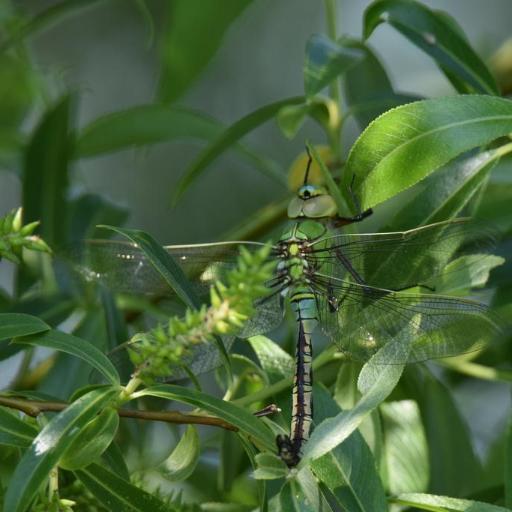
Ruling the skies above garden ponds and lakes, the Emperor Dragonfly (Anax imperator) is a true titan of the insect world. Often called the "Blue Emperor," this magnificent aerial acrobat is a fierce "friend" to gardeners, acting as a high-speed interceptor for mosquitoes and flies. While its massive size and hovering flight might seem intimidating, it is a harmless, non-stinging marvel of natural engineering that signifies a healthy aquatic ecosystem.
🔍 How to Identify
- 👀 Compound Vision: They possess giant, multifaceted eyes that meet in the middle of the head, providing a nearly 360-degree field of view to spot prey and rivals.
- 💎 Jewel Tones: The males sport a brilliant, sky-blue abdomen with a dark dorsal stripe, while females are usually a camouflaging apple-green.
- ✈️ Herculean Build: One of the largest dragonflies in Europe and Africa, it has a thick, apple-green thorax (the middle section) and a powerful wingspan that can reach nearly 4 inches.
🌲 Habitat & Ecology
- 👑 Territorial Patrol: Unlike many insects that hide in the grass, the Emperor is a "hawker." Males are rarely seen resting, instead spending their days patrolling a fixed territory over water, aggressively chasing away any other dragonflies that dare to enter.
- 🦟 Aerial Interceptor: They are apex predators of the insect world. Using their legs like a basket, they scoop up midges, moths, and even smaller dragonflies mid-air, often consuming their "catch of the day" without even landing.
⚠️ Safety & Toxicity
- 🛡️ Harmless Friend: Despite their long, pointed abdomens which some folklore mistakenly calls "stings," they have no stinging apparatus. They are entirely safe to have in your garden.
- 🤏 Handling: If accidentally caught, a large adult might give a tiny, harmless nip with its mandibles, but they are not aggressive toward humans or pets and prefer to stay out of reach.
✨ Fun Fact
The Emperor Dragonfly is a master of physics; it can move each of its four wings independently, allowing it to hover like a helicopter, fly backward, and accelerate to speeds of nearly 30 miles per hour in a split second.
More Details








