Info
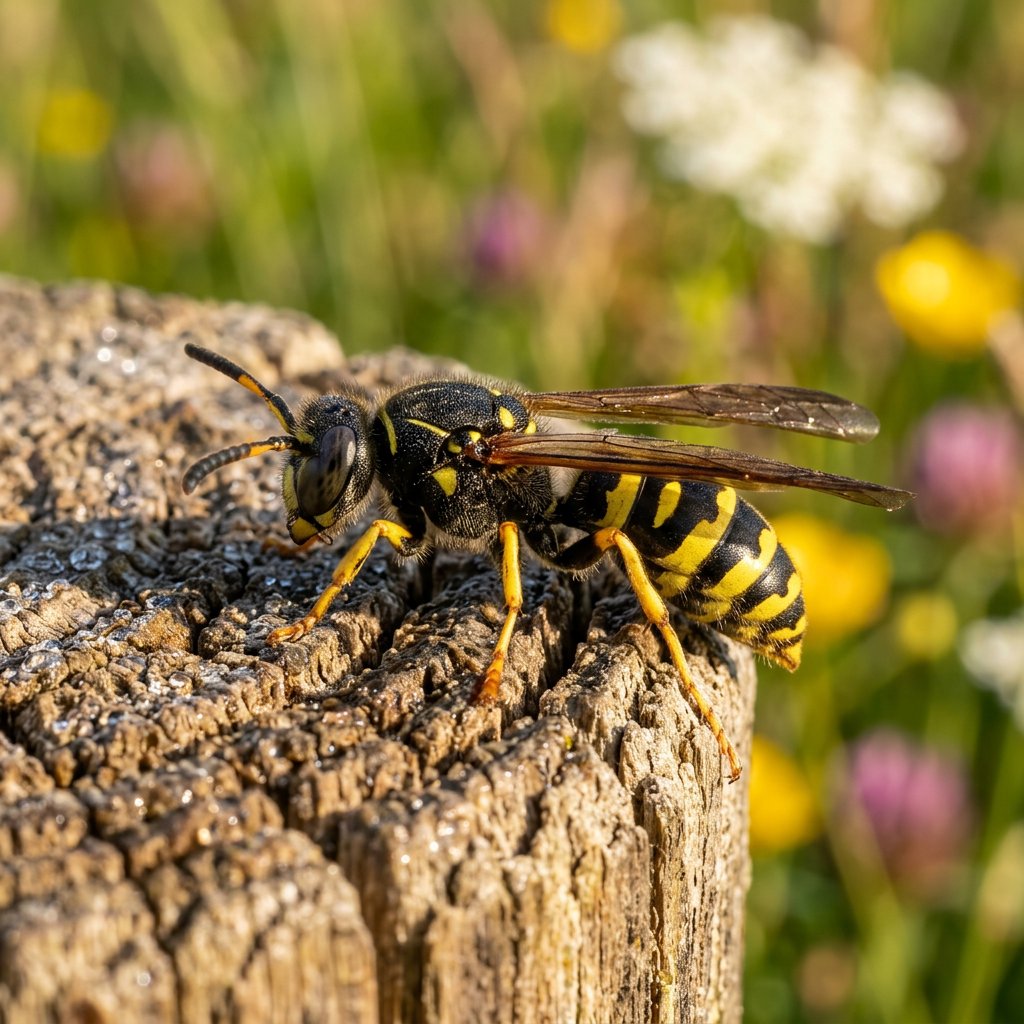
Commonly known as a species of Potter Wasp, the Ancistrocerus trifasciatus is a solitary architect that gardeners should welcome with open arms. While its striking yellow-and-black patterns often cause people to mistake it for a "scary" yellowjacket, this wasp is a peaceful loner that spends its life hunting garden pests and building tiny mud nurseries.
🔍 How to Identify
- 🐝 The Three Bands: True to its name (trifasciatus), it typically features three prominent yellow bands across its dark, polished abdomen, though subtle markings can appear on other segments.
- 📐 Compact Frame: It is a medium-sized, slender wasp (about 7–13mm) with a noticeably "notched" or squared-off first abdominal segment, a characteristic of this genus.
- 🌑 Dark Wings: Its wings are often tinged with a smoky or purplish-black hue, which it folds longitudinally when at rest, making it look even more streamlined.
🌲 Behavior & Habitat
- 🏗️ The Masonry Expert: Instead of building large communal paper nests, this wasp is a solitary "potter." It uses mud and saliva to seal up hollow plant stems, abandoned beetle borings in wood, or even the gaps in your window frames to create individual nurseries for its young.
- 🐛 Caterpillar Control: It is a dedicated predator of small caterpillars (especially leaf-rollers). The female paralyzes the prey with a sting and tucks it into a mud cell, providing a "fresh" meal for her larvae once they hatch.
- 🌺 Nectar Sipper: While the larvae eat meat, the adults are gentle pollinators that visit flowers like goldenrod and wild carrot to fuel their high-energy flights.
⚠️ Safety & Toxicity
- 🛡️ Passive Temperament: Because they have no "queen" or hive to defend, these wasps are not aggressive. They will only sting if they are squeezed or stepped on.
- 🩹 Mild Sting: For the average person, a sting is similar to a small bee sting—painful for a few minutes but generally harmless. However, if you have a known allergy to wasp venom, you should always keep a safe distance.
✨ Fun Fact
The genus name Ancistrocerus comes from the Greek words for "hooked horn." This refers to the tiny, microscopic hook at the very tip of the male wasp's antennae, which he uses to hold onto the female during their courtship flight!
More Details








