Info
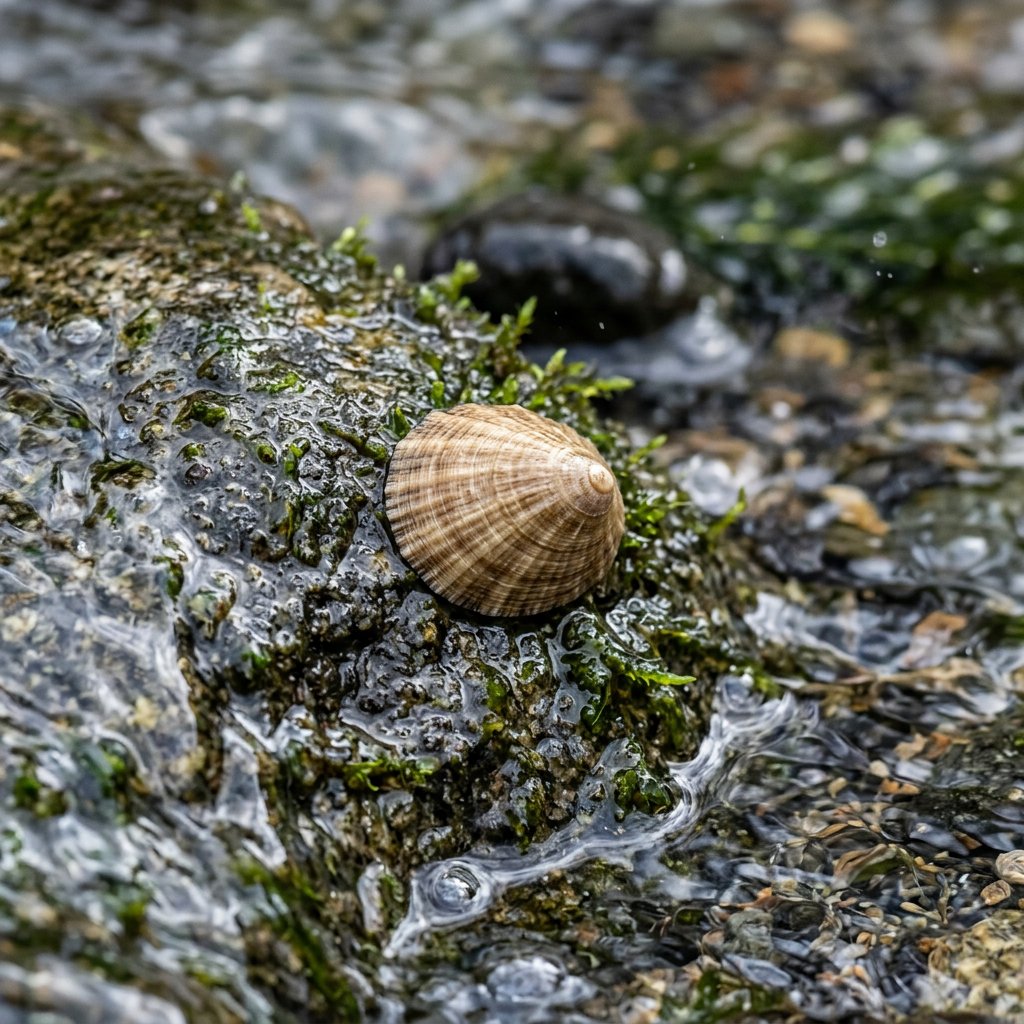
Often mistaken for a tiny underwater pebble or even an aquatic beetle, the River Limpet (Ancylus fluviatilis) is actually a resilient species of freshwater snail. Unlike the garden snails you might find on land, this "freshwater mountaineer" lacks a spiral shell, instead sporting a peaked cap that helps it hug stones in rushing currents.
🔍 How to Identify
- 🐚 The Shell: It features a simple, uncoiled shell shaped like a Phrygian cap or a tiny shield, which allows water to flow over it without washing the snail away.
- 📐 The Apex: The "peak" of the shell is situated near the back and is distinctly hooked or tilted toward the right side.
- 📏 Size: They are miniature marvels, typically measuring only 5 to 8 millimeters—roughly the size of a single lentil.
🌊 Habitat & Ecology
- 🏔️ The Fast Lane: These snails are specialists of high-energy environments. You will almost exclusively find them in clean, fast-flowing rivers and streams or on the wave-washed shores of high-altitude lakes.
- 🍽️ Algae Grazers: They spend their entire lives clinging to the surface of smooth stones, using a specialized "toothed" tongue called a radula to scrape off microscopic algae and biofilms.
- 🧪 Bio-Indicators: Because they require high oxygen levels and are sensitive to chemical runoff, the presence of River Limpets is a "green flag" for excellent water quality.
⚠️ Safety & Toxicity
- ✅ Harmless: The River Limpet is completely non-toxic and poses no threat to humans, swimmers, or pets.
- 💧 Fragile Population: While they are safe for us, we are a threat to them; they are highly susceptible to water pollution and habitat destruction, making them a species to observe rather than collect.
✨ Fun Fact
The suction power of a River Limpet is legendary in the microscopic world. For its size, it can exert enough force to stay anchored against currents that would sweep away much larger fish!
More Details








