Info
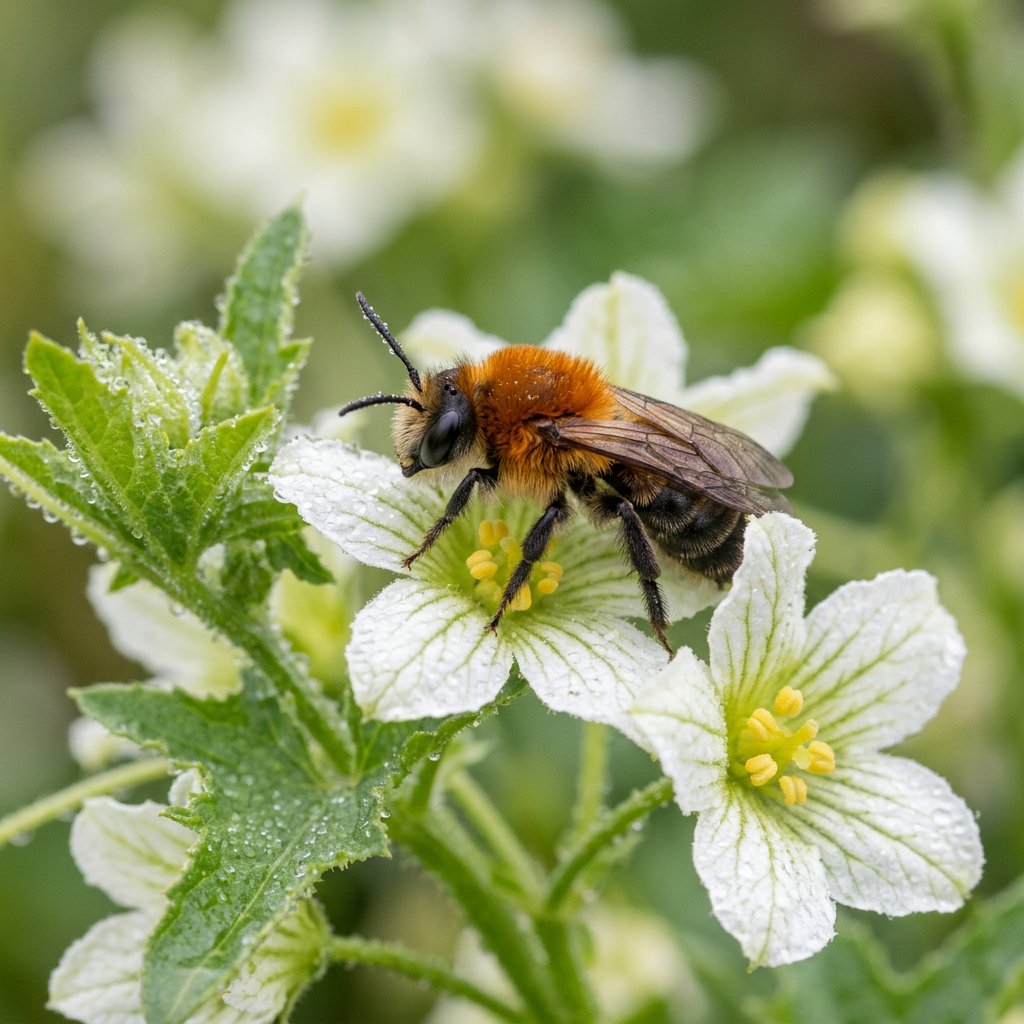
Known as the Bryony Mining Bee, this little redhead is a true specialist of the summer hedgerows. While many bees are happy to visit any flower in sight, Andrena florea is a dedicated "food snob" that relies almost entirely on one specific plant to survive. If you have climbing vines of White Bryony nearby, you are likely hosting this industrious and harmless neighbor.
🔍 How to Identify
- 🔴 Abdomen Markings: The most striking feature is the bright red or orange-brown coloring on the first two segments of the abdomen, making it look much more colorful than a standard honeybee.
- 🐝 Size and Shape: It is a medium-sized bee, roughly 10–13mm long. It has a classic "fuzzy" thorax with brownish-grey hairs and a slightly flattened, shiny tail end.
- 🎒 Pollen Baskets: Females have specialized, thick fringes of hair on their hind legs (called scopa) which they use to carry large loads of pale yellow pollen back to their burrows.
🌲 Habitat & Ecology
- 🌿 The Specialist Diet: This bee is "oligolectic," meaning it is biologically locked to one plant family. It almost exclusively visits White Bryony (Bryonia dioica). Without this specific plant, the bee cannot provide the right nutrients for its larvae.
- 🏗️ Solitary Miner: Unlike honeybees, they don't live in hives. Each female is an independent architect, digging her own private tunnel in light, sandy soil or sunny, south-facing banks to lay her eggs.
- ☀️ Summer Seasonal: You will only see them active during the peak of summer (May to July), perfectly synchronized with the blooming period of their favorite vine.
⚠️ Safety & Toxicity
- 🛡️ Non-Aggressive: This is a "gentle giant" of the bee world. Because they have no hive or queen to defend, they are not aggressive and will only sting if physically squeezed or stepped on.
- 🩹 Low Risk: The sting is very weak and often cannot even penetrate human skin. They are 100% safe to have around children and pets, and they provide a vital service to the local ecosystem.
✨ Fun Fact
Male Bryony Mining Bees are quite the romantics—or perhaps just impatient! They spend their days patrolling the White Bryony flowers, rarely stopping for long, just waiting for a female to land so they can attempt a high-speed "pounce" to mate right there on the petals.
More Details








