Info
Meet the White-bellied Mining Bee, one of the most charming early-spring visitors to European gardens and meadows. Often mistaken for a tiny, hyper-active bumblebee due to its thick, luxurious coat, this solitary worker is a vital pollinator for spring blossoms. While it doesn't live in a hive, it is a "gregarious" neighbor, often nesting in large groups that turn a sunny patch of bare soil into a bustling miniature city.
🔍 How to Identify
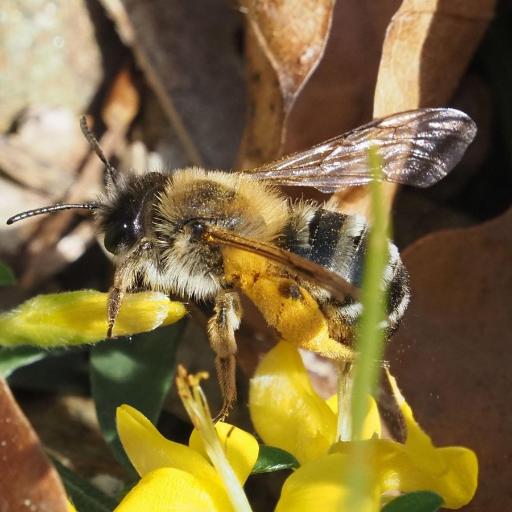
- 🐝 The Buff Vest: The thorax (middle section) is covered in a dense, velvety coat of tawny-orange or buff-colored hairs, making it look particularly "cuddly" compared to sleeker wasps.
- ⚪ Snowy Abdomen: Its most striking feature is the series of crisp, white hair bands across its dark abdomen. When fresh, these bands are bright and give the bee a very neat, "pinstriped" appearance.
- 🦵 Pollen Baskets: Females possess specialized, thick brushes of hair on their hind legs. During the spring, these "baskets" are often overflowing with bright yellow or orange pollen.
🌲 Habitat & Ecology
- 🏖️ Subterranean Architect: As "mining" bees, they avoid hanging hives. Instead, they excavate deep, vertical tunnels in light, sandy, or loamy soil. You’ll often see small volcanoes of earth on garden lawns or south-facing banks marking their front doors.
- 🌸 Early Risers: They are among the first bees to emerge as the frost thaws. They play a critical role in pollinating early-season favorites like Blackthorn, Willow catkins, and fruit trees such as Apple and Cherry.
- 🏡 Garden Friend: They are highly beneficial "friends" to gardeners. By nesting in your lawn, they help aerate the soil without causing any structural damage or killing the grass.
⚠️ Safety & Toxicity
- 🛡️ Low Risk: These bees are incredibly docile. Because they are solitary and have no queen or honey stores to defend, they have zero interest in attacking humans or pets.
- 🧒 Child & Pet Safe: While females do possess a small stinger, it is very weak and struggle to penetrate human skin. They will only attempt to use it if they are physically crushed or stepped on with bare feet.
✨ Fun Fact
The scientific name gravida translates from Latin to "heavy" or "pregnant." This likely refers to the bee’s stout, robust body and its habit of flying low to the ground while weighed down by massive loads of pollen for its underground nursery!
More Details








