Info
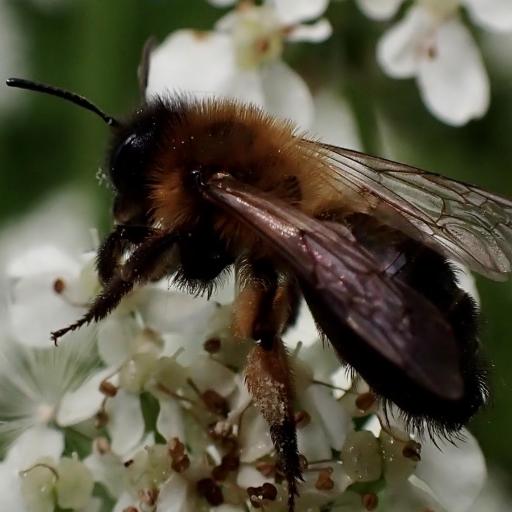
Often called the Grey-haired Mining Bee, this fuzzy spring visitor is one of the most industrious pollinators you’ll find in early spring. While they might be mistaken for small, slightly deflated bumblebees, these solitary bees are gentle neighbors that prefer a "ground-level" lifestyle. They are essential for a healthy ecosystem, waking up just as the first fruit trees and dandelions begin to bloom.
🔍 How to Identify
- 🐝 The Thorax: Look for a dense, "foxy" or buff-grey coat of hair on the upper body, which gives them their common name.
- 🖤 The Abdomen: The lower body is mostly shiny black, often featuring thin, subtle bands of pale hair between segments.
- 🦵 Pollen Baskets: Females have specialized, thick hairs on their hind legs (scopa) that turn bright yellow or orange when they are packed with pollen.
🌲 Habitat & Ecology
- 🏡 The Neighborhood: They are "mining" bees, meaning they dig intricate tunnels in the earth. You’ll often spot small volcano-like mounds of soil in your lawn or flower beds where they have established their nurseries.
- 🌸 Dietary Generalists: Unlike some picky insects, these bees are "polylectic," meaning they visit a wide variety of flowers, from garden fruit trees like apples and pears to wild buttercups and hawthorn.
- 🏠 Solitary but Social: While each female builds her own nest, they are "gregarious" and often choose to nest near one another in large "villages" if the soil is just right.
⚠️ Safety & Toxicity
- ✅ Status: Entirely harmless and non-aggressive.
- 🛡️ The Sting: Like most solitary bees, they are very docile. They have a stinger, but it is too weak to easily pierce human skin and is only used if the bee is being squeezed or stepped on. They are perfectly safe to have around children and curious pets.
✨ Fun Fact
The Grey-haired Mining Bee has a "frenemy" called the Dark-edged Bee-fly. This fly mimics a bee and hangs around Andrena nests, expertly "flicking" its own eggs into the bee's burrow so its larvae can feast on the bee's pollen stores!
More Details








