Info
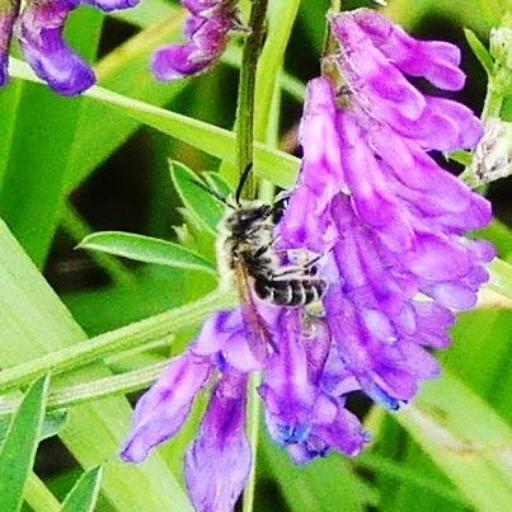
Often called Wilke's Mining Bee, this industrious little insect is a champion of the meadow. Unlike the famous honeybee, this species is a "solitary" bee, meaning it doesn't live in a hive with a queen, but operates as an independent architect. It is a vital pollinator, specifically evolved to handle the tricky flowers of the pea and clover family.
🔍 How to Identify
- 🐝 The "Mini-Honeybee" Look: It is medium-sized (about 10-12mm) and can easily be mistaken for a honeybee at a distance, though it has a flatter, more compact abdomen.
- 🍯 Golden Highlights: Look for the dense, fox-colored or golden-brown hairs on its thorax (the middle section) and the subtle white bands of hair on its dark tail.
- 🦵 Pollen Baskets: The females have distinctive, thick brushes of pale hair on their hind legs, which they use to "mine" and carry pollen back to their burrows.
🌲 Habitat & Ecology
- 🏘️ Subterranean Neighborhoods: True to its name, this bee "mines" tunnels into the earth. It prefers sunny, south-facing banks or areas of short grass where the soil is well-drained and easy to dig.
- 🌼 Legume Lover: While it visits many flowers, Wilke’s Mining Bee is a specialist for the Fabaceae family. If you have clover, vetch, or bird’s-foot trefoil in your lawn, you are likely to see them busy at work.
- 🤝 Solitary but Social: While each female builds her own private nest, they are "gregarious," meaning they like to build their tunnels near one another, creating a bustling underground "village."
⚠️ Safety & Toxicity
- 🛡️ Non-Aggressive: This bee is exceptionally gentle. Because they have no hive or queen to defend, they have no reason to attack. They will only sting if they are physically stepped on or squeezed.
- 🐕 Safe for Gardens: They are perfectly safe around children and pets. In fact, having them in your garden is a sign of a healthy, pesticide-free environment.
✨ Fun Fact
Inside her deep underground tunnel, the female Wilke’s Mining Bee creates a "pollen loaf"—a carefully kneaded ball of nectar and pollen. She lays a single egg on this loaf and seals the chamber, providing her offspring with a perfectly portioned "packed lunch" to eat while it grows!
More Details








