Info
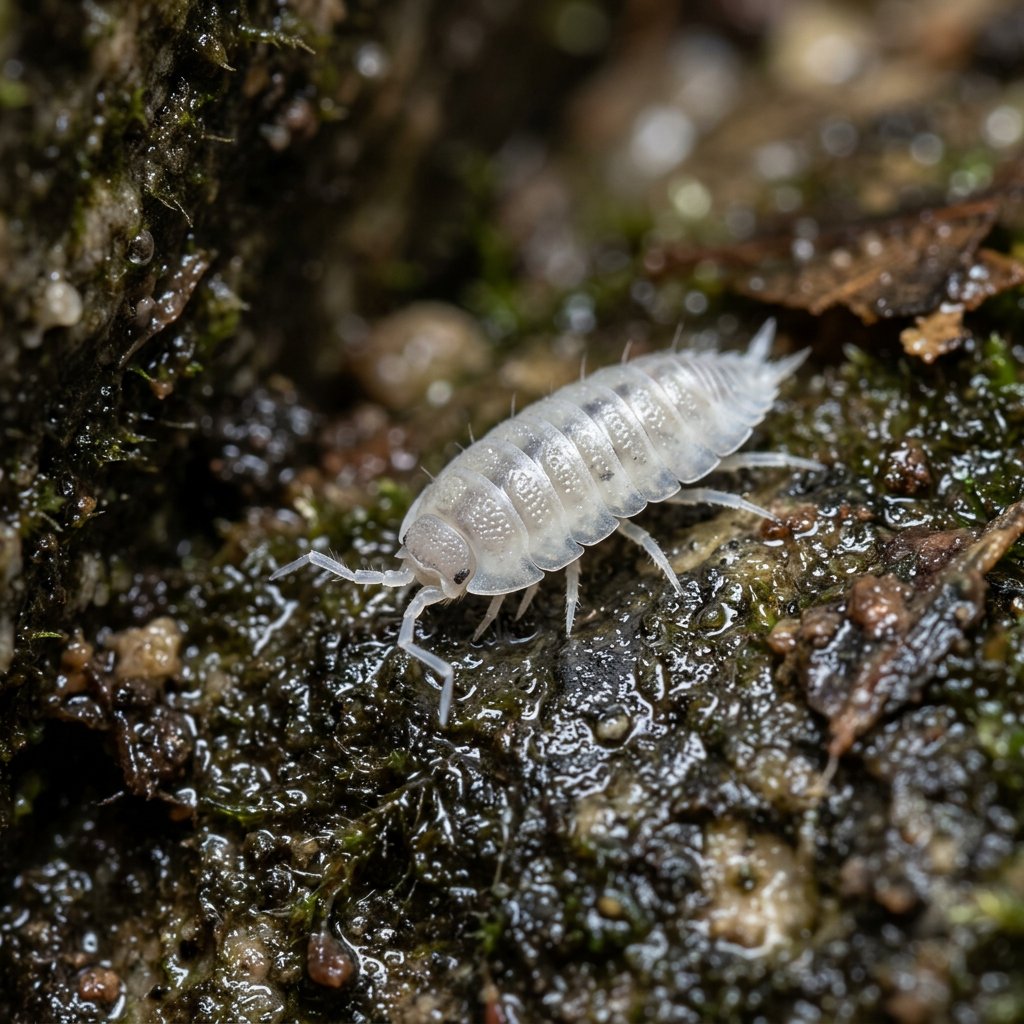
Often called the Rosy Woodlouse, this tiny wanderer is the hidden gem of the damp garden floor. Unlike its drab grey cousins, it sports a vibrant pinkish-orange hue that makes it look more like a piece of coral than a backyard bug. While many see woodlice as pests, these little crustaceans are actually nature’s "tiny janitors," tirelessly recycling dead leaves into rich, healthy soil.
🔍 How to Identify
- 🌸 Color: A striking rose-pink, salmon, or bright orange body that distinguishes it immediately from the common grey slater.
- 🐢 Texture: The exoskeleton has a distinctively rough, "beady," or granular surface rather than being smooth or shiny.
- 🎨 Back Stripe: Look for a faint yellowish or pale orange line running down the center of its back, which is often its internal gut visible through the shell.
- 👀 Eyes: They possess very simple eyes consisting of just three tiny black dots (ocelli) clustered together on each side of the head.
🌲 Habitat & Ecology
- 🍂 Nature's Recycler: These are peaceful scavengers that feed on rotting wood, fallen leaves, and decaying vegetation. They are a sign of a healthy, functioning garden ecosystem.
- 🧱 Lime Lover: They are "calciphiles," meaning they are attracted to areas rich in calcium. You’ll often find them hiding in the mortar of old stone walls, under bricks, or in limestone-heavy soil to help harden their shells.
- 💧 Moisture Seeker: Because they breathe through modified gill-like structures, they are highly sensitive to drying out. They spend their days in the darkest, dampest crevices to stay hydrated.
⚠️ Safety & Toxicity
- ✅ Harmless: The Rosy Woodlouse is completely safe. They do not bite, sting, or produce any venom, and they are not known to carry any diseases that affect humans.
- 🐾 Pet & Child Friendly: They are non-toxic to curious pets and children. In the hobbyist world, their relatives are even kept as "bioactive" cleaners in tropical reptile terrariums.
✨ Fun Fact
Even though we find them in the dirt, these creatures are actually land-dwelling crustaceans! They are more closely related to lobsters and crabs than to bees or beetles, which explains why they still need a moist environment to "breathe" through their legs.
More Details








