Info
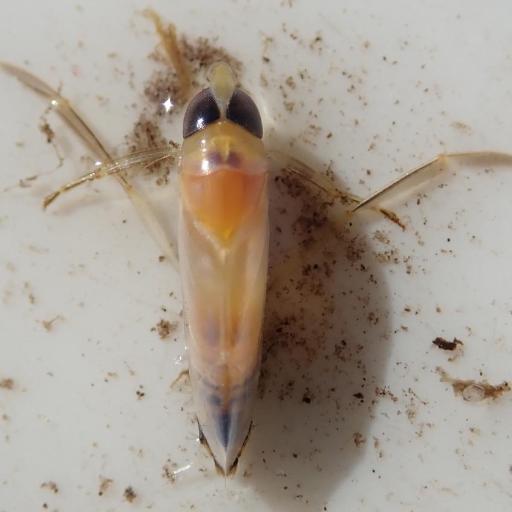
The Anisops, widely known as the "Backswimmer," is the acrobatic predator of the pond world. Unlike most aquatic creatures, these clever insects spend their lives viewing the world from a different perspective—upside down! Often found in still or slow-moving freshwater, they are the unsung heroes of pest control, though they occasionally startle unsuspecting swimmers with their "electrifying" personality.
🔍 How to Identify
- 🛶 The Rowing Legs: Their hind legs are remarkably long and fringed with fine hairs, acting like a pair of powerful oars that propel them through the water with jerky, rhythmic strokes.
- 🙃 Inverted Posture: Their most defining trait is swimming on their backs. Their ventral side (belly) is usually darker, while their dorsal side (back) is lighter, providing perfect camouflage against the bright sky when viewed from below.
- 👀 Dominant Eyes: They possess large, wrap-around compound eyes that take up most of their head, allowing them to spot tiny movements of prey or predators from almost any angle.
🌲 Habitat & Ecology
- 🦟 The Mosquito Hunter: Anisops are voracious predators. They play a vital role in keeping ecosystems healthy by feasting on mosquito larvae, water fleas, and even tiny tadpoles or small fish.
- 🎈 A Living Scuba Tank: To breathe underwater, they trap a thin layer of air against their bodies using specialized hairs. This silver-looking bubble acts as a physical lung, and the insect can even regulate its buoyancy by utilizing hemoglobin in its body—a rare trait for an insect!
⚠️ Safety & Toxicity
- 🐝 The "Water Bee" Sting: While not aggressive toward humans, Anisops can deliver a surprisingly painful bite if handled or accidentally trapped against the skin (like inside a swimsuit). The sensation is often compared to a bee sting.
- 🚫 Non-Venomous but Sharp: The bite is caused by their piercing-sucking mouthparts. While it may cause temporary redness or a sharp "zap" of pain, it is not dangerous to humans and carries no long-term toxicity. Just give them their space in the pool!
✨ Fun Fact
Unlike many other aquatic insects, some species of Anisops are famous for "singing" underwater. The males rub their front legs against their heads to create a chirping sound (stridulation) to attract mates, turning the pond into a tiny, submerged concert hall.
More Details








