Info
The Pink-striped Oakworm Moth is like a living piece of dusk caught in a forest. Formally known as Anisota virginiensis, this moth is a common sight in North American woodlands, though you are far more likely to encounter its flashy, "mohawked" larvae than the elusive, sunset-hued adults. While they may look like tiny, punk-rock dragons as caterpillars, they are gentle residents of the canopy.
🔍 How to Identify
- 🎨 The "Pink" Stripes: The caterpillar stage is unmistakable, featuring a dark greenish-black body accented by four vibrant, longitudinal pink or reddish-orange stripes running the length of its body.
- 😈 Thoracic Horns: Just behind the head, the larvae sport two long, black, flexible "horns" (filaments) that give them a slightly devilish but completely harmless appearance.
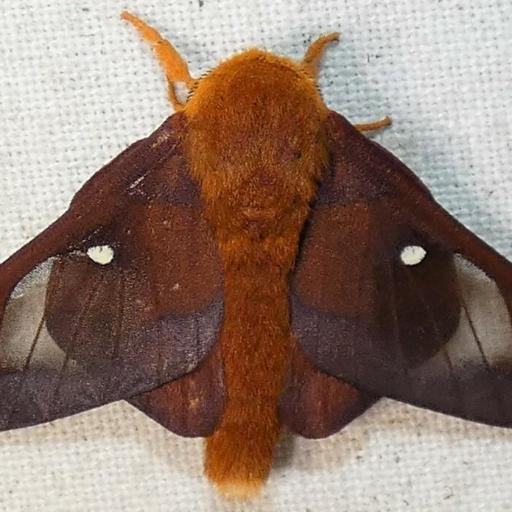
- 🦋 The Window Spot: Adult moths are stunningly dimorphic; the females are large and yellow-orange, while the smaller males are purplish-brown. Both feature a distinct, small white spot centered on each forewing.
🌲 Habitat & Ecology
- 🌳 The Oak Specialist: As the name suggests, these insects are deeply tied to Oak trees (Quercus). The females lay clusters of eggs on the undersides of leaves, which serve as an all-you-can-eat buffet for the emerging larvae.
- 🛏️ Earth Dwellers: Unlike many moths that spin silk cocoons in the branches, these caterpillars crawl down to the forest floor when they are finished growing. They burrow several inches into the soil to pupate and overwinter in the safety of the earth.
⚠️ Safety & Toxicity
- 🚫 A Gentle "Monster": Despite the intimidating black spikes and horns on the caterpillars, they do not possess stinging hairs or venom. They are perfectly safe to observe or gently move if they have strayed onto a garden path.
- 🌿 Tree Health: While a large colony of these caterpillars can noticeably "thin out" the leaves on a single Oak branch, healthy mature trees usually recover quickly and are rarely harmed by the seasonal snacking.
✨ Fun Fact
Male and female Pink-striped Oakworm Moths look so radically different that early naturalists often mistook them for two entirely different species! The males have feathery antennae and translucent wings for agile daytime flying, while the heavy-bodied females prefer to wait quietly on foliage for a mate to find them.
More Details








