Info
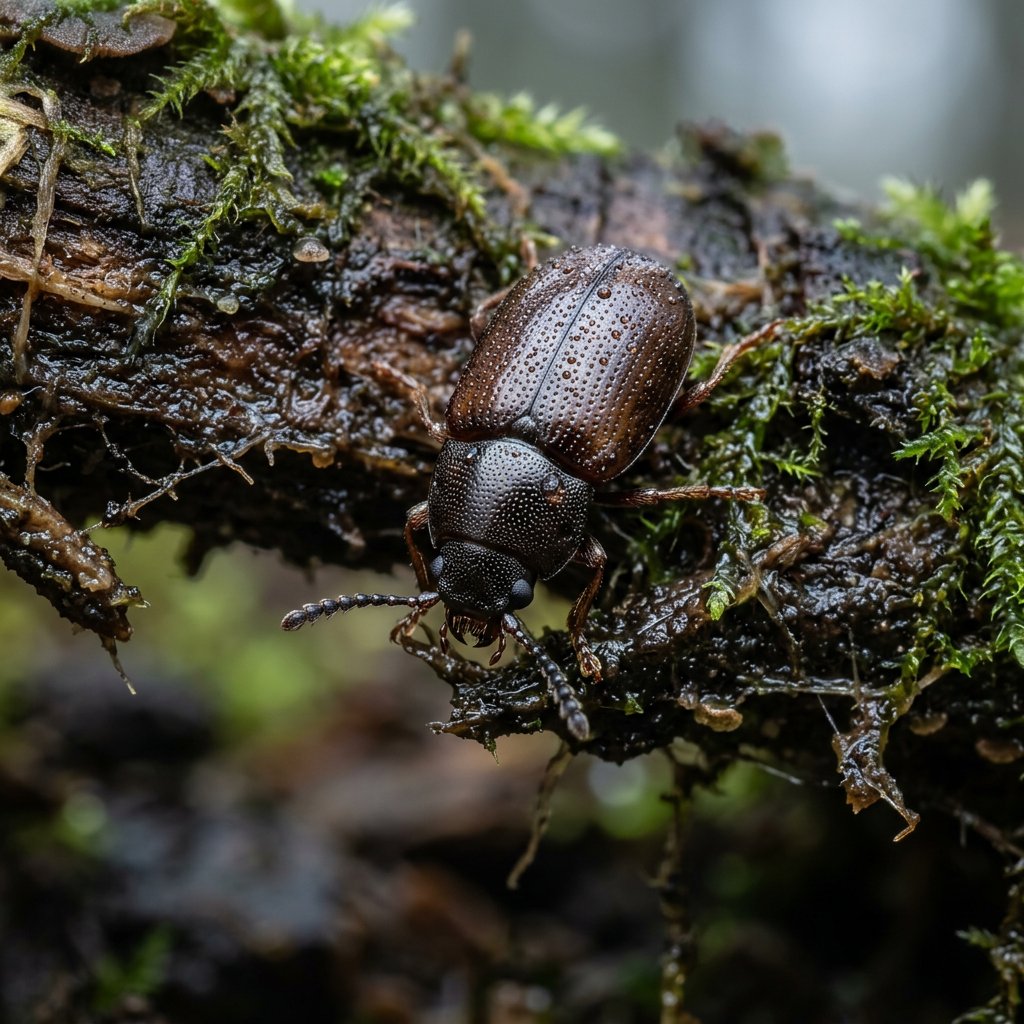
Commonly known as the Round Fungus Beetle, members of the Anisotoma genus are the hidden gems of the forest floor. These tiny, glossy beetles are specialized scavengers that play a vital role in the decomposition cycle. While they might look like small, shiny beads to the naked eye, they are highly adapted specialists with a very particular appetite for the "aliens" of the woods—slime molds.
🔍 How to Identify
- 🛡️ Body Shape: They possess a distinctively convex, hemispherical shape, looking very much like a tiny, polished marble cut in half.
- ✨ Luster and Color: Their exoskeleton is typically very smooth and highly reflective. Most species range from a deep mahogany red to a pitch black.
- 📡 Clubbed Antennae: If you look closely with a magnifying glass, you’ll see antennae that end in a distinct 3 to 5-segmented club, which they use to sniff out their favorite fungi.
🌲 Habitat & Ecology
- 🍄 The Slime Mold Specialist: Unlike many beetles that eat plants or other bugs, Anisotoma are famous for their relationship with slime molds (Myxomycetes). They are often found hiding within the fruiting bodies of these strange organisms.
- 🍂 Forest Floor Dweller: You are most likely to encounter them in damp, shaded woodlands. They thrive under rotting logs, within deep leaf litter, or on the underside of bracket fungi where moisture levels are high.
- ♻️ Nature's Recycler: By feeding on fungi and slime molds, they help break down organic matter, turning it into nutrient-rich soil that supports the growth of the trees around them.
⚠️ Safety & Toxicity
- ✅ Harmless Neighbor: These beetles are completely harmless to humans. They do not bite, sting, or carry any diseases that affect people.
- 🐾 Pet & Garden Safe: They are not known to be toxic to pets. Furthermore, they are not garden pests; they won't eat your prize roses or vegetables, as their diet is strictly limited to primitive fungi and slime molds.
✨ Fun Fact
The larvae of Anisotoma are just as specialized as the adults! They actually live inside the slime mold, munching away on the spores from the inside out, effectively living within their own dinner.
More Details








