Info
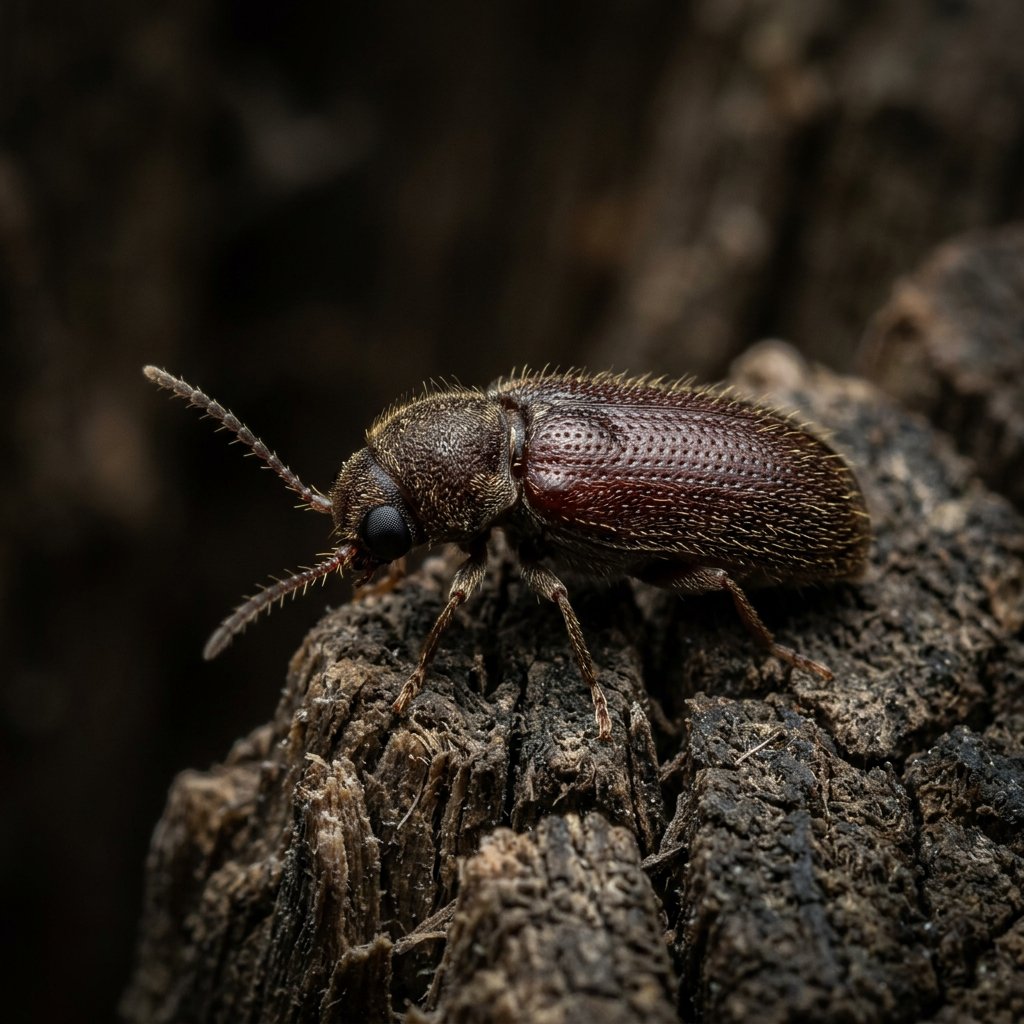
Known as the "Common Furniture Beetle," this tiny architect of destruction is the culprit behind the mysterious "woodworm" holes found in vintage chairs and old floorboards. While the adult beetle is short-lived and harmless, its larvae spend years tunneling through wood, quietly turning solid timber into dust. It is a classic example of a household pest that is more famous for the evidence it leaves behind than for its actual appearance.
🔍 How to Identify
- 🪲 The "Monk’s Hood": One of its most distinct features is a large, hood-like thorax that almost completely hides the beetle's head when viewed from above, making it look like a tiny brown cylinder.
- 🧥 Textured Wings: The wing cases (elytra) are marked with fine, longitudinal lines consisting of tiny pits or punctures, which gives the species its Latin name punctatum.
- 🕳️ The Exit Signs: You are more likely to see the "exit holes" than the beetle itself. These are perfectly circular, 1–2 mm wide, and often accompanied by "frass"—fine, gritty wood dust that feels like sand between your fingers.
🌲 Habitat & Ecology
- 🪵 The Wood Eater: Unlike many insects that prefer rotting logs in the forest, this beetle loves "seasoned" wood. It specifically targets the sapwood of softwoods and hardwoods found in structural timbers, plywood, and antique furniture.
- 💧 Moisture Seeker: These beetles are rarely found in centrally heated, bone-dry modern homes. They thrive in areas with slight dampness (above 12% moisture content), such as crawl spaces, lofts, or old cottages.
- ⏳ A Long Childhood: The adult beetle only lives for a few weeks to mate and lay eggs. However, the larvae (the "woodworms") spend up to five years munching through your furniture before they finally emerge.
⚠️ Safety & Toxicity
- 🛡️ Harmless to Humans: Anobium punctatum does not bite, sting, or carry diseases. They are entirely focused on wood and pose no direct physical threat to people or pets.
- 🏚️ Structural Risk: The primary safety concern is structural. Over many decades, a heavy infestation can honey-comb support beams or floorboards, eventually making them brittle and unsafe to walk on.
✨ Fun Fact
The "woodworm" isn't actually a worm at all! It is a beetle larva. Because they are so difficult to see inside the wood, people once believed the holes were created by "spontaneous generation" or tiny invisible spirits until early naturalists discovered the beetle's life cycle.
More Details








