Info
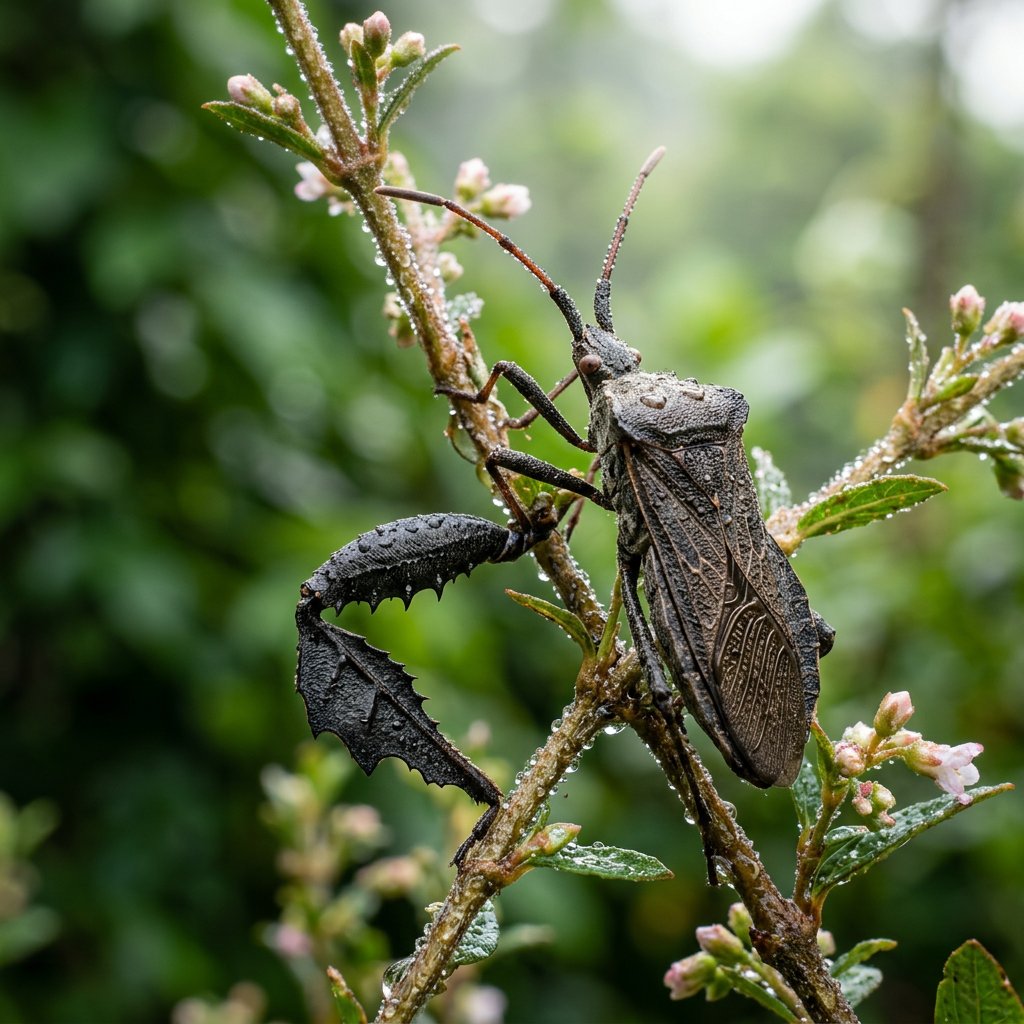
Known as the Dallas's Leaf-footed Bug, this impressive insect often startles gardeners with its robust, armor-like body and "muscular" back legs. While it looks like a miniature tank from a sci-fi movie, it is a specialized sap-sucker that prefers the quiet life among the stems of shrubs and trees. In many cultures, its kin are simply called "Big-legged Bugs" due to their comical, bowed-out hind limbs.
🔍 How to Identify
- 🦵 The "Thighs": The most striking feature is the enormously thickened hind femora (upper legs), which look like they’ve been hitting the gym.
- 🛡️ Shield Shape: It possesses the classic "True Bug" shape—an elongated, leathery body that tapers toward the rear, usually in shades of dark chocolate brown or matte black.
- 📡 Segmented Antennae: Look for long, prominent antennae that are often tipped with a lighter color, which they use to sniff out the tastiest plant juices.
🌲 Habitat & Ecology
- 🌱 Sap Specialist: These insects are herbivores that use a needle-like proboscis to pierce plant tissues. They are particularly fond of legumes, young shoots, and succulent fruits.
- 🛡️ Chemical Defense: Like their cousins, the Stink Bugs, they possess scent glands. If they feel threatened by a bird or a curious human, they release a pungent, citrusy-but-foul chemical spray to discourage being eaten.
- ☀️ Sun Lovers: You’ll typically find them basking on the upper sides of leaves during the hottest part of the day, as they require high body temperatures to remain active and find mates.
⚠️ Safety & Toxicity
- 🚫 Low Risk: They are not aggressive and do not possess a stinger. They are considered "neutral" to humans, though they can be a "foe" to prize garden plants if they appear in large numbers.
- 🤏 The "Poke": While they don't "bite" in the traditional sense, if handled very roughly, they may attempt to poke with their feeding tube. It is not venomous but can cause a momentary sharp pinch.
- 🐾 Pet Safety: They are non-toxic to cats and dogs, though the defensive "stink" spray might cause a pet to drool or shake its head in disgust if they try to eat one.
✨ Fun Fact
The massive hind legs of the males aren't just for show; they are used as wrestling tools! Males will hook their legs around a rival and squeeze in a "leg-wrestling" match to determine who gets the best territory for attracting females.
More Details








