Info
Named after the one-eyed giant from Greek mythology, the Polyphemus Moth is one of North America’s largest and most spectacular "gentle giants." While its massive size and "staring" eyespots might startle a gardener at first glance, this moth is a harmless, non-biting beauty that spends its short adult life searching for a mate under the cover of darkness.
🔍 How to Identify
- 👁️ The Eyespots: The most striking feature is the large, translucent "eyespots" on the hindwings, ringed in yellow, blue, and black, designed to startle predators.
- 🍂 Wing Coloration: The wings are typically a rich cinnamon-tan or reddish-brown, mimicking the look of dead leaves to provide camouflage when resting.
- 🧶 Furry Body: Like most silk moths, it has a thick, fuzzy body and the males possess large, feathery antennae used to "sniff" out female pheromones from miles away.
🌲 Habitat & Ecology
- 🌿 Tree Dwellers: You’ll most likely spot them near deciduous forests or suburban yards with plenty of host trees like Oak, Maple, Birch, and Willow.
- ⏳ A Brief Life: In a strange twist of nature, the adult moth has no functional mouth and cannot eat. It lives for only 4 to 7 days, relying entirely on energy stored from its time as a caterpillar.
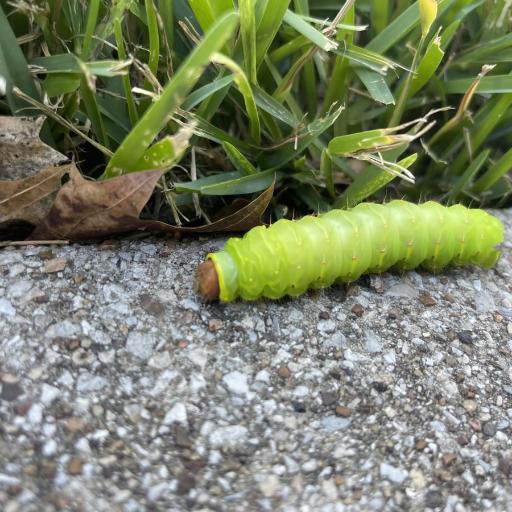
- 🐛 The Caterpillar: Before it becomes a moth, it is a bright neon-green, accordion-shaped caterpillar that can consume 86,000 times its own weight in leaves before spinning a silk cocoon.
⚠️ Safety & Toxicity
- 🛡️ Harmless Giant: The Polyphemus moth is completely safe. It does not bite, sting, or possess any chemical irritants.
- 🧒 Child & Pet Friendly: They are wonderful subjects for nature study with children. Even the caterpillars are generally safe to handle, though they should be moved gently to avoid harming them.
✨ Fun Fact
The moth gets its name from the Cyclops Polyphemus from Homer’s Odyssey. The name refers to the single, large eyespot found in the center of each hindwing, which looks like a giant, unblinking eye staring back at you!
More Details








