Info
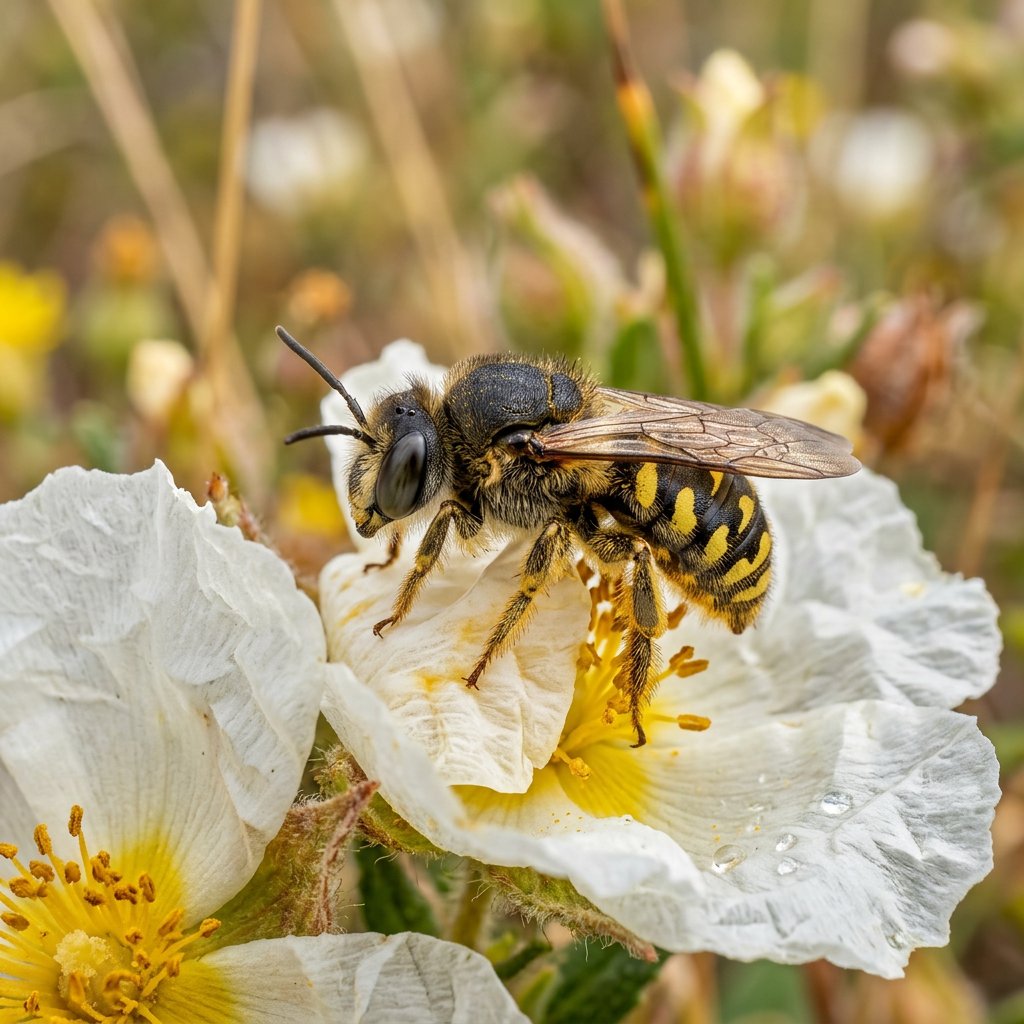
Known as the Oblong Woolcarder Bee, this charismatic little insect is a true garden architect. While often mistaken for a small wasp due to its striking yellow-and-black patterns, it is actually a solitary bee that plays a vital role in pollination. Its name comes from the female’s fascinating habit of "carding" or scraping the fuzz off silver-leaved plants to build soft, wooly nurseries for her offspring.
🔍 How to Identify
- 🐝 Yellow Markings: Unlike the continuous stripes of a honeybee, look for distinct, paired yellow spots or "commas" along the sides of a dark, stout abdomen.
- 🧵 The "Wool" Ball: During nesting season, you may spot females flying with a visible ball of white plant fibers tucked under their bodies.
- ✈️ Hovering Flight: They have a very distinct flight pattern—darting quickly from flower to flower and then hovering perfectly still for a few seconds like a miniature helicopter.
🐝 Habitat & Ecology
- 🌸 Plant Partnerships: They are highly attracted to the Mint (Lamiaceae) and Pea (Fabaceae) families. If you have Stachys (Lamb's Ear) or Sedum in your garden, you are almost guaranteed to see them.
- 🛡️ Territorial Sentinels: Males are famous for being "feisty" protectors. They will patrol a patch of flowers and physically head-butt other bees or butterflies to chase them away from their favorite foraging spots.
⚠️ Safety & Toxicity
- 🛡️ Friendly Neighbor: These are solitary bees, meaning they don't have a hive to defend. They are extremely non-aggressive toward humans and will only sting if physically handled or crushed.
- 🐾 Pet Safety: They pose no threat to curious cats or dogs. They are far more interested in gathering nectar and plant fluff than interacting with pets.
✨ Fun Fact
The female Oblong Woolcarder Bee has specialized "teeth" on her mandibles specifically designed to shave the hairs off plants. She is essentially a tiny, flying barber that uses the "hair" to waterproof and insulate her nest cells!
More Details








