Info
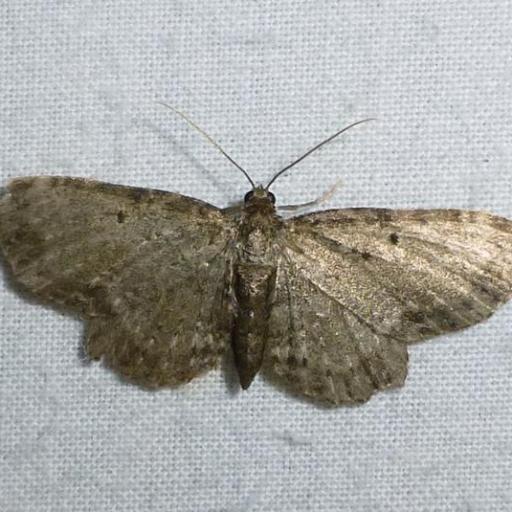
Often called the Dentated Pug, this small, subtle moth is a master of wetland camouflage. It gets its name from the distinctively "toothed" or jagged edges of its wings, which help it blend perfectly into the shadows of damp foliage. It is a specialist species, rarely wandering far from the specific marshland plants it relies on for survival.
🔍 How to Identify
- 🦋 The Wing Edges: Unlike most moths with smooth, rounded wing borders, the hindwings of this species have a noticeably "dentated" or scalloped edge, looking like the serrations of a tiny leaf.
- 🎨 Earthy Patterns: The wings are generally a muted grayish-brown, decorated with several faint, wavy cross-lines that provide excellent camouflage against bark and dried leaves.
- ⚫ The Discal Spot: Look closely at the center of each forewing; you will find a small but sharp black dot (the discal spot) that serves as a key identifying mark.
🌲 Habitat & Ecology
- 🌿 The Loosestrife Specialist: This moth is a picky eater during its caterpillar stage. It feeds almost exclusively on the flowers and leaves of Yellow Loosestrife (Lysimachia vulgaris), meaning you will only find it where this plant thrives.
- 💧 Wetland Preference: It is a resident of fens, marshes, riverbanks, and damp woodland clearings. Because it stays so close to its host plant, it is rarely seen in dry suburban gardens unless the specific Loosestrife is present.
- 🌙 Nocturnal Life: While it is primarily active at night during mid-summer, it can easily be disturbed from its daytime resting place among the tall marsh grasses.
⚠️ Safety & Toxicity
- ✅ Harmless Neighbor: The Dentated Pug is entirely non-toxic and lacks any form of stinger, biting mouthparts, or irritating hairs.
- 🐾 Pet & Child Safe: It is perfectly safe to observe or have in your garden. It poses no threat to curious pets or small children and does not damage household structures or textiles.
✨ Fun Fact
- 🐕 The Pug Connection: Why the name "Pug"? Early entomologists thought these moths, with their short wings and "pushed-in" appearance when resting, looked remarkably like the flat-faced Pug breed of dog!
More Details








