Info
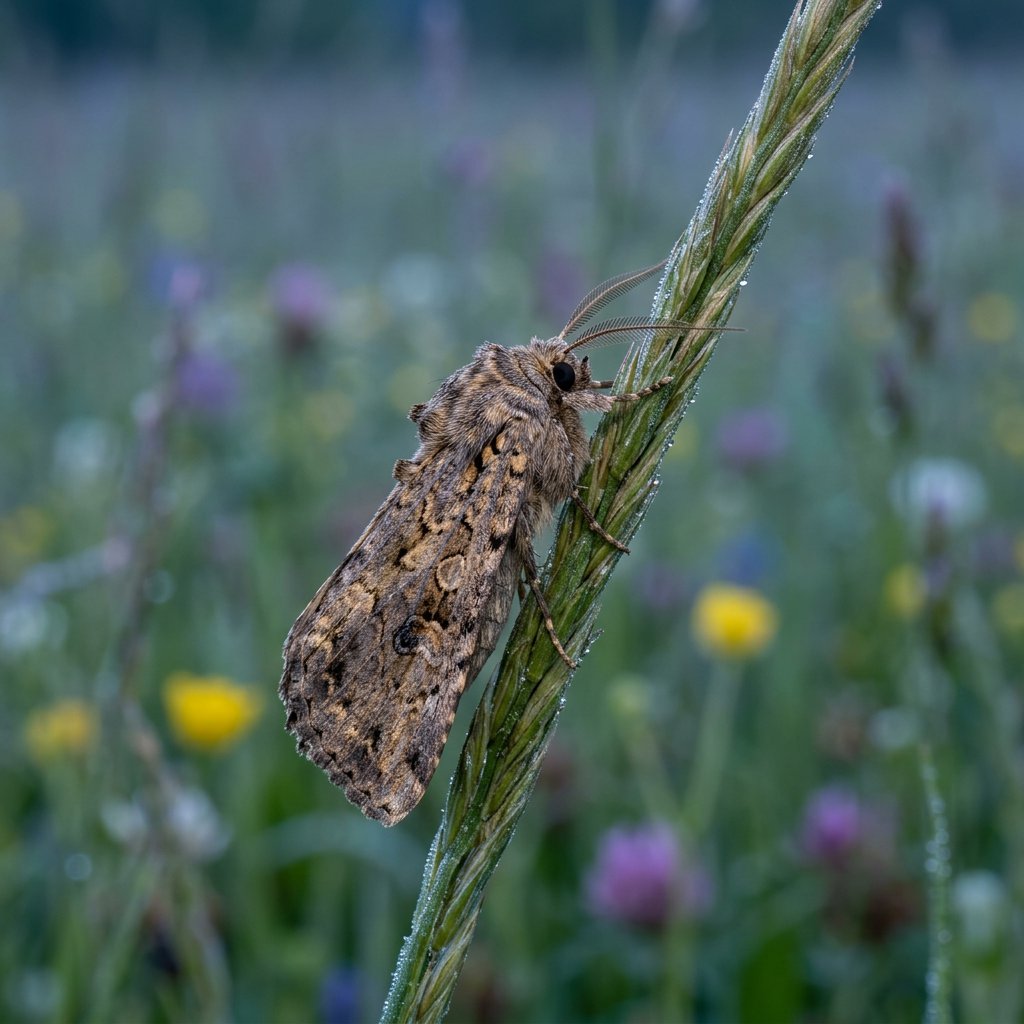
Commonly known as the Large Nutmeg, this moth is a master of camouflage that perfectly mimics the earthy tones of dried seeds and tree bark. A classic inhabitant of European and Asian meadows, it belongs to the "Owlet" family (Noctuidae), named for the way their eyes catch the light at night, much like a tiny owl watching from the grass.
🔍 How to Identify
- 🦋 The Forewings: They feature a cryptic blend of sandy brown and pale grey. Look for the "kidney" and "oval" shaped markings in the center of the wing, which are outlined in a slightly darker shade.
- 🧶 The Thorax: It has a distinctively fuzzy, "hunched" appearance. This thick coat of hair-like scales helps insulate the moth during cooler night flights.
- 📐 Resting Posture: When at rest, it folds its wings into a neat, flat triangular shape, making it nearly invisible against a backdrop of dead grass or weathered wood.
🌲 Habitat & Ecology
- 🌾 The Grassland Specialist: You will most likely spot this moth near meadows, sand dunes, or unrefined garden borders. Its caterpillars are "grass-feeders," hiding at the base of stems or just below the soil surface during the day.
- 🌙 Night Owl Behavior: The Large Nutmeg is strictly nocturnal. It spends its nights visiting flowers for nectar or being drawn to garden light traps. It is particularly fond of "sugar" (a mix of fermented fruit and treacle used by enthusiasts to attract moths).
- 🌿 The Life Cycle: It spends the winter as a caterpillar, bravely hunkering down in the soil to pupate in early spring before emerging as an adult moth between May and July.
⚠️ Safety & Toxicity
- ✅ Harmless: The Large Nutmeg is a gentle visitor to the garden. It does not bite, sting, or carry any diseases.
- 🐾 Pet & Child Safe: Unlike some moth caterpillars that have irritating "stinging" hairs, the Large Nutmeg larvae are smooth and safe to move if you find one while weeding. They pose no threat to curious cats or dogs.
✨ Fun Fact
The Latin name anceps translates to "two-headed" or "uncertain." This refers to the historical difficulty scientists had in distinguishing this moth from its many look-alike cousins—it is truly a champion of the "generic brown moth" disguise!
More Details








