Info
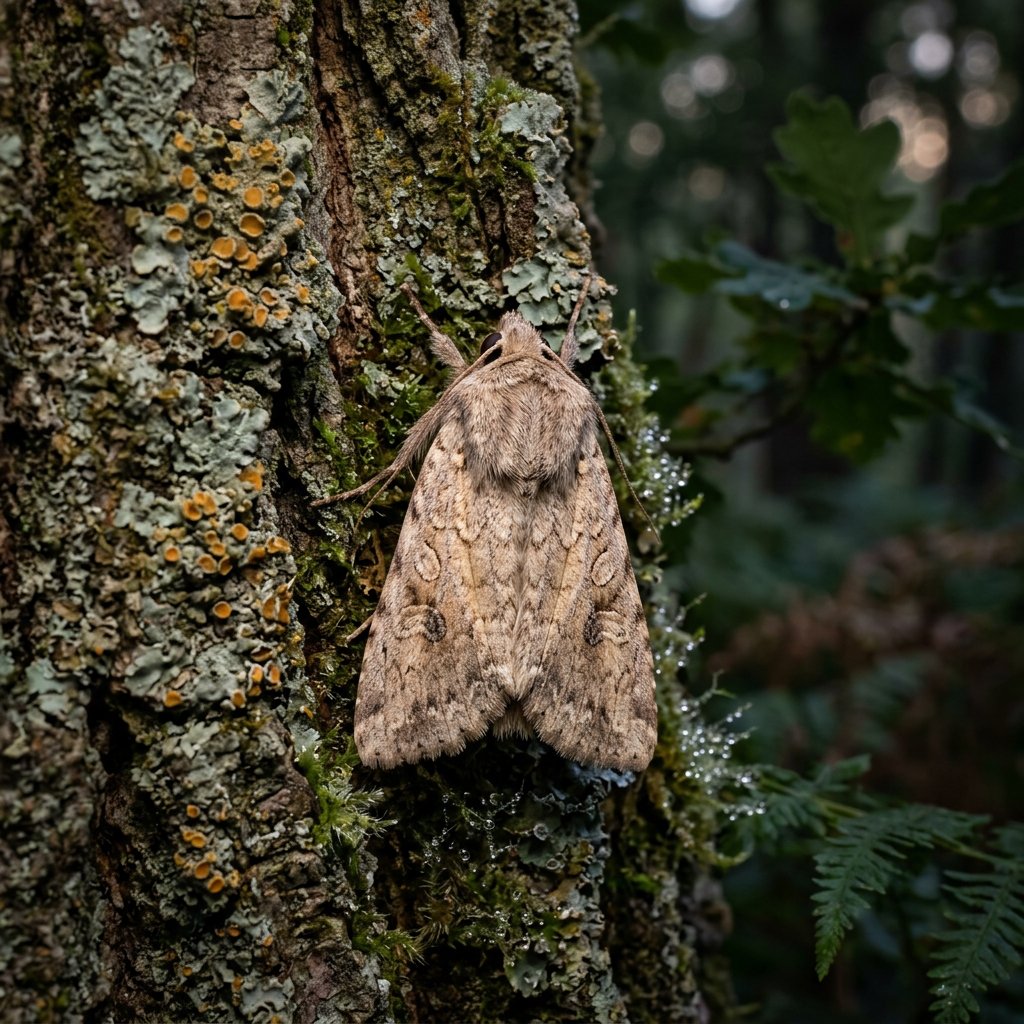
Often referred to as the Light Arches, this moth is a master of disguise. Evolution has gifted it a color palette that perfectly mimics weathered wood or dried straw, allowing it to hide in plain sight during the day. As a member of the "Owlet" moth family, it is a frequent, quiet visitor to gardens across Europe and temperate Asia during the midsummer nights.
🔍 How to Identify
- 🪵 Wood-Like Wings: The forewings are a pale, ochre-tan or straw color, marked with delicate, darker brown streaks that look remarkably like the grain of old timber.
- 🏹 The "Arches": Look for a series of subtle, dark, pointed marks (the "arches") near the outer edges of the wings that give the moth its common name.
- 📐 Resting Posture: When at rest, it holds its wings flat and slightly overlapping, creating a narrow, streamlined silhouette that resembles a fallen splinter.
🌲 Habitat & Ecology
- 🌾 Grassland Resident: The Light Arches is most at home in meadows, pastures, and suburban gardens where various wild grasses grow in abundance.
- 🐛 Subterranean Larvae: Unlike many caterpillars that munch on leaves, the larvae of the Light Arches live near the ground or even slightly underground, feeding on the stems and roots of grasses.
- 🌙 Nocturnal Visitor: Adults are strictly nocturnal and are highly attracted to both artificial light sources and "sugar" (fermenting fruit or nectar baits).
⚠️ Safety & Toxicity
- 🛡️ Harmless Friend: The Light Arches is completely harmless. It does not bite, sting, or carry any toxins that are dangerous to humans.
- 🐾 Pet Friendly: If your cat or dog happens to catch one of these moths, there is no cause for alarm; they are non-toxic to domestic animals.
✨ Fun Fact
The scientific name Lithoxylaea comes from the Greek words for "stone" and "wood." This perfectly describes its unique "fossilized wood" appearance, which protects it from hungry birds during its long daytime naps.
More Details








