Info
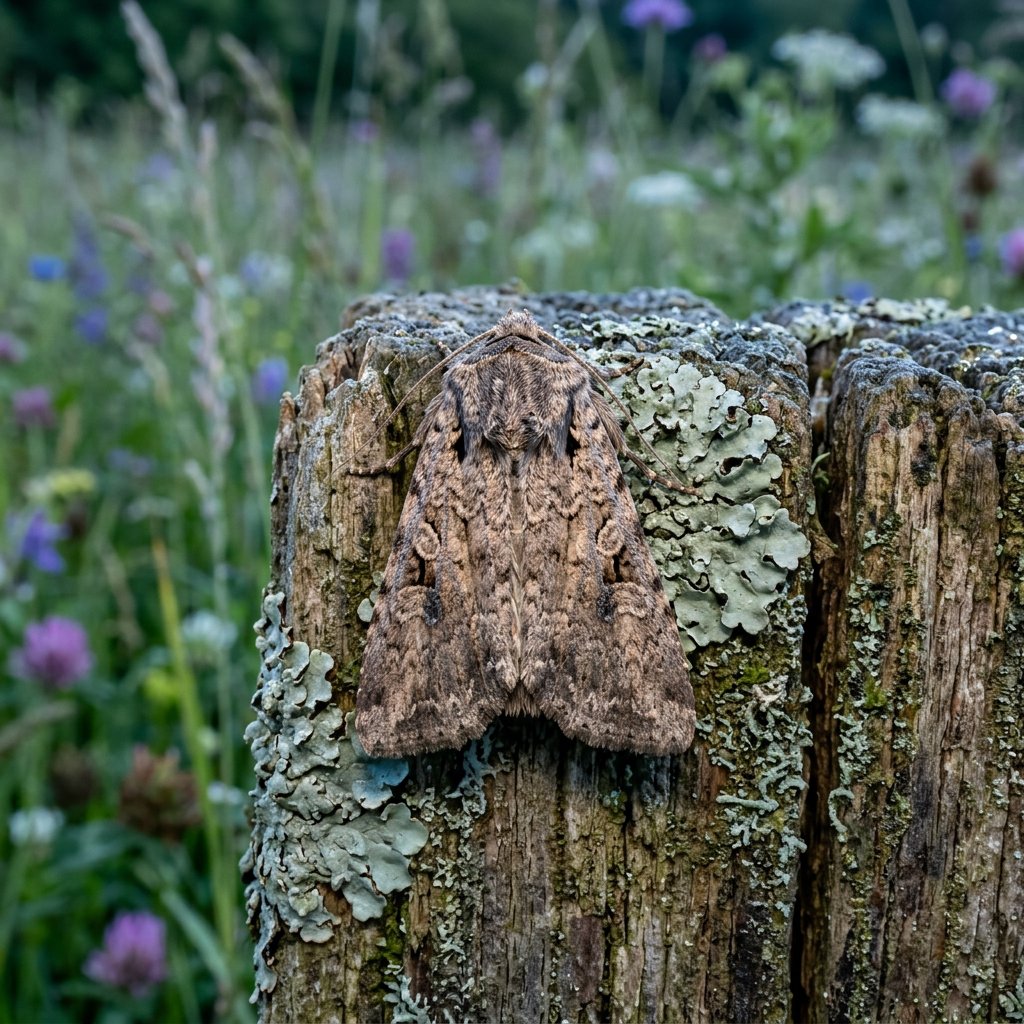
Often called the Rustic Shoulder-knot, this moth is a master of disguise. It sports a subtle, earthy palette that allows it to blend perfectly against tree bark or weathered wooden fences. While it might look like just another "brown moth" to the untrained eye, a closer look reveals a tiny, dark "knot" of color that acts as its unique signature.
🔍 How to Identify
- 🧬 The Signature Mark: Look for a prominent, thin black streak at the base of the forewing—this is the "shoulder-knot" that gives the moth its common name.
- 🎨 Camouflage Tones: The wings are a mottled blend of grayish-ochre and dull brown, designed to mimic dried grass or lichen-covered wood.
- 👁️ The Kidney Spot: Centered on the wing is a faint, kidney-shaped mark (known as a reniform stigma), which is often outlined in a slightly lighter shade.
🌲 Habitat & Ecology
- 🌾 A Grassland Resident: You’ll typically find these moths in gardens, meadows, and agricultural fields. Their larvae (caterpillars) are "grass specialists," feeding on the stems and seeds of various wild grasses and cereal crops like wheat and barley.
- 🌙 Nighttime Wanderer: This is a strictly nocturnal species. By day, it stays tucked away in deep vegetation, but at night, it is frequently drawn to garden lights or "sugar baits" (fermented fruit mixtures) set out by nature enthusiasts.
⚠️ Safety & Toxicity
- ✅ Harmless Neighbor: The Rustic Shoulder-knot is completely safe for humans and pets. It does not bite, sting, or possess any irritating hairs.
- 🌱 Minor Garden Pest: While the caterpillars do nibble on grasses and grains, they rarely occur in high enough numbers to cause noticeable damage to a typical lawn or flower bed. They are primarily seen as a minor agricultural concern rather than a home garden threat.
✨ Fun Fact
The Rustic Shoulder-knot is a hardy winter survivor; instead of perishing when the cold hits, its caterpillars spend the entire winter tucked away in the soil or deep among grass roots, emerging as soon as the ground thaws to finish their growth!
More Details








