Info
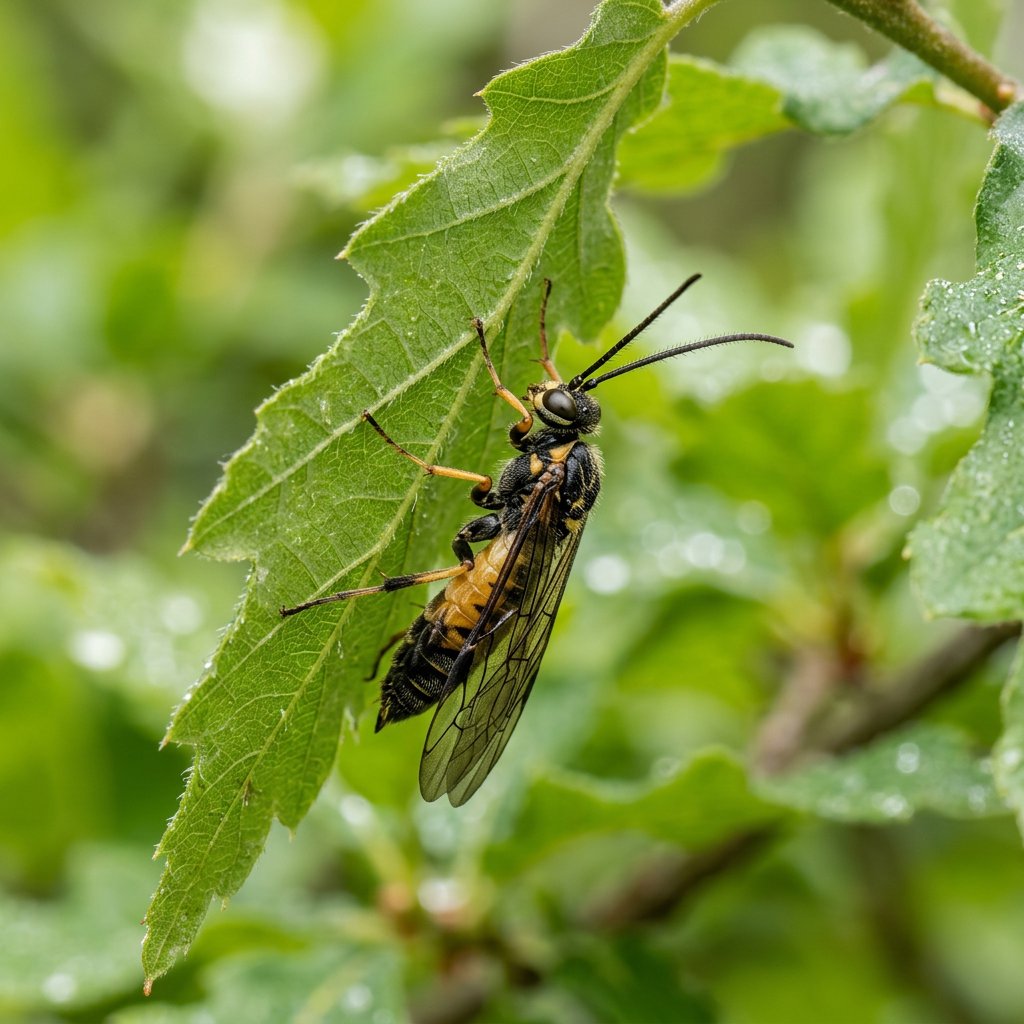
Often mistaken for their more aggressive cousins, the wasps, insects of the Apethymus genus are actually peaceful "sawflies." Frequently known as the Autumn Oak Sawflies, these slender fliers are masters of disguise, mimicking the appearance of stinging insects to ward off predators while they go about their business in the canopy. They are the quiet engineers of the late-season forest, playing a specific role in the life cycle of deciduous trees.
🔍 How to Identify
- 🐝 The "Waistless" Body: Unlike true wasps which have a tiny "wasp waist," Apethymus has a broad connection between its thorax and abdomen, giving it a more cylindrical, robust look.
- 🪚 The Serrated Ovipositor: Females possess a specialized, saw-like organ at the end of their abdomen. While it looks like a stinger, it is actually used to delicately "saw" into plant tissue to lay eggs.
- 🐛 Larval Mimicry: The larvae look almost exactly like moth caterpillars, but if you look closely, they have six or more pairs of fleshy "prolegs" along their underside, whereas caterpillars have five or fewer.
🌲 Habitat & Ecology
- 🌳 Oak Specialists: These insects are most commonly found in or near Oak forests. The larvae are "leaf-feeders," spending their youth munching on the foliage of various oak species.
- 🍂 Autumnal Activity: While many sawflies emerge in the heat of summer, many Apethymus species are specialized for the fall. You are most likely to see the adults hovering around trees as the leaves begin to turn color.
- 🐦 Avian Buffet: Because they lack a stinger or chemical defenses, these sawflies are a critical protein source for birds preparing for winter migration or local foraging.
⚠️ Safety & Toxicity
- 🛡️ Non-Stinging: Apethymus insects are completely harmless to humans and pets. They do not possess a stinger and will not bite, even if handled.
- 🍃 Plant Health: While the larvae eat leaves, they rarely cause significant long-term damage to established trees. They are considered a "minor" garden pest that usually doesn't require chemical intervention.
✨ Fun Fact
The "saw" in Sawfly is so precise that it can unzip the outer layer of a twig or leaf with surgical accuracy, allowing the female to tuck her eggs safely inside the plant's skin, protected from the winter cold!
More Details








