Info
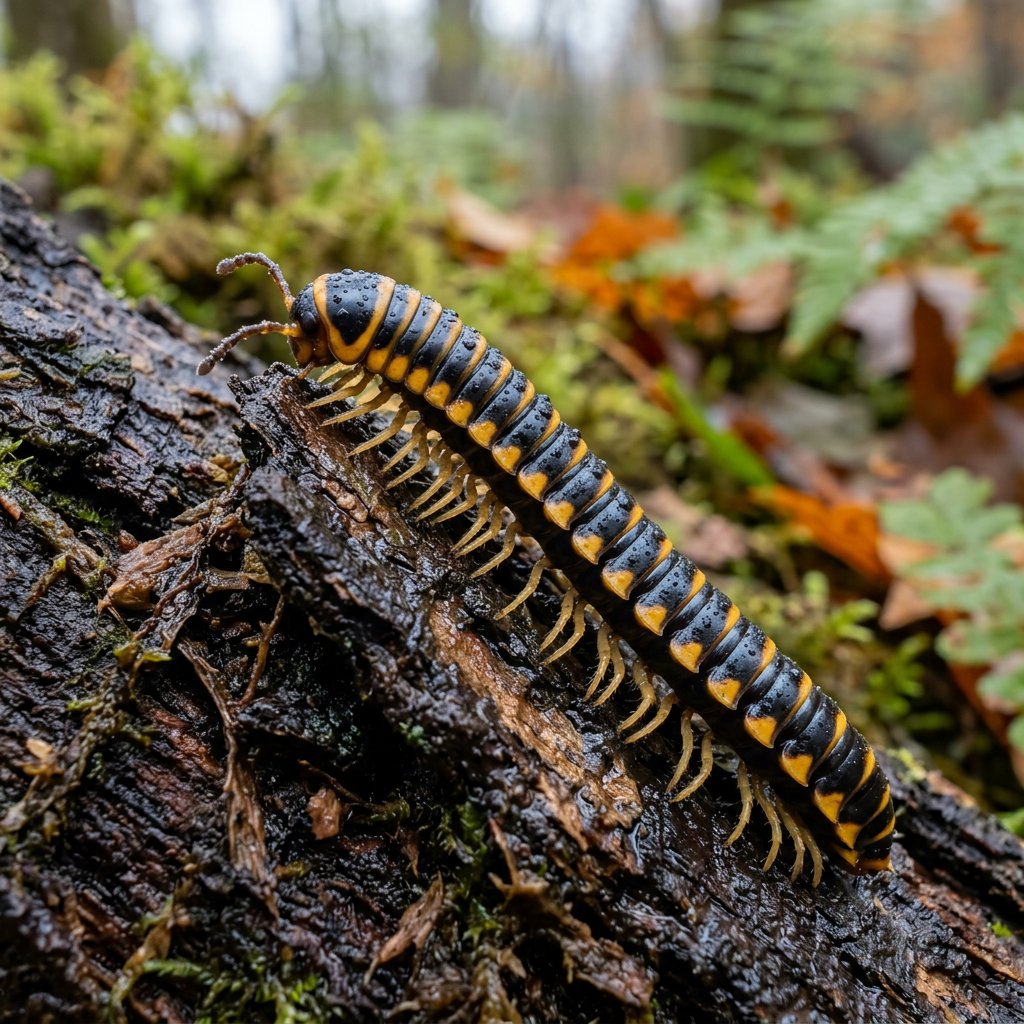
Often called the Cherry Millipede due to its surprising fragrance, Apheloria virginiensis is a striking forest-floor resident. While its bold black-and-gold colors might look intimidating, this slow-moving architect is a vital "decomposer" that helps keep woodland ecosystems healthy by recycling old leaves into rich soil.
🔍 How to Identify
- 🎨 Flattened Profile: Unlike the typical "sausage-shaped" millipedes, this species has flat, wing-like plates called paranota extending from its sides, giving it a wide, armored appearance.
- 🖤 Warning Colors: The body is deep matte black, accented with brilliant yellow or orange-red trim along the edges. This high-contrast look is a biological "keep away" sign to predators.
- 👣 Leg Pairs: As a millipede, it features two pairs of small, pale legs on most of its body segments, moving in a rhythmic, wave-like motion.
🌲 Habitat & Ecology
- 🍂 The Leaf Litter Layer: They are primarily found in the moist deciduous forests of Eastern North America. They spend their lives under damp logs, rocks, or buried deep in decaying organic matter.
- 🍄 Gourmet Scavenger: They are detritivores, meaning they exclusively eat dead leaves and rotting wood. They are completely harmless to your garden plants and actually help improve soil quality.
⚠️ Safety & Toxicity
- 🧪 Chemical Defense: If handled roughly or stepped on, this millipede releases a defensive secretion containing hydrogen cyanide. This liquid smells remarkably like bitter almonds or marzipan.
- ✋ Skin & Eye Irritation: The secretion can cause a mild burning sensation or temporary staining on human skin. It is highly irritating to the eyes. Always wash your hands immediately after touching one, and ensure children do not put them near their mouths.
- 🐕 Pet Warning: These are toxic if swallowed. Keep curious dogs or cats away, as the chemical defense can cause vomiting or distress in small animals.
✨ Fun Fact
The Apheloria virginiensis is part of a "Müllerian mimicry" ring. Several different species of millipedes in the same forests have evolved to look identical so that predators only have to learn one "lesson" (black and yellow = bad taste) to leave all of them alone!
More Details








