Info
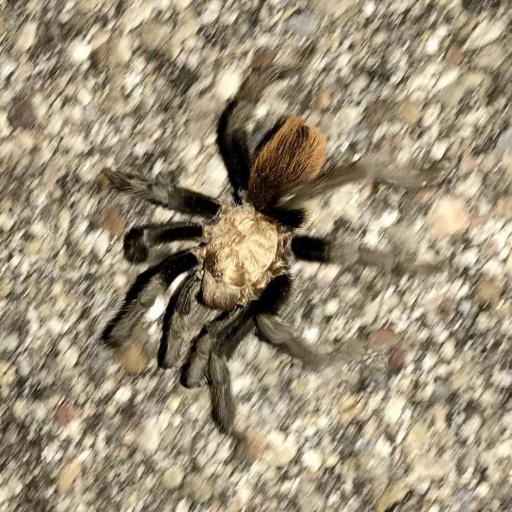
Often called the Arizona Blonde Tarantula, this fuzzy giant is the "gentle soul" of the American Southwest. While their size might cause a momentary shiver, these arachnids are legendary among hobbyists for their calm demeanor and striking bi-color appearance. You’ll often spot them wandering across desert roads during the summer monsoon season as males venture out on a quest for love.
🔍 How to Identify
- 🌵 The "Blonde" Carapace: The upper section of the body (cephalothorax) is covered in a dense layer of pale, tan, or honey-colored hairs, contrasting beautifully with its darker parts.
- 🕷️ Velvety Limbs: Their legs and abdomen are typically a deep chocolate brown or charcoal black, giving them a distinct two-toned look.
- 📏 Sturdy Stature: These are heavy-bodied spiders with a leg span that can reach up to 5 inches, making them one of the more imposing species in North America.
🏜️ Habitat & Ecology
- 🕳️ Subterranean Architecture: They are master burrowers, often taking over abandoned rodent holes or digging their own deep silk-lined tunnels to escape the blistering desert heat.
- 🌙 Patient Predators: As nocturnal hunters, they don't use webs to catch prey. Instead, they sit near the mouth of their burrow and use sensitive vibrations to detect and pounce on passing crickets, beetles, or even small lizards.
- ⏳ Desert Longevity: These spiders are the epitome of "slow and steady." While males live only a few years, females can thrive in the wild (or in captivity) for 20 to 30 years.
⚠️ Safety & Toxicity
- 🛡️ Low Risk: Despite their intimidating fangs, they are exceptionally docile and rarely bite unless pinned or severely provoked.
- 🧴 Urticating Hairs: Their primary defense is "flicking" irritating hairs from their abdomen. These can cause a prickly, itchy rash on human skin and are particularly painful if they get into your eyes or respiratory tract.
- 🐝 Venom Profile: Their venom is considered "mild" to humans—roughly equivalent to a bee sting. However, it can be more dangerous to small pets, so keep curious cats and dogs at a distance.
✨ Fun Fact
Unlike many other spiders that die shortly after reaching maturity, a female Arizona Blonde can outlive many family dogs, often staying in the exact same burrow for decades!
More Details








