Info
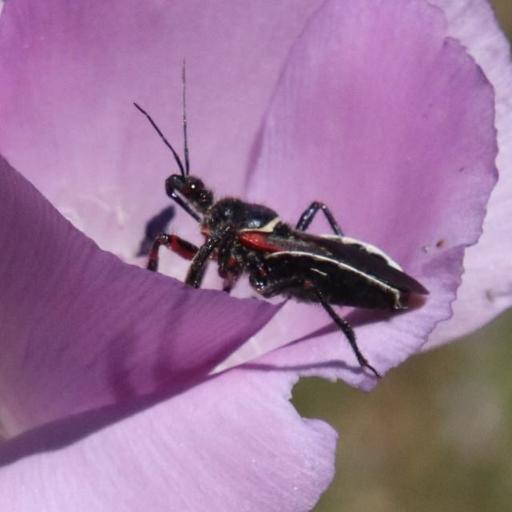
Often called the California Bee Assassin, this striking bug is a colorful master of the ambush. It prowls the sunny hillsides and gardens of the American West, lurking on bright flowers like a tiny, armored bandit. While it might look intimidating with its vibrant "danger" colors, it is a vital—if slightly ruthless—member of the garden ecosystem that keeps pest populations in check.
🔍 How to Identify
- 🎨 Bold Coloration: Its body is typically jet black, accented with brilliant bands of red, orange, or yellow along the sides of the abdomen and joints.
- 🦵 Sticky Forelegs: The front legs are noticeably thickened and often look "hairy" or wet; they use these to grip slippery prey.
- 🗡️ Robust Rostrum: It possesses a short, powerful, curved "beak" (proboscis) tucked under its head, which it uses to pierce the armor of other insects.
🌲 Habitat & Ecology
- 🌸 The Flower Ambush: You will most likely find this insect perched motionless atop sunflowers, goldenrod, or buckwheat. It chooses high-traffic "pollinator hubs" to wait for its next meal.
- 🐝 Resourceful Hunter: While they are famous for catching bees, they are generalist predators. They provide a service to gardeners by consuming various beetles and flies that might otherwise damage plants.
⚠️ Safety & Toxicity
- 🎯 Defensive Biter: The Bee Assassin is not a "foe" in the sense of seeking out humans, but it is definitely a "watch-don't-touch" insect.
- 💉 The Sting-Like Bite: If handled or accidentally pressed against the skin, it will deliver a defensive bite. The digestive enzymes it injects can cause intense, immediate pain similar to a wasp sting, often followed by localized swelling that can last for several days.
✨ Fun Fact
The California Bee Assassin is a tool-user! These insects are known to collect sticky resin from plants and smear it onto their front legs. This "bee glue" turns their limbs into living flypaper, making it nearly impossible for a honeybee to escape once the assassin makes contact.
More Details








