Info
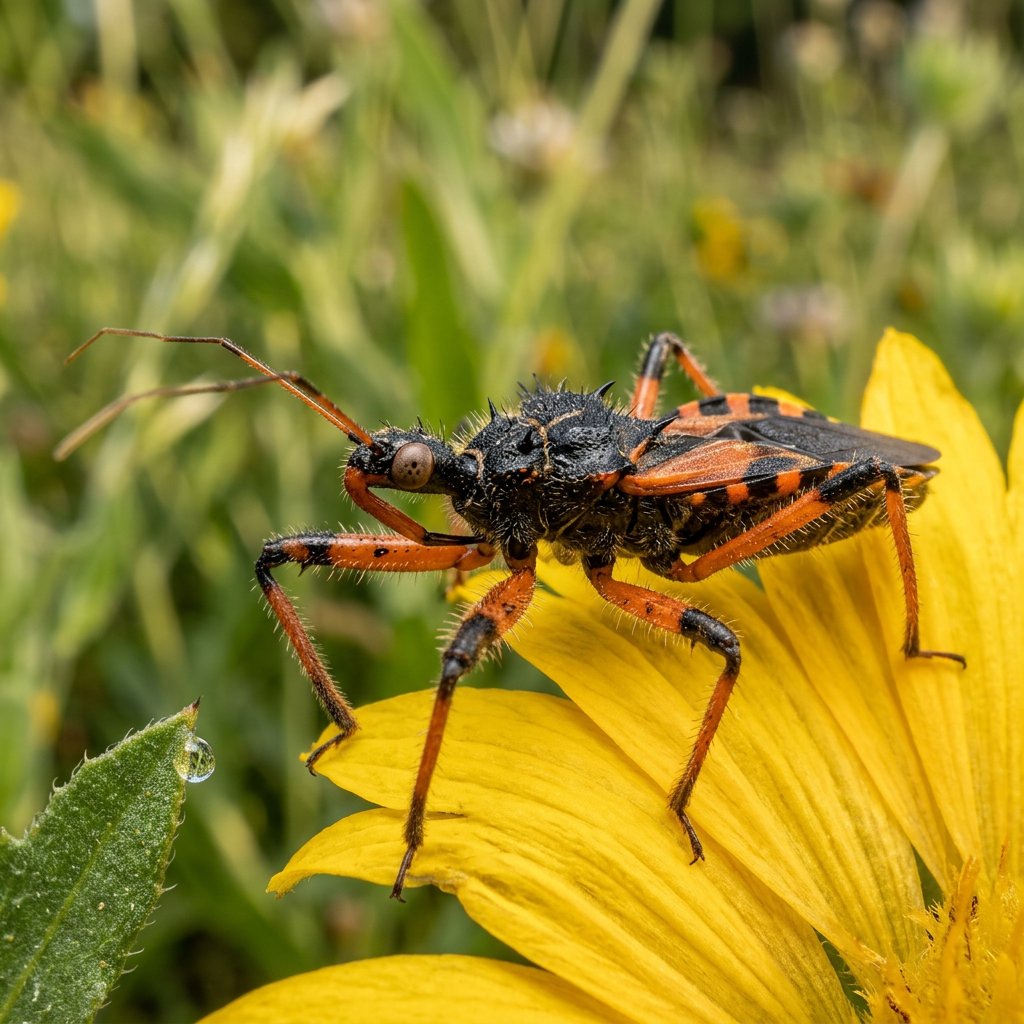
Often found lurking on sun-drenched flowers like a tiny, armored ninja, the Bee Assassin Bug (Apiomerus spissipes) is nature’s specialized ambush hunter. While its name might sound intimidating to bee-lovers, this insect is a fascinating example of evolutionary ingenuity, famous for its "sticky-trap" strategy. It is generally a friend to the gardener, as it keeps various pest populations in check, though it doesn't discriminate between a "bad" fly and a "good" honeybee.
🔍 How to Identify
- 🦵 Thick Hairy Legs: Its species name, spissipes, literally means "thick-footed." Its front legs are notably stout and covered in fine, stiff hairs designed for gripping struggling prey.
- 🎨 High-Contrast Markings: They typically sport a dark brown or black body accented with vibrant red, orange, or yellow "racing stripes" along the sides of the abdomen and the joints of the legs.
- 🗡️ The Rostrum: Look for a stout, curved beak tucked under the head. This is its primary weapon, used to pierce the armor of other insects and inject a paralyzing enzyme.
🌲 Habitat & Ecology
- 🍯 The Resin Trick: These bugs are rare "tool users" in the insect world. They collect sticky resin from plants (like pines or sunflowers) and smear it onto their front legs. This acts like natural flypaper, making it impossible for a bee to escape once the assassin grabs hold.
- 🌸 The Flower Ambush: You will most commonly find them perched on colorful wildflowers, goldenrod, or garden perennials. They remain motionless for hours, perfectly camouflaged against the petals, waiting for a pollinator to land.
- 🛠️ Garden Role: While they do eat pollinators, they are generalist predators. They help control populations of beetles, flies, and caterpillars that might otherwise munch on your ornamental plants.
⚠️ Safety & Toxicity
- 🥊 Defensive Biter: The Bee Assassin Bug is not a blood-feeder and does not hunt humans. However, it is highly defensive. If it is trapped in a hand or stepped on, it will deliver a very painful "stab."
- 🩹 The Sensation: The bite is often described as feeling similar to a wasp sting. The enzymes it injects cause immediate sharp pain, redness, and minor swelling, though it is not medically significant for most people.
- 🧤 Safe Handling: If you find one in your house, use a jar and a piece of paper to relocate it to the garden. Avoid touching it with bare skin to prevent an accidental nip.
✨ Fun Fact
Bee Assassin Bug mothers are incredibly protective; they smear the same sticky plant resins onto their eggs. This coating protects the eggs from being eaten by ants and ensures that when the babies (nymphs) hatch, they already have a "sticky start" to help them catch their first meal!
More Details








