Info
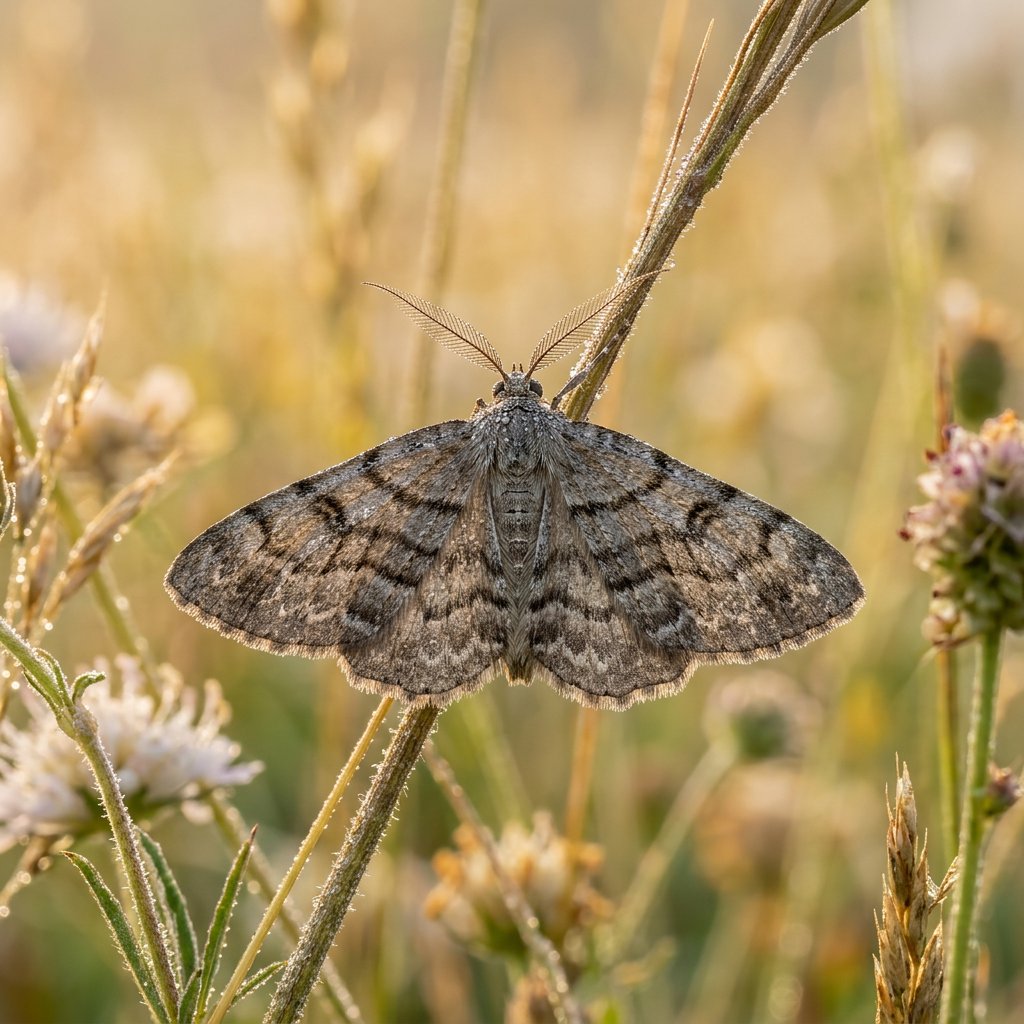
Often found fluttering near rocky meadows or sun-drenched hillsides, the Treble-bar moth is a master of camouflage that mimics a weathered piece of stone. This elegant moth is a "friend" to the gardener, serving as a subtle pollinator and a vital link in the local food chain. While its grey tones might seem modest, its life is uniquely tied to the sun-loving St. John’s Wort plant.
🔍 How to Identify
- 🦋 The "Bars": Its most striking feature is the set of three distinct, dark transverse bands (or "bars") crossing its narrow, ash-grey forewings.
- 📐 Resting Posture: Unlike many moths that spread their wings flat, the Treble-bar typically rests with its wings held steeply like a tent, creating a sharp, triangular silhouette.
- 📏 Pointed Abdomen: The body is slender, and the abdomen often tilts upward slightly when the moth is settled on a stem or wall.
🌲 Habitat & Ecology
- 🌱 The Specialist Diet: This moth is a specialist; its caterpillars feed almost exclusively on St. John’s Wort (Hypericum). If you have these yellow-flowered herbs in your garden, you are likely to spot this moth nearby.
- ☀️ Sun Seeker: While most moths are strictly nocturnal, the Treble-bar is easily disturbed during the day and can be seen flying in bright sunshine, though it is most active from dusk onwards.
- 🍂 Two Chapters: In many regions, they produce two generations per year—one appearing in late spring and another in the warmth of mid-to-late summer.
⚠️ Safety & Toxicity
- ✅ Harmless Neighbor: The Treble-bar is completely safe for humans and pets. It does not bite, sting, or carry any known toxins.
- 👕 Not a Pest: Unlike the common clothes moth, the Treble-bar has no interest in your wardrobe or pantry. It stays outdoors where its host plants grow and poses no threat to your home.
✨ Fun Fact
The Treble-bar has a "secret twin" called the Lesser Treble-bar (Aplocera efformata). They look so identical that even seasoned entomologists often have to examine the shape of their "tails" (the tip of the abdomen) with a magnifying glass to tell them apart!
More Details








