Info
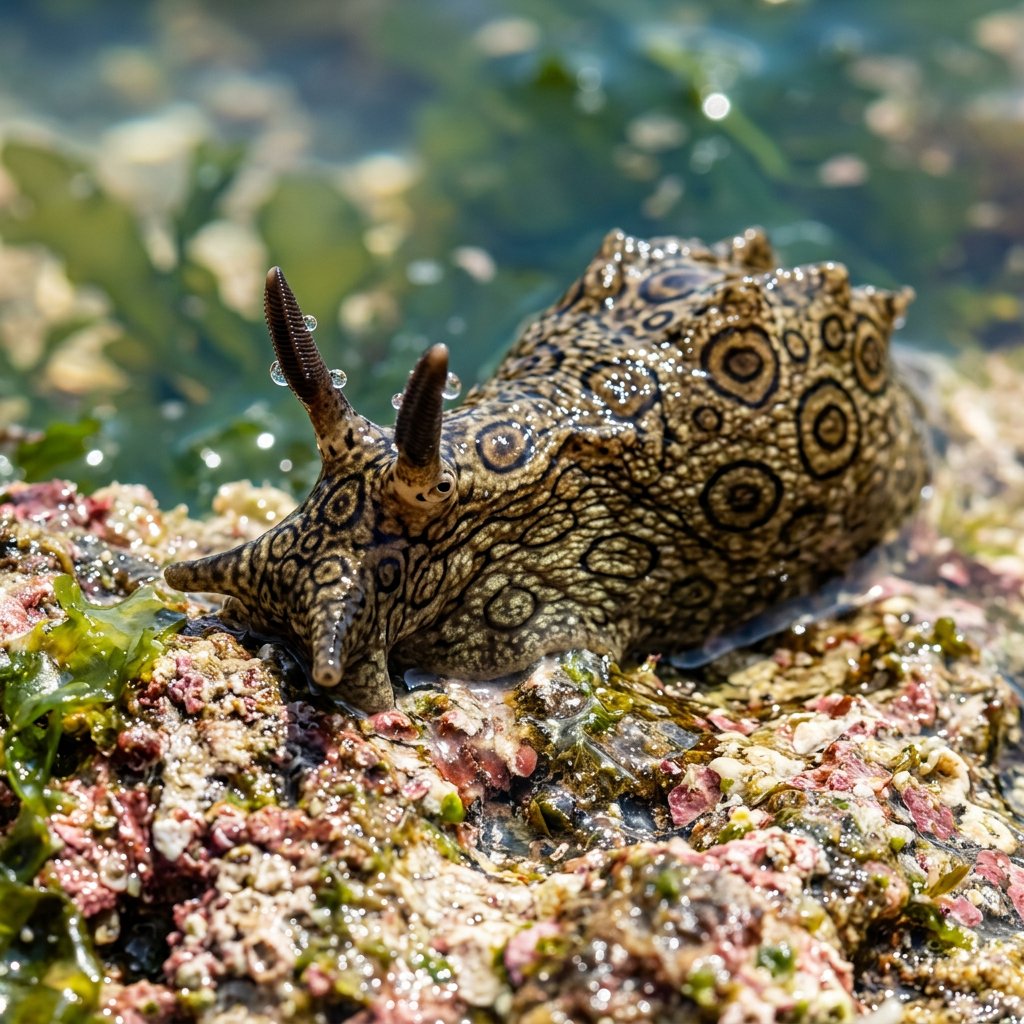
Commonly known as the Leopard Sea Hare, Aplysia argus is a fascinating marine gastropod that often surprises beachgoers with its large size and "bunny-like" appearance. Although sometimes mistaken for a strange insect or a "sea slug," it is actually a shell-less mollusk. In many cultures, they are seen as mysterious protectors of the tide pools, often appearing in large numbers to graze on seaweed like silent underwater cattle.
🔍 How to Identify
- 👀 Leopard Spots: The body is covered in distinctive dark, ring-like spots (ocelli) against a tan or grayish background, resembling the many eyes of the Greek giant Argus.
- 🐰 Rabbit Ears: It features two large, ear-like sensory tentacles called rhinophores on its head, which it uses to "smell" chemicals in the water.
- 🌊 Fleshy Flaps: It has large, wing-like folds called parapodia that run along its back, which it can use to crawl or occasionally propel itself through the water.
🌊 Habitat & Ecology
- 🌿 Algae Grazer: This creature is a dedicated herbivore. It spends its life "vacuuming" up red and green algae from coral reefs and seagrass beds, playing a vital role in keeping reef surfaces clean.
- 🐙 Chemical Defense: When startled, it doesn't bite; instead, it releases a thick cloud of vibrant purple or reddish ink. This ink isn't just a smoke screen—it actually "jams" the chemical senses of predators like lobsters and crabs.
⚠️ Safety & Toxicity
- 🛡️ Generally Harmless: The Leopard Sea Hare is non-aggressive and does not sting or bite. It is safe for humans to observe in tide pools.
- 🐕 Pet Caution: While not inherently "poisonous" to touch, these slugs concentrate toxins from the algae they eat. If a dog or curious pet swallows one at the beach, it can cause severe vomiting or distress.
✨ Fun Fact
The Aplysia genus is a "superstar" in the world of science! Because they have some of the largest neurons in the animal kingdom, they were used in Nobel Prize-winning research to help humans understand how memories are formed and stored.
More Details








