Info
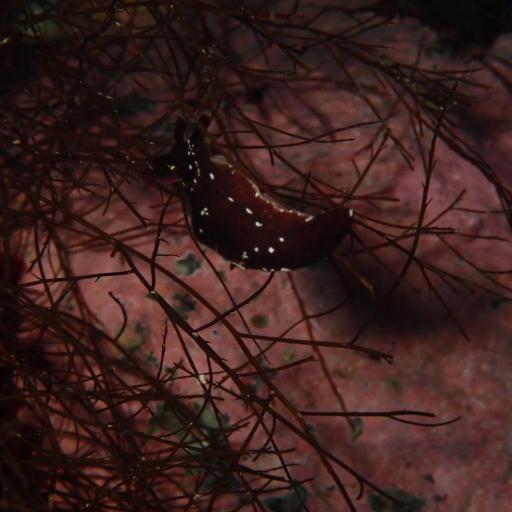
Often mistaken for a strange underwater bug or a giant slug, the Spotted Sea Hare is actually a master of disguise in the shallow reefs. Despite being called "sea hares" due to their rabbit-like "ears," they are peaceful marine snails that have evolved to hide their shells inside their soft, fleshy bodies. They are famous among scientists for their relatively simple nervous systems, which have helped us understand how memories are formed!
🔍 How to Identify
- 🐰 The "Hare Ears": It features two prominent, ear-like tentacles called rhinophores on its head, which it uses to "smell" chemicals in the water to find food.
- 🎨 Camouflage Coat: The body color is highly variable, ranging from olive-green to deep mahogany or even purplish-black, always decorated with distinctive small, pale spots.
- 🐚 The Internal Shell: While it looks like a soft slug, it actually carries a thin, fragile, transparent shell hidden deep underneath the fleshy flaps (parapodia) on its back.
🌊 Marine Habitat & Ecology
- 🥗 Algae Gourmet: These creatures are strict vegetarians. Interestingly, their body color often changes to match the specific type of seaweed they have been eating, providing them with near-perfect natural camouflage.
- 🏠 Tide Pool Resident: You will most likely encounter them in rocky shorelines, seagrass meadows, or shallow coastal waters. They are slow-moving grazers, often described as the "cows of the sea."
⚠️ Safety & Toxicity
- 💜 Purple Smoke Screen: When poked or threatened, the Sea Hare can release a thick cloud of vibrant purple or white ink. This ink isn't dangerous to humans, but it can be quite messy and is designed to clog the "noses" of predatory fish.
- 🧤 Sensitive Skin: While they don't bite or sting, they are very delicate. Their skin produces a bitter slime to deter predators; it’s best to observe them in their natural habitat rather than picking them up, as they are easily stressed.
✨ Fun Fact
Sea hares are "simultaneous hermaphrodites," meaning they are both male and female at the same time. During the breeding season, they are known to form "mating chains" of three or more individuals, where each hare acts as a male to the one in front of it and a female to the one behind!
More Details








