Info
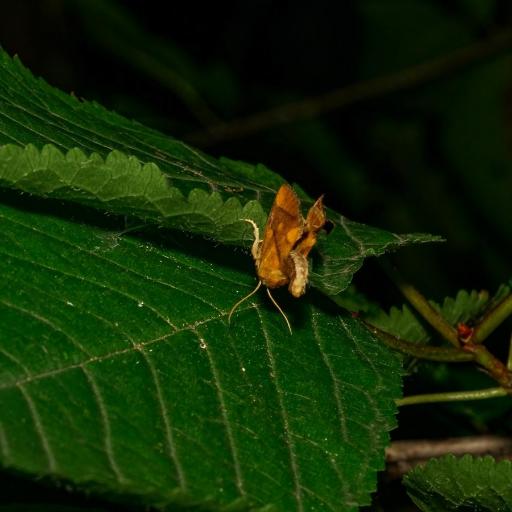
Often called the Festoon, this moth is one of nature’s most convincing tricksters. While the adult is a subtle, toasted-brown beauty, its larval stage is famous for looking less like a caterpillar and more like a wandering green jewel or a slimy slug, earning it a spot in the fascinating "Slug Moth" family.
🔍 How to Identify
- 🦋 The "Festoon" Wings: The adult moth features warm, ochre-colored wings marked by two dark, wavy lines. These lines create a "festoon" (a decorative chain) pattern that gives the insect its name.
- 🐌 The Slug-Like Larva: The caterpillar is bright green, flattened, and oval-shaped. It lacks the typical "prolegs" found on most caterpillars, making it look like a smooth, legless lime-colored lozenge.
- 🛡️ Hidden Head: The larva’s head is usually tucked completely under its body for protection, only emerging when it’s time to feast on a leaf.
🌲 Habitat & Ecology
- 🌳 Ancient Woodland Resident: You are most likely to find the Festoon in established broadleaf forests. They have a strong preference for the canopy of Oak and Beech trees, where the larvae blend perfectly with the foliage.
- 🌊 The Gliding Walk: Instead of the rhythmic "scoot" of a typical caterpillar, the Festoon moves using a series of muscular waves along its sticky underside. This allows it to glide smoothly across leaf surfaces just like a snail or slug.
- 🌙 Nocturnal Life: The adult moths are strictly nocturnal. They are often attracted to light traps, but during the day, they sit perfectly still, mimicking a dead, shriveled leaf to avoid birds.
⚠️ Safety & Toxicity
- 🟢 Generally Harmless: While many members of the Slug Moth family (Limacodidae) possess venomous stinging hairs, the Apoda limacodes is considered safe and does not have a "sting."
- 🖐️ Handle with Care: Even though they aren't toxic, the microscopic hairs on the larva can occasionally cause mild skin irritation for people with high sensitivity. It is always best to admire these "green slugs" with your eyes rather than your hands.
✨ Fun Fact
- ✨ Suction Power: To prevent being blown off high branches during storms, the caterpillar’s entire underside acts like a giant suction cup. It creates enough surface tension to stay anchored to a leaf even in high winds!
More Details








