Info
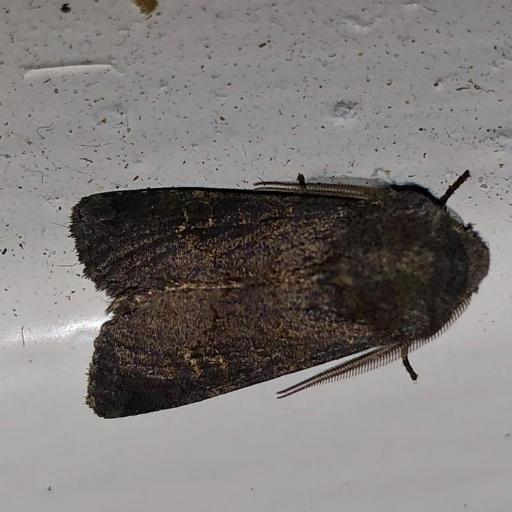
The Deep-brown Rustic (Aporophyla lutulenta) is a master of disguise that thrives in the cooling shadows of the autumn garden. Often overlooked because of its somber, earthy tones, this moth is a "late-season specialist" that emerges just as the vibrant colors of summer begin to fade. It plays a quiet but essential role in the nocturnal ecosystem, acting as a food source for bats and a subtle pollinator of night-blooming flora.
🔍 How to Identify
- 🦋 Wing Color: The forewings are typically a rich, deep chocolate brown or a dark, "muddy" grey, which helps it blend perfectly against tree bark or damp soil.
- 🖋️ Markings: Look for subtle, darker wavy lines and two faint, kidney-shaped spots (known as stigmata) near the center of the upper wings.
- 📐 Resting Posture: When at rest, it folds its wings flat over its back in a neat triangular shape, resembling a charred piece of wood or a withered leaf.
🌲 Habitat & Ecology
- 🍂 Seasonal Timing: Unlike many insects that disappear in the cold, the Deep-brown Rustic is most active in September and October. It is often one of the last moths seen before the first hard frost.
- 🥗 Larval Diet: The caterpillars are not picky eaters; they feed on a wide variety of plants including grasses, hawthorn, heather, and even garden favorites like docks and plantains.
- 🌙 Night Owl: This moth is strictly nocturnal and is frequently drawn to artificial garden lights or "sugar patches" (sweet bait set out by moth enthusiasts).
⚠️ Safety & Toxicity
- ✅ Status: Completely harmless. The Deep-brown Rustic does not bite, sting, or carry diseases.
- 🛡️ Defense Mechanisms: Its only defense is its camouflage. If disturbed, it may drop to the ground and remain perfectly still, "playing dead" until the threat passes.
- 🐾 Pet Safety: It is non-toxic to cats and dogs, though its dusty wing scales might cause a stray sneeze if a curious pet tries to sniff it.
✨ Fun Fact
The specific name lutulenta is derived from the Latin word for "muddy" or "dirty." While that sounds unflattering, it is actually a tribute to its incredible ability to mimic the dark, wet earth of a forest floor!
More Details








