Info
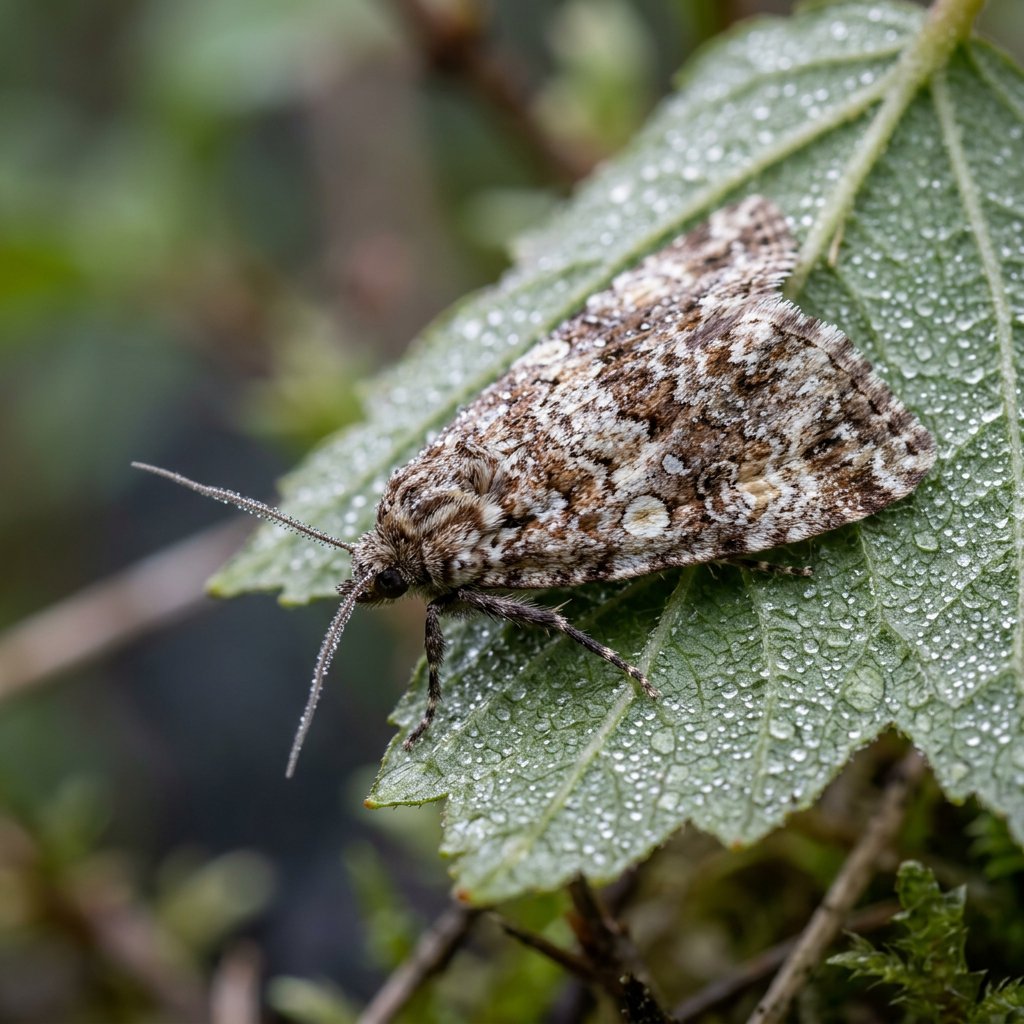
Known as the Birch Marble, Apotomis turbidana is a master of disguise found throughout European woodlands. If you spot what looks like a splash of bird lime on a birch leaf, look closer—it might just be this clever little moth. It spends its days hiding in plain sight, relying on one of nature's most effective (and unappealing) forms of camouflage to avoid becoming a snack.
🔍 How to Identify
- 🦋 Wing Pattern: The front half of the forewing is a dark, mottled charcoal-black, while the outer half is a stark, creamy white with intricate grey "marbled" veins.
- 📐 Resting Posture: When at rest, it holds its wings in a steep, roof-like shape. This specific silhouette, combined with its coloring, perfectly mimics a bird dropping.
- 📏 Size: This is a small moth, typically boasting a wingspan of only 15–20mm, making it a "micro-moth" that requires a keen eye to spot.
🌲 Habitat & Ecology
- 🌳 Birch Specialist: As the name suggests, this moth is deeply tied to Birch trees (Betula). You are most likely to find them in heathlands, moors, or gardens that sit near established birch silver-woods.
- 🍃 Leaf-Rollers: The larvae are "leaf-rollers." After hatching, the caterpillars spin silk to fold or roll a birch leaf around themselves, creating a private, protective sleeping bag where they can munch on the leaf in safety.
- 🌙 Night Life: While they sit motionless on leaves during the day, adults are active from dusk through the night during June and July, often appearing near porch lights or garden lanterns.
⚠️ Safety & Toxicity
- ✅ Harmless: The Birch Marble is a "friend" to the gardener. It does not bite, sting, or carry any toxins that could irritate human skin.
- 🐾 Non-Toxic: If a curious pet or child happens to touch or even swallow one, there is no cause for alarm. They do not possess the irritating hairs found on some other moth caterpillars (like the Processionary moth).
✨ Fun Fact
- 💩 The "Eww" Factor: This moth employs a strategy called "mimesis." By evolving to look exactly like bird poop, it exploits a biological loophole: almost no predator in the forest is looking to eat bird waste, allowing the moth to sleep safely in broad daylight on the surface of green leaves!
More Details








