Info
Commonly known as the Zigzag Elm Sawfly, this tiny traveler is a relatively new and unwelcome guest in many Western gardens. While it might sound like a whimsical character from a storybook, its "artistic" feeding habits can leave elm trees looking like they’ve been through a geometric paper shredder. Originally from East Asia, it has rapidly expanded across Europe and North America, proving that you don't need to be big to make a massive impact.
🔍 How to Identify
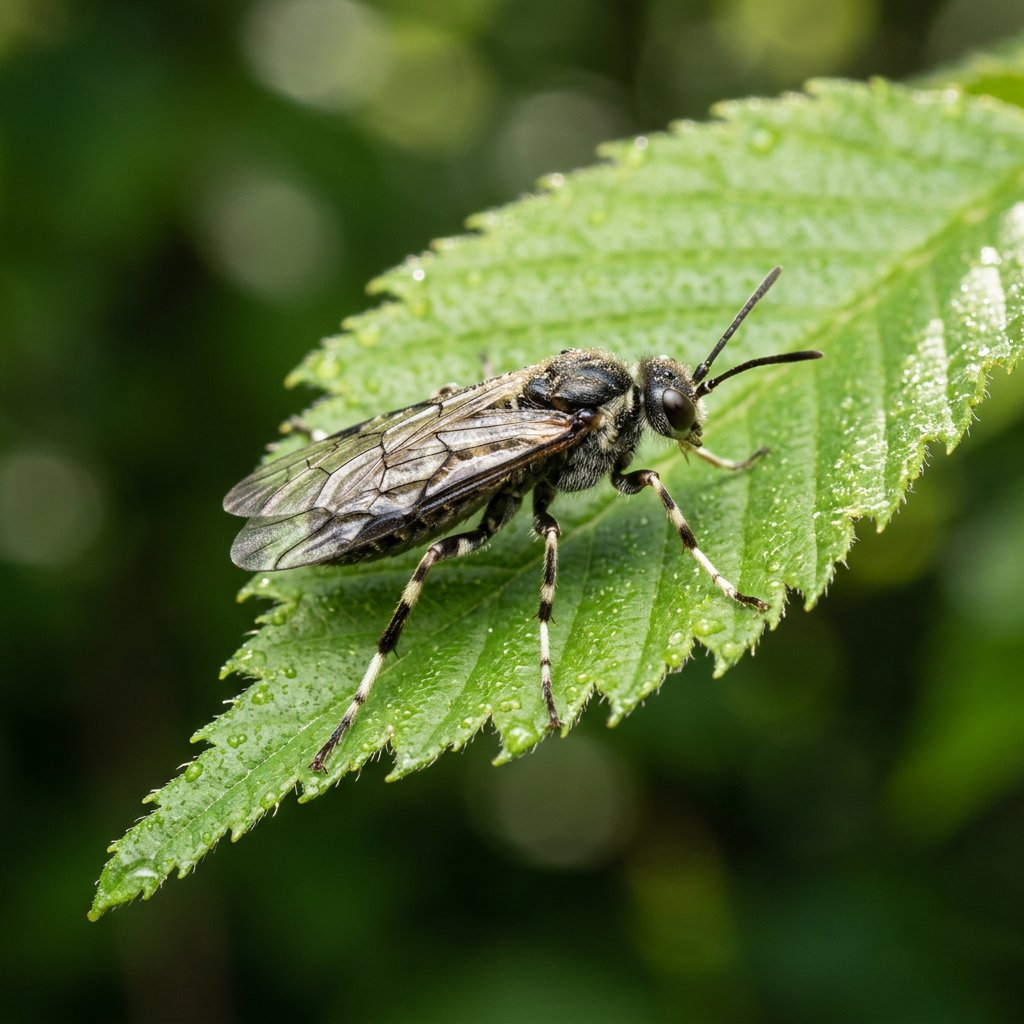
- 🦟 The Adult: A small, stout insect roughly 6mm long. It is mostly black with distinctively pale, whitish legs (the name leucopoda literally translates to "white foot"). Unlike a wasp, it lacks a "pinched" waist.
- 🐛 The Larvae: These look like tiny green caterpillars. If you look very closely at their tiny "prolegs," you’ll see a small dark T-shaped mark, which is a key ID feature for this specific species.
- 📐 The Signature Zigzag: The most unmistakable sign of their presence isn't the bug itself, but the damage. Young larvae eat through elm leaves in a perfect, tight "zigzag" pattern that looks almost like a serrated blade or a heart monitor rhythm.
🌲 Habitat & Ecology
- 🌳 Elm Specialist: This sawfly is an "obligate" feeder on Elm trees (Ulmus). You won't find them on your oaks or maples; they are strictly dedicated to the elm family.
- 🌪️ Rapid Reproduction: They are masters of efficiency. This species is parthenogenetic, meaning females can produce more females without needing to mate. This allows a single stray insect to colonize an entire forest or park in just a few seasons.
- 🍂 Feeding Cycles: They can go through several generations in a single summer. While early-season damage is just a few squiggles, by late summer, an entire tree can look "skeletonized" as the larvae grow larger and stop being so neat with their eating habits.
⚠️ Safety & Toxicity
- 🛡️ Human & Pet Safety: The Zigzag Elm Sawfly is completely harmless to humans and pets. They do not sting, bite, or carry any toxins. They are "sawflies" because the female uses a saw-like organ to lay eggs inside the leaf, not for defense.
- 📉 Plant Health: While they don't usually kill a healthy tree outright, the loss of leaves (defoliation) can weaken the tree, making it more susceptible to Dutch Elm Disease or environmental stress.
✨ Fun Fact
The "zigzag" isn't just for decoration! Scientists believe the larvae feed in this specific pattern to avoid cutting through the major leaf veins too early. By keeping the main "plumbing" of the leaf intact, the tissue stays fresh and hydrated while the larva finishes its meal!
More Details








