Info
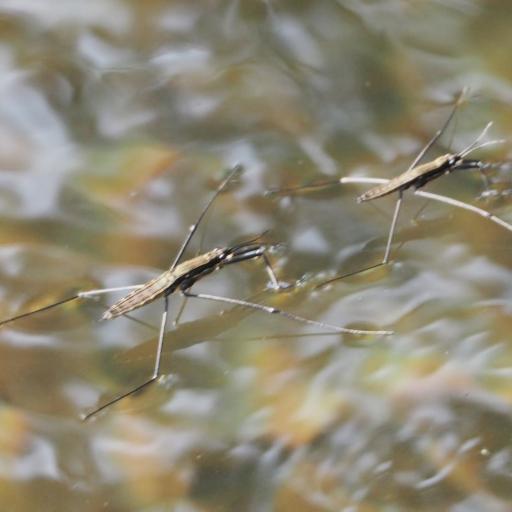
Often called the "River Skater" or the "Jesus Bug," Aquarius najas is the sleek, high-speed athlete of the water’s surface. Unlike many of its cousins that prefer stagnant ponds, this specialized insect thrives on the gentle currents of rivers and streams. Watching them glide effortlessly against the flow is like watching a professional ice skater performing on a moving treadmill—they are masters of fluid dynamics and surface tension.
🔍 How to Identify
- 🛶 Long-Oar Legs: They possess incredibly long, needle-thin middle and hind legs that act as oars and rudders, allowing them to "row" across the water.
- 🕴️ Sleek Silhouette: Their bodies are narrow, elongated, and typically a dark, matte brown or black, designed to be aerodynamic and difficult for predators below to spot.
- 🧥 Waterproof Suit: Their entire body is covered in millions of microscopic, water-repellent hairs (microsetae) that trap a thin layer of air, ensuring they never get "wet" or sink.
🌊 Habitat & Ecology
- 💧 The Surface Hunter: These insects are surface-dwelling predators. They don't hunt underwater; instead, they feel for the tiny vibrations of a "land" insect (like a fly or beetle) that has fallen into the water and is struggling.
- 🏞️ River Specialists: While many water striders like still ponds, Aquarius najas is specifically adapted for moving water. They are often found in large groups near the shaded edges of clean rivers, where they congregate to find mates and share the "bounty" of the current.
⚠️ Safety & Toxicity
- ✅ Harmless Friend: Aquarius najas is completely harmless to humans and pets. They do not sting and are far too preoccupied with their watery world to bother people.
- 🛡️ Natural Indicator: Because they rely on the surface tension of the water, they are very sensitive to pollution and detergents. Finding them in a river is usually a great sign that the water is clean and healthy!
✨ Fun Fact
During the mating season, the much smaller male Aquarius najas will climb onto the female's back and may stay there for several days! He hitches a ride while she continues to hunt and skate, effectively "guarding" her from other suitors.
More Details








