Info
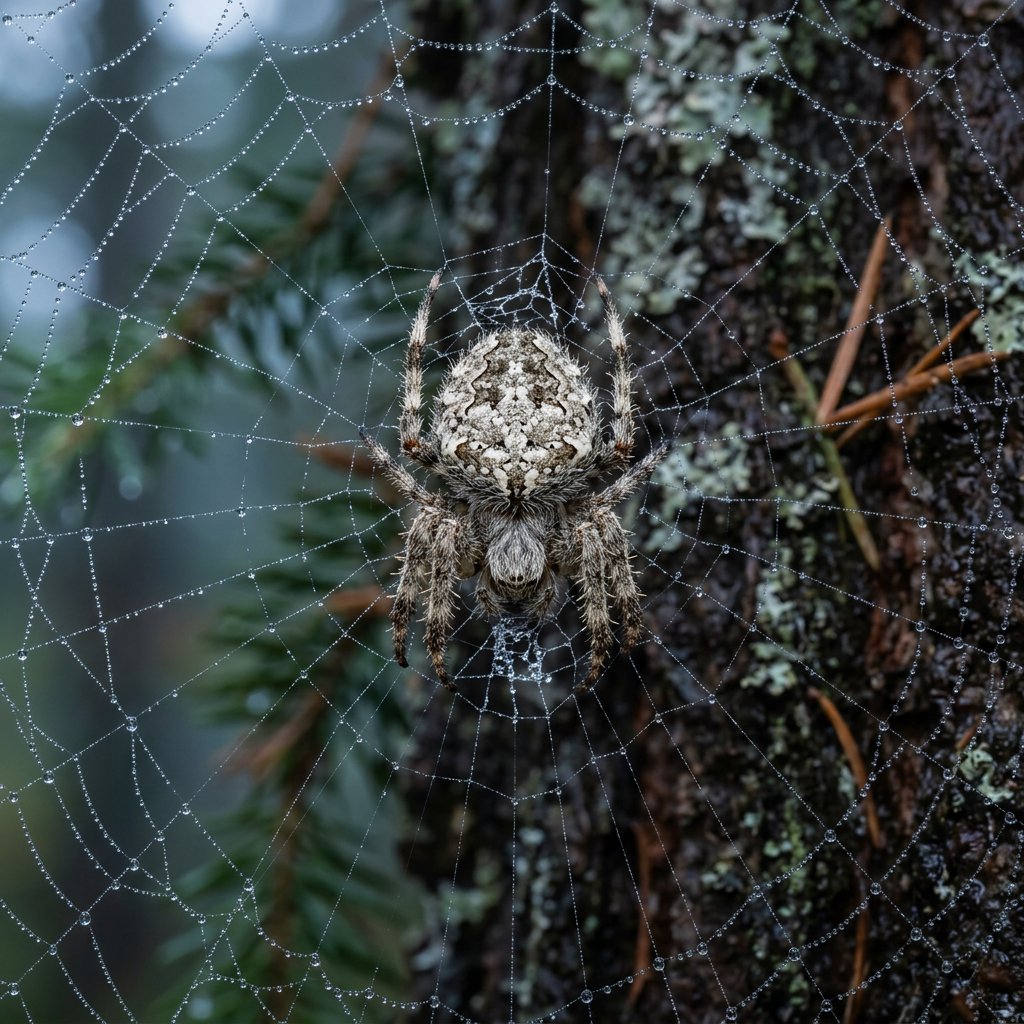
Known as the Giant Lichen Orb Weaver, this spider is one of nature’s most sophisticated camouflage artists. While its impressive size and "hunchbacked" appearance might seem intimidating, it is a magnificent garden ally that spends its nights weaving intricate, circular webs to catch flying pests. Its name comes from its uncanny ability to blend into the mossy textures of old-growth trees, making it a master of disguise.
🔍 How to Identify
- 🕸️ The "Shoulders": This spider features two prominent, pointed humps on the front of its abdomen, giving it a broad, powerful silhouette compared to other orb weavers.
- 🌿 Lichen Mimicry: The body is a stunning mosaic of pale greens, whites, and greys, perfectly mimicking the crustose lichen found on tree bark.
- 🦵 Banded Legs: Its long, sturdy legs are decorated with dark rings or bands, which help break up its outline when it huddles against a branch.
🌲 Habitat & Ecology
- 🌙 Nighttime Architect: Primarily nocturnal, this spider usually hides in a silken retreat during the day and emerges at dusk to build or repair its massive, ornate web.
- 🦟 Pest Control: As a generalist predator, it plays a vital role in the ecosystem by consuming large quantities of moths, beetles, and mosquitoes that fly after dark.
- 🌳 Tree Dweller: You are most likely to spot them in mature gardens, orchards, or woodland edges where lichen-covered trees provide the perfect backdrop for their camouflage.
⚠️ Safety & Toxicity
- 🛡️ Gentle Giant: Despite their "scary" appearance, they are non-aggressive and shy. They will almost always choose to retreat or play dead rather than bite.
- 🕷️ Low Risk: They are not considered medically significant to humans. A bite—which typically only happens if the spider is squeezed—is comparable to a mild bee sting, causing minor localized redness or itching.
✨ Fun Fact
The Giant Lichen Orb Weaver is so committed to its disguise that it will often sit perfectly still in the center of its web at night, looking like a stray clump of moss caught in the wind to confuse potential predators like owls or bats!
More Details








