Info
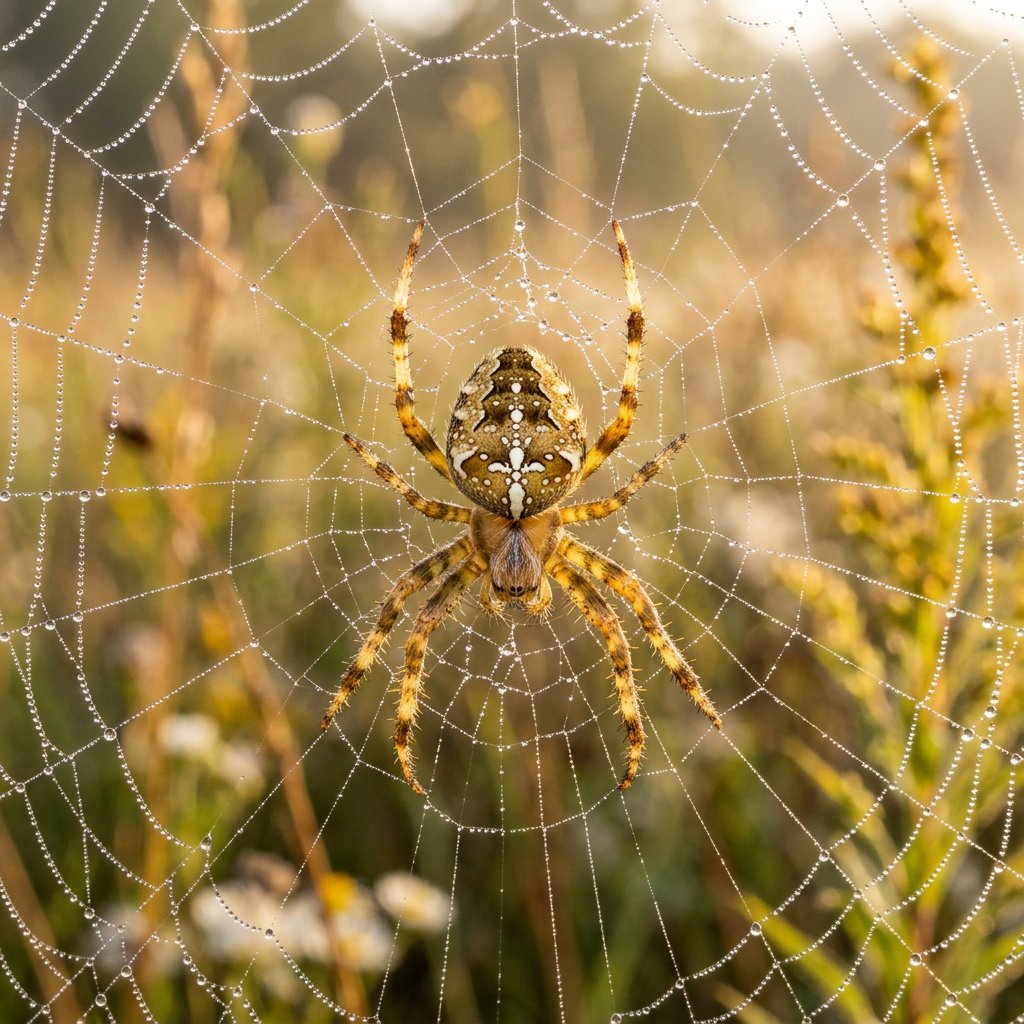
Meet the Shamrock Spider, also known as the "Pumpkin Spider." These round-bodied architects are the quintessential autumn guests of the garden, often appearing just as the leaves begin to turn. While their large, bulbous abdomens might look intimidating, they are one of the most beneficial neighbors you can have, acting as silent pest controllers throughout the late summer months.
🔍 How to Identify
- ☘️ Abdominal Markings: Their most famous feature is the pattern of four pale spots on the upper side of the abdomen, which often resembles a lucky shamrock.
- 🎃 Variable Coloration: They are masters of the "fall aesthetic." Depending on their environment, their bodies can range from a pale, ghostly white to a vibrant, "pumpkin" orange or even a deep purplish-brown.
- 🦓 Banded Legs: Their legs are distinctively marked with bold, alternating bands of white and dark brown or black, making them look like they are wearing striped stockings.
🕸️ Behavior & Ecology
- 🏠 The Leafy Retreat: Unlike some spiders that sit in the middle of their web, the Shamrock Spider usually builds a "hideout." They fold a leaf over and silk it shut at the edge of their web, waiting there for vibrations to signal a catch.
- 🕸️ Geometric Art: They are members of the Orb-weaver family, meaning they spin large, classic, circular webs that can span over a foot in diameter to catch flying insects like flies and moths.
- 🌾 Preferred Hangouts: You’ll most likely find them in tall grasses, moist fields, or tucked away in the shrubbery of your backyard garden during the late summer and early autumn.
⚠️ Safety & Toxicity
- 🛡️ Status: Generally harmless and non-aggressive.
- 🩹 Details: While they are capable of biting if handled roughly or squeezed, their venom is not medically significant to humans. A bite is often described as less painful than a bee sting. They are shy creatures that would much rather hide in their leafy tent than confront a human.
✨ Fun Fact
The Shamrock Spider is a bit of a "chameleon." They have the limited ability to change their body color over the course of several days to better blend in with their surroundings, moving from pale yellow to bright orange as the seasons shift!
More Details








