Info
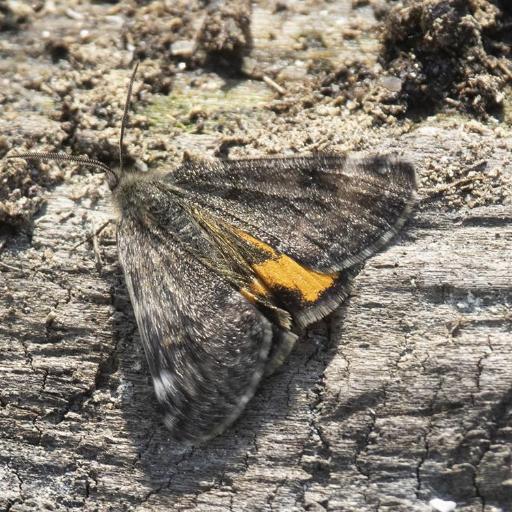
Known as the Light Orange Underwing, this elusive moth is one of the true heralds of spring. While many moths wait for the cover of darkness, Archiearis notha is a sun-lover, dancing around the high canopies of Aspen trees on the first warm days of March. It is often mistaken for a falling leaf or a small butterfly until its brilliant orange "petticoat" flashes in flight.
🔍 How to Identify
- 🦋 Forewings: The upper wings are a mottled, dusky grey-brown. When resting, they overlap to create a triangular shape that perfectly mimics the bark of a tree.
- 🍊 Hindwings: The star feature! The hidden lower wings are bright orange with a distinct black border and a dark, kidney-shaped spot near the center.
- 📡 Feathery Antennae: Males possess noticeably "feathery" (pectinate) antennae, which they use to sniff out the pheromones of females drifting through the forest air.
- 📏 The "Inchworm" Silhouette: As a member of the Geometridae family, its larvae are classic "loopers" or inchworms, moving with a distinctive humped-back gait.
🌲 Habitat & Ecology
- 🌳 The Aspen Connection: This moth is a specialist. Its life cycle is almost entirely tied to the Aspen tree (Populus tremula). The larvae feed on the catkins and young leaves, making them quite picky eaters.
- ☀️ Sun Chasers: Unlike your typical porch-light moth, the Light Orange Underwing is diurnal. You’ll find them flying high in the canopy during bright, sunny mornings, though they occasionally descend to the ground to drink from damp mud or puddles.
⚠️ Safety & Toxicity
- 🛡️ Status: Completely harmless. This moth does not bite, sting, or possess any irritating hairs.
- 🐾 Pet Safety: They are non-toxic to cats and dogs. However, because they fly so high in the trees, your furry friends are unlikely to ever catch one!
✨ Fun Fact
Because they fly so high up in the treetops, researchers often have to use binoculars just to spot them. To get a closer look, some entomologists use "sugar ropes" or fermented fruit placed on lower branches to lure these spring beauties down from the sky!
More Details








