Info
The False Apollo is an ethereal wanderer of the Mediterranean spring. Named after the Greek god of light and beauty, this butterfly looks like a piece of hand-painted parchment fluttering through rocky hillsides and olive groves. While it may look delicate, it is a hardy survivor that emerges while the spring air still carries a winter chill.
🔍 How to Identify
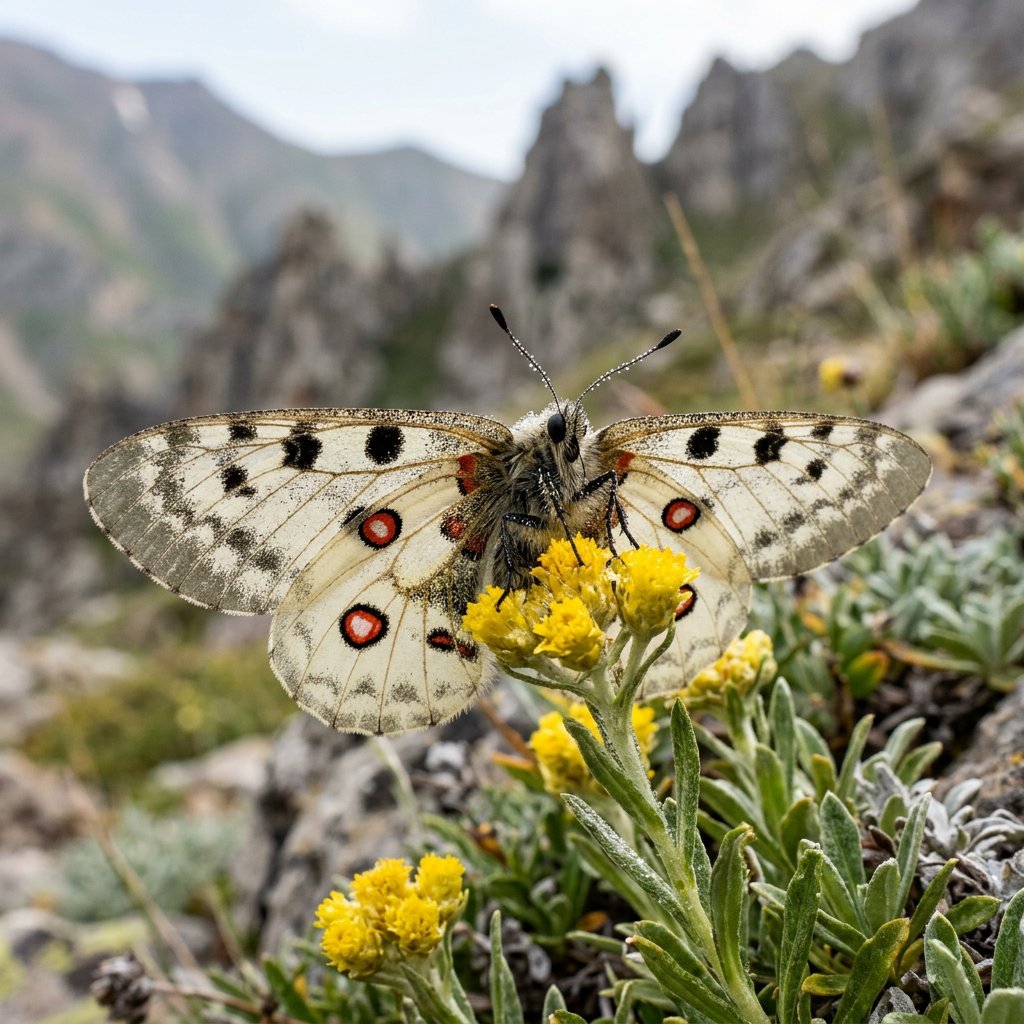
- 🦋 Parchment Wings: The wings have a unique, semi-translucent quality, almost like antique paper, with a soft creamy-white or pale yellow base color.
- 🔴 Jewel Spots: The hindwings are decorated with a row of small, vivid red or orange spots rimmed with black, which serve as "false eyes" to startle hungry birds.
- ⚫ Bold Markings: Large, distinct black smudges and spots decorate the forewings, providing a high-contrast pattern that is visible even from a distance.
🌲 Habitat & Ecology
- 🌿 The Birthwort Bond: This butterfly is a specialized feeder. Its caterpillars rely entirely on Aristolochia (Birthwort) plants. Because these plants are often found in rocky, undisturbed gullies, the False Apollo is a great indicator of a healthy, ancient ecosystem.
- 🗓️ Early Emergence: It is a "univoltine" species, meaning it has only one generation per year. It is one of the first butterflies to signal the end of winter, appearing in early March to dance across the limestone landscapes of the Balkans and Turkey.
⚠️ Safety & Toxicity
- 👐 Harmless Friend: The False Apollo is completely safe for humans. It possesses no sting or bite and is generally a slow, graceful flier that is a joy to observe.
- 🧪 Chemical Shield: While safe to touch, it is chemically protected. By eating toxic Birthwort plants as a caterpillar, the butterfly stores bitter acids in its body, making it a "bad snack" for birds and lizards.
✨ Fun Fact
After mating, the male False Apollo secretes a waxy, shell-like structure called a sphragis onto the female’s abdomen. This "chastity belt" prevents other males from mating with her, ensuring his genes are the ones that carry on to the next spring!
More Details








