Info
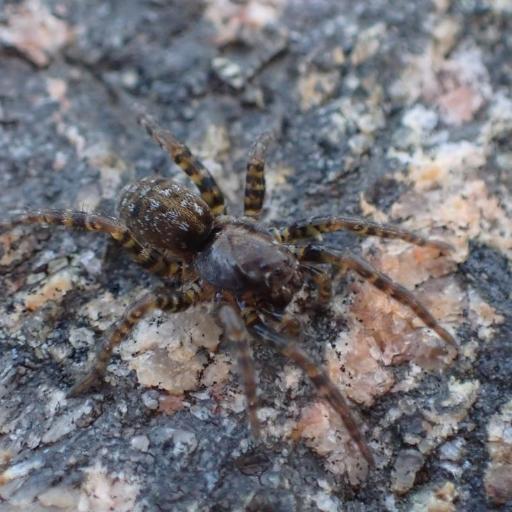
The Leopard Wolf Spider (Arctosa leopardus) is a master of camouflage that prowls the damp shadows of the undergrowth. Often called the "Leopard of the Moss," this spider doesn't rely on sticky webs to catch a meal; instead, it uses its incredible eyesight and explosive speed to ambush its prey. Its striking spotted pattern makes it a favorite among arachnid enthusiasts and nature photographers.
🔍 How to Identify
- 🐆 Leopard Pattern: The cephalothorax and abdomen are covered in a mottled pattern of dark chocolate brown spots against a lighter tan or grayish-orange background, mimicking a leopard's coat.
- 👀 Sharp Eyes: It possesses eight eyes, including two large, forward-facing ones that provide the exceptional depth perception needed for hunting in low light.
- 🏃 Powerful Build: Unlike delicate web-weavers, this spider has a robust, low-slung body and thick, hairy legs designed for sprinting across uneven terrain.
🌲 Habitat & Ecology
- 💧 Water Lovers: This species is highly specialized for damp environments. You are most likely to spot them in marshes, bogs, or among the wet moss and leaf litter near pond edges.
- 🏠 Solitary Hunters: They are nocturnal wanderers. During the day, they typically hide in shallow, silk-lined burrows or under stones, emerging at dusk to hunt for beetles, flies, and other small invertebrates.
⚠️ Safety & Toxicity
- 🛡️ Non-Aggressive: The Leopard Wolf Spider is shy and will almost always choose to run away or hide rather than confront a human.
- 🐝 Minor Risk: Like almost all spiders, it is venomous, but its venom is designed for small insects. A bite to a human is rare and usually only occurs if the spider is squeezed; the sensation is typically no worse than a mild bee sting, though it may cause slight redness or itching.
✨ Fun Fact
Wolf spider mothers are the "minivans" of the nature world! After the spiderlings hatch, they climb onto their mother's back and ride along with her for several days, clinging to special "knobbed" hairs until they are large enough to hunt on their own.
More Details








