Info
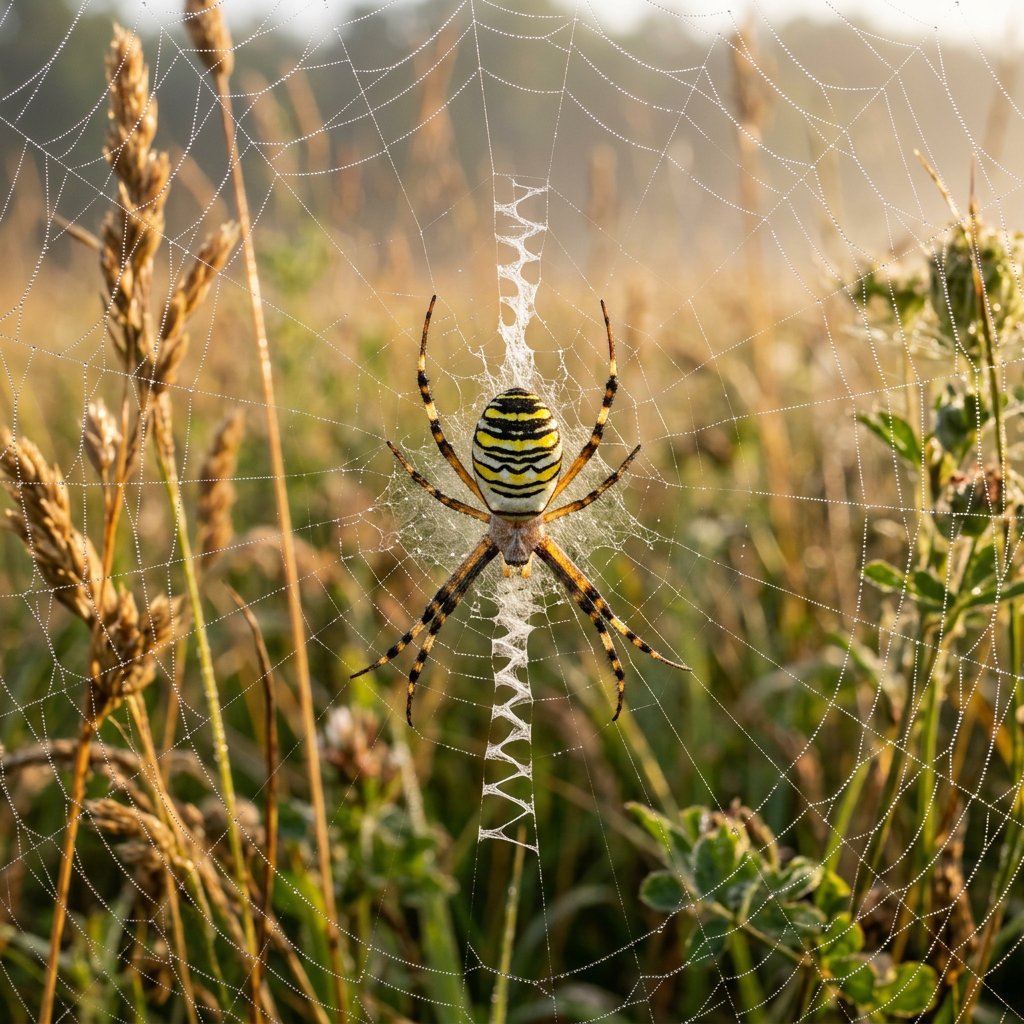
Known as the Wasp Spider, this striking arachnid is one of nature’s most successful mimics. While its bold yellow and black stripes might make you jump, it is a non-aggressive "friend" that acts as a natural pest controller in meadows and sunny gardens. Often found hanging head-down in the center of a large circular web, it uses its "scary" appearance to trick birds into thinking it’s a stinging wasp.
🔍 How to Identify
- 🎨 The "Wasp" Pattern: The female boasts a large, oval abdomen decorated with vivid horizontal bands of yellow, black, and silver-white.
- 🕸️ Zig-Zag Web: It builds a classic orb web but adds a unique, thick vertical zig-zag of white silk called a stabilimentum through the center.
- 🕷️ Size Difference: Females are large and colorful (up to 2cm), while males are tiny, drab brown, and rarely larger than 5mm.
🌲 Habitat & Ecology
- 🌾 Grassland Specialist: These spiders prefer long grass, heathlands, and roadside verges where they can stretch their webs between tall stalks.
- 🦗 Grasshopper Hunter: Their primary diet consists of jumping insects like grasshoppers and crickets. Once a prey item hits the web, the spider wraps it in a thick "shroud" of silk in seconds.
- ☀️ Sun Lovers: They are most active in the peak of summer and are often found in the sunniest spots of the garden to keep their metabolism high for hunting.
⚠️ Safety & Toxicity
- 🛡️ Reluctant Biter: The Wasp Spider is not aggressive. If disturbed, its first instinct is to vibrate its web rapidly to become a blur or drop into the undergrowth to hide.
- 🐝 Low Risk: While they do possess venom to paralyze insects, a bite to a human is rare and generally no more painful than a mild bee sting, typically resulting in minor local redness or swelling.
✨ Fun Fact
The purpose of the zig-zag "stabilimentum" in their web is still a scientific mystery! Some believe it helps birds see and avoid flying into the web, while others think it reflects UV light to lure in unsuspecting pollinating insects.
More Details








